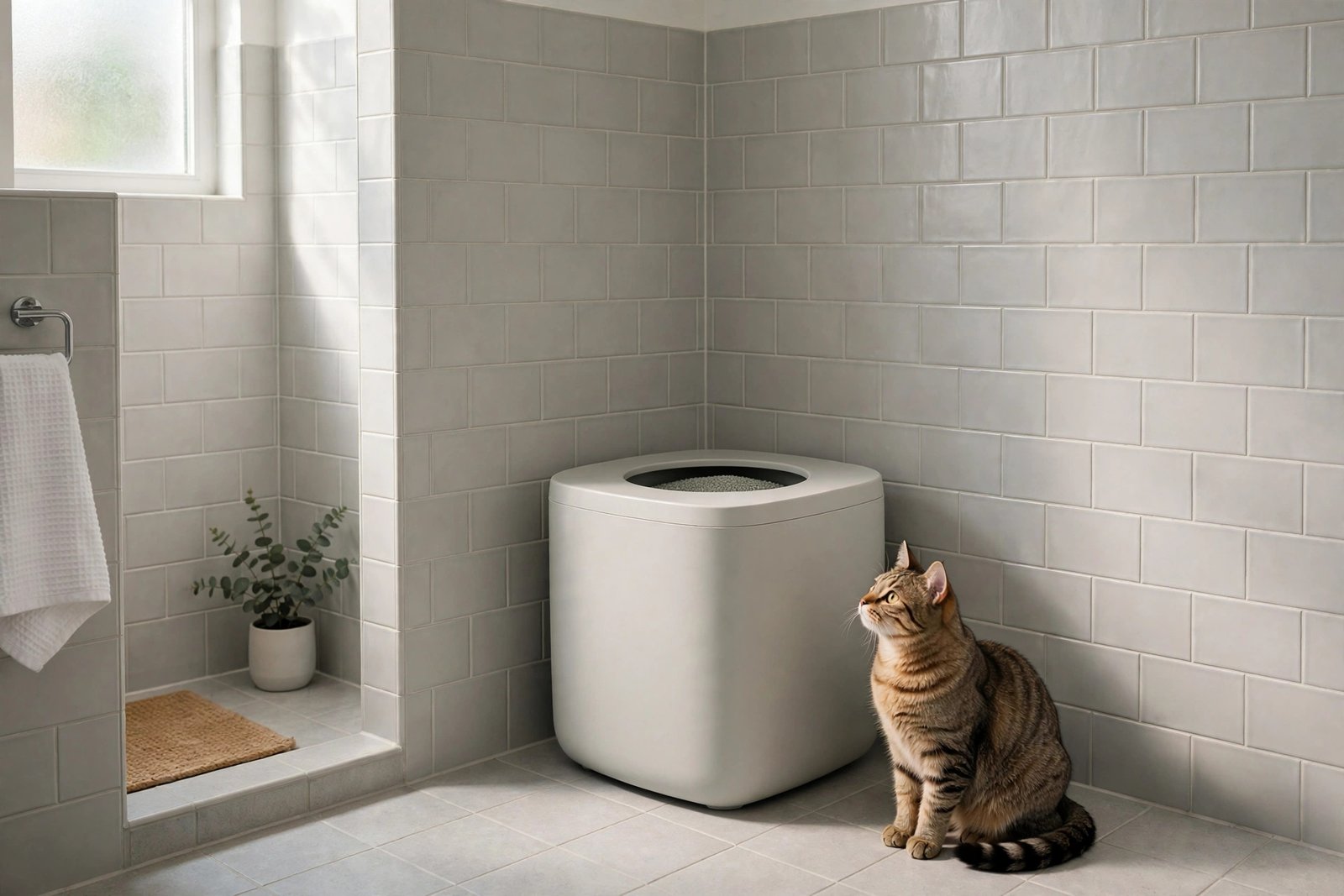
Finding the right litter box for small apartment living is mostly a geometry problem with a smell problem attached. You need something that fits a bathroom corner or a closet nook, keeps odor from taking over 500 square feet, and doesn’t fling litter across the one rug you own.
We researched the most recommended boxes on Chewy and PetSmart, compared real dimensions, ratings, and reviews, and picked eight that actually make sense in tight quarters — top-entry, covered, stainless steel, low-entry, and one compact automatic for people who want the scooping handled. Here is the full rundown.
| Award | Product | Why it stands out | Check Price |
|---|---|---|---|
| Best overall | IRIS Top Entry Cat Litter Box with Scoop | Top entry kills tracking; grooved lid doubles as a mat | Check Price on PetSmart |
| Best covered | Catit Jumbo Hooded Cat Pan | Huge interior with a carbon filter and removable door | Check Price on Chewy |
| Best stainless steel | IRIS Stainless Steel Open-Top with Scatter Shield | Steel pan that won’t hold odor; tall walls contain spray | Check Price on Chewy |
| Best low-entry | KittyGoHere Senior Cat Litter Box | 3-inch entry for seniors, kittens, and stiff joints | Check Price on Chewy |
| Best high-sided open | Frisco High Sided Cat Litter Box, XL | 10-inch walls stop kick-out; 4.8 stars from 7,000+ ratings | Check Price on Chewy |
| Best for odor & tracking | Tidy Cats Breeze Hooded Litter Box System | Pellets + pads separate urine from solids; nearly dust-free | Check Price on Chewy |
| Best compact automatic | PetSafe ScoopFree Crystal Smart Self-Cleaning | Rake handles the scooping; slim profile for tight spots | Check Price on Chewy |
| Best budget | Petmate Litter Pan, Jumbo | Simple, sturdy, Made-in-USA pan that just works | Check Price on Chewy |
Best overall: IRIS Top Entry Cat Litter Box with Scoop
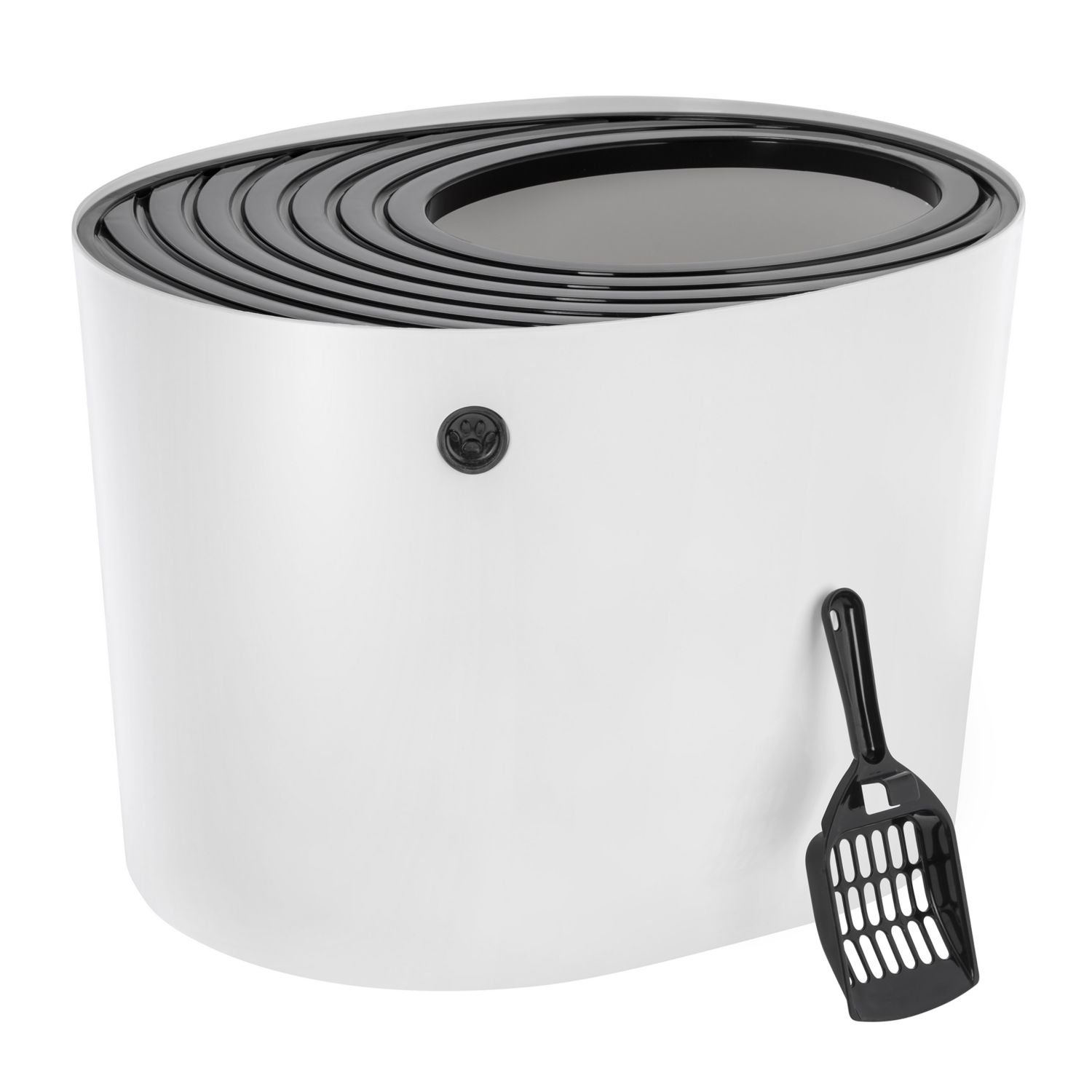
The IRIS top entry is the small-apartment classic for a reason. Your cat enters through a 9.25-inch hole in the lid, does their business in a deep enclosed pan, and climbs back out across a grooved lid that knocks litter off their paws before they hit your floor. In a studio where the litter box might sit six feet from your bed, that tracking control matters more than almost anything else.
The footprint is honest apartment size — about 20.75 by 16 inches, so it tucks into a bathroom corner or beside a dresser without eating the room. The enclosed shape also traps odor better than any open pan, and the included scoop hangs on a hook inside the lid so it is always where you left it. At around 14.6 inches tall it is deep enough for serious diggers.
The real limitation is the entry itself. Senior cats, arthritic cats, and young kittens can struggle with — or flat-out refuse — a top entry, so know your cat before committing. And the grooved lid only works if you wipe it down now and then; otherwise tracked litter just relocates to the lid.
Apartment scorecard: Footprint: 20.75 x 16.1 in · Installation: none, out of the box · Rental-friendly: yes · Cleaning: removable lid, smooth rounded pan · Best room: bathroom corner, laundry nook
Best covered: Catit Jumbo Hooded Cat Pan
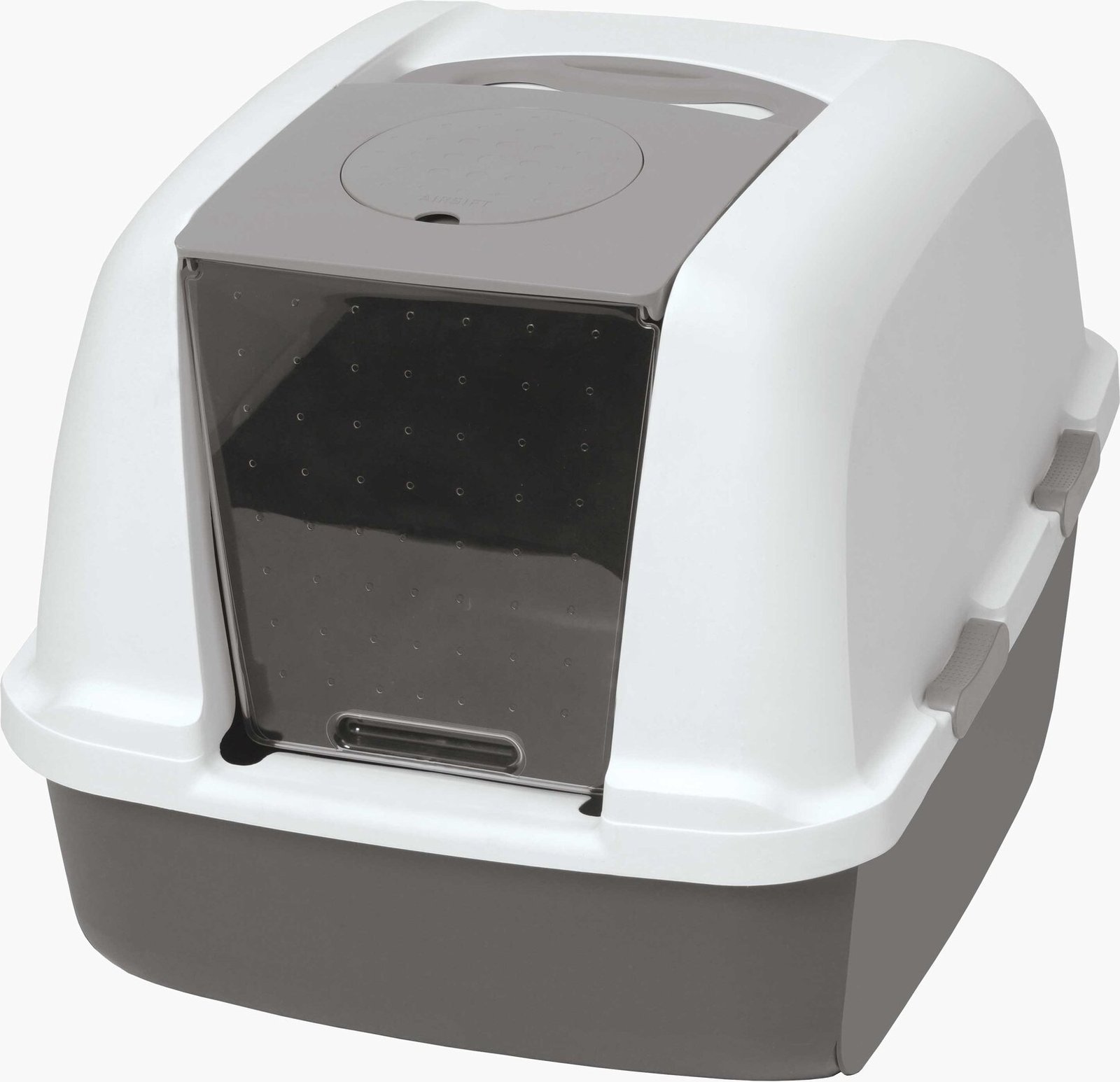
If your cat will tolerate a hood, the Catit Jumbo is one of the roomiest covered boxes you can buy — 22.4 by 18.3 inches of interior, which means even large cats can turn around comfortably. The hood does the heavy lifting on odor in a small space, and the built-in carbon filter takes the edge off between scoops. The clear swinging door gives privacy without making the interior pitch black, and it is removable for cats who find doors suspicious.
For apartments, the practical wins are the sliding locks that keep the hood firmly attached (no lid popping off mid-scoop) and the carry handle, which genuinely helps when you haul the whole thing to the bathtub for a wash. The bottom pan is smooth, so litter doesn’t weld itself to the plastic.
Be honest about the tradeoff: this is the biggest box in this roundup. Measure your spot before ordering — 22-plus inches doesn’t disappear into every bathroom. And the swinging door can stick over time; some owners just leave it off, which costs you a little odor control but keeps nervous cats using the box. Want the box fully out of sight instead? A furniture-style cover is the next step — see our guide to automatic litter box enclosures for apartments for the hidden route.
Apartment scorecard: Footprint: 22.4 x 18.3 in · Installation: snap-together hood · Rental-friendly: yes · Cleaning: detachable lid, smooth pan · Best room: anywhere 22+ inches fits — closet floor, bathroom
Best stainless steel: IRIS Stainless Steel Open-Top with Scatter Shield
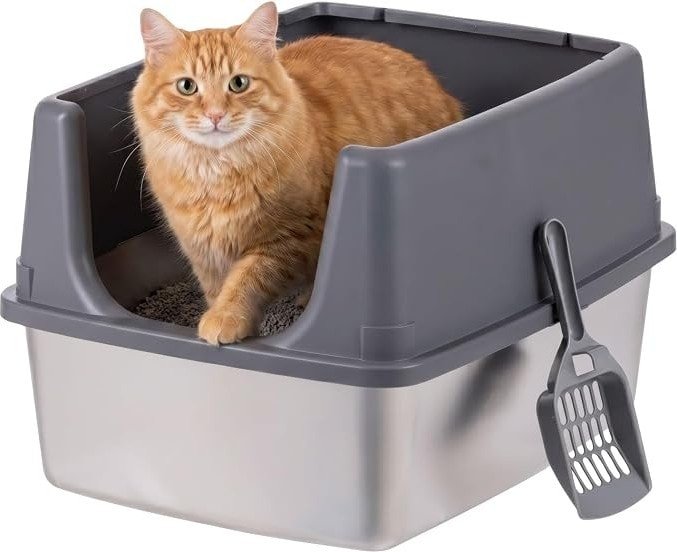
Plastic litter boxes absorb odor over time — anyone who has owned one for two years knows the smell that survives a full wash. Stainless steel doesn’t. This IRIS pairs a steel pan with extra-tall plastic walls on three sides, so you get the odor resistance of metal plus the spray containment of a high-sided box. The listing specifically calls out a compact footprint for smaller spaces, and felt pads underneath protect hardwood floors and dampen the clatter when your cat hops in at 3 a.m.
The open top is a deliberate choice: easy scooping access, easy to monitor your cat’s habits, and no hood for claustrophobic cats to object to. Cleaning is the selling point — the steel pan wipes down instead of needing a soak and a prayer.
The honest downside is odor containment. Without a lid, smells rise freely between scoops, so this box rewards a strict daily scooping habit more than a covered one does. And steel can be loud with hard litters — something to think about if the box lives next to your bedroom wall.
Apartment scorecard: Footprint: not verified · Installation: none · Rental-friendly: yes · Cleaning: steel pan wipes clean · Best room: bathroom, utility nook near the kitchen
Best low-entry: KittyGoHere Senior Cat Litter Box
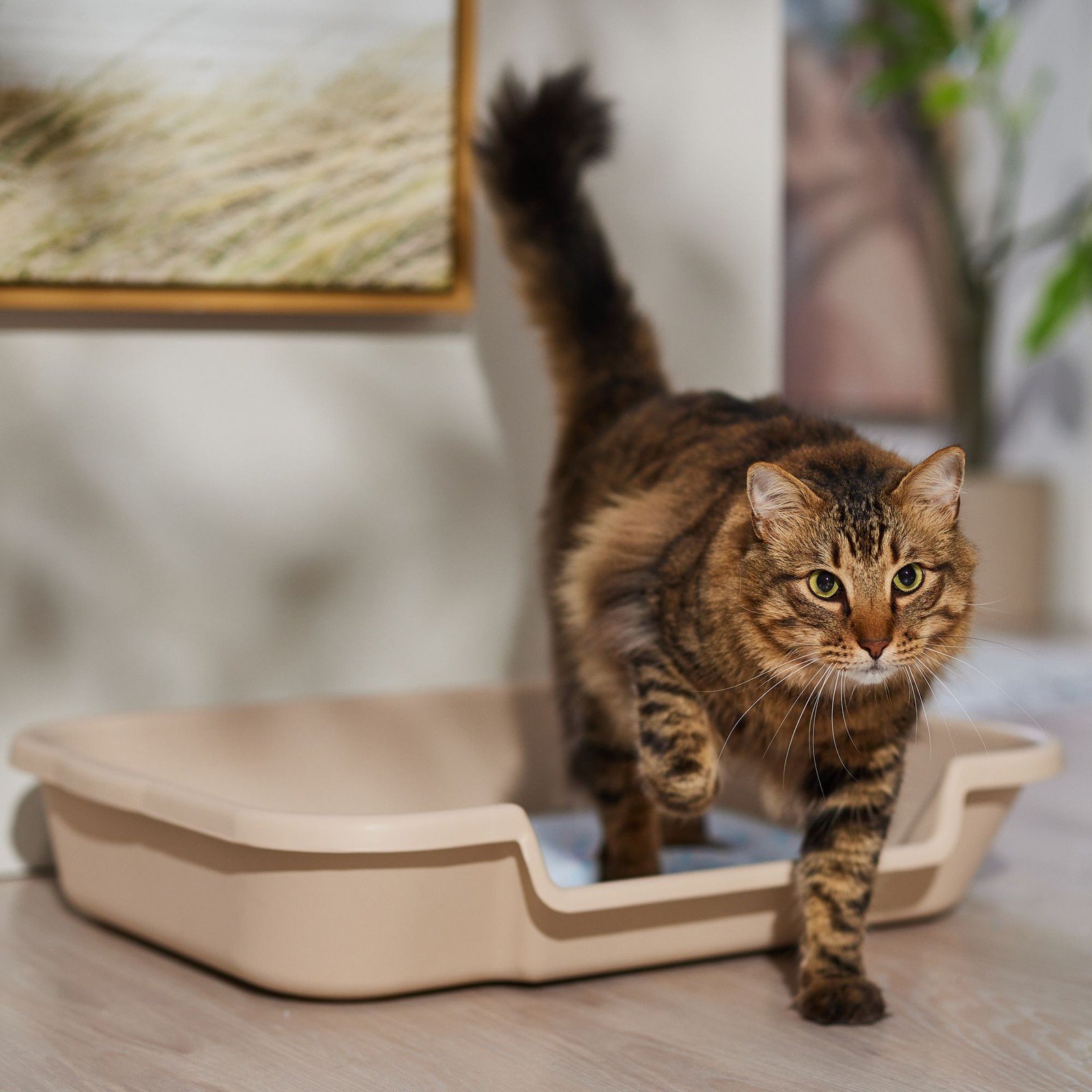
Not every cat can hurdle a 10-inch wall. The KittyGoHere Senior has a 3-inch entry cut into one long side, which makes it the right call for senior cats, arthritic cats, kittens, and any cat recovering from an injury. At 20 by 24 inches it is genuinely spacious — big cats fit without hanging over the edge.
In an apartment the low entry also solves a placement problem: this box slides under a desk or into a closet nook where a tall box wouldn’t fit, and the wide flat shape is stable on any flooring. The BPA-free plastic and curved interior corners make the weekly wash less of a chore.
What you give up is containment. Five-inch walls won’t stop an enthusiastic digger from broadcasting litter, so pair this one with a large mat and expect some sweeping. A few reviewers also mention the bottom texture can be rough, which makes deep cleaning take longer than the smooth pans in this roundup.
Apartment scorecard: Footprint: 20 x 24 in · Installation: none · Rental-friendly: yes · Cleaning: curved corners; bottom texture can be rough · Best room: quiet bedroom corner for seniors (easy, stress-free access)
Best high-sided open: Frisco High Sided Cat Litter Box, XL
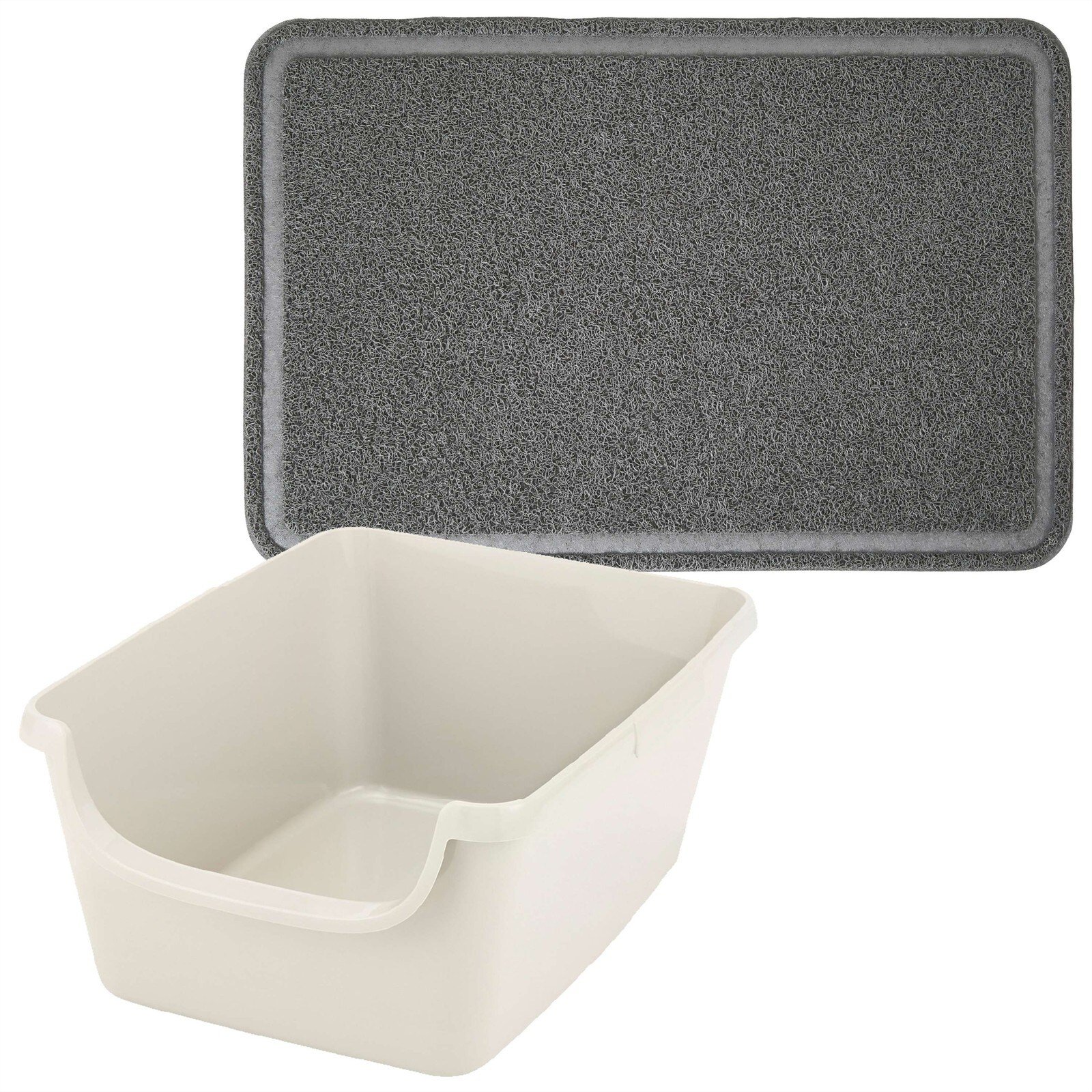
Sometimes the simplest answer is a big open pan with tall walls. The Frisco XL is 24 by 18 inches with 10-inch sides and a 5.6-inch front entry — high enough to stop kick-out and high pee-ers, low enough in front for easy access. With a 4.8-star average across more than 7,000 ratings, it is one of the most consistently praised boxes Chewy sells.
For apartments, the appeal is flexibility: no hood to trap odor for sensitive cats, no top entry to learn, nothing to assemble. It goes wherever you put it and works with any litter. The smooth bottom scoops clean without chipping at stuck clumps.
Two tradeoffs, both about size. Twenty-four inches is a real footprint — measure your bathroom before it arrives. And an XL pan needs more litter per fill than a standard box, plus the open top means odor control is entirely on you and your scooping schedule.
Apartment scorecard: Footprint: 24 x 18 in · Installation: none · Rental-friendly: yes · Cleaning: smooth flat bottom · Best room: laundry area, bathroom with 24+ inches to spare
Best for odor & tracking: Tidy Cats Breeze Hooded Litter Box System
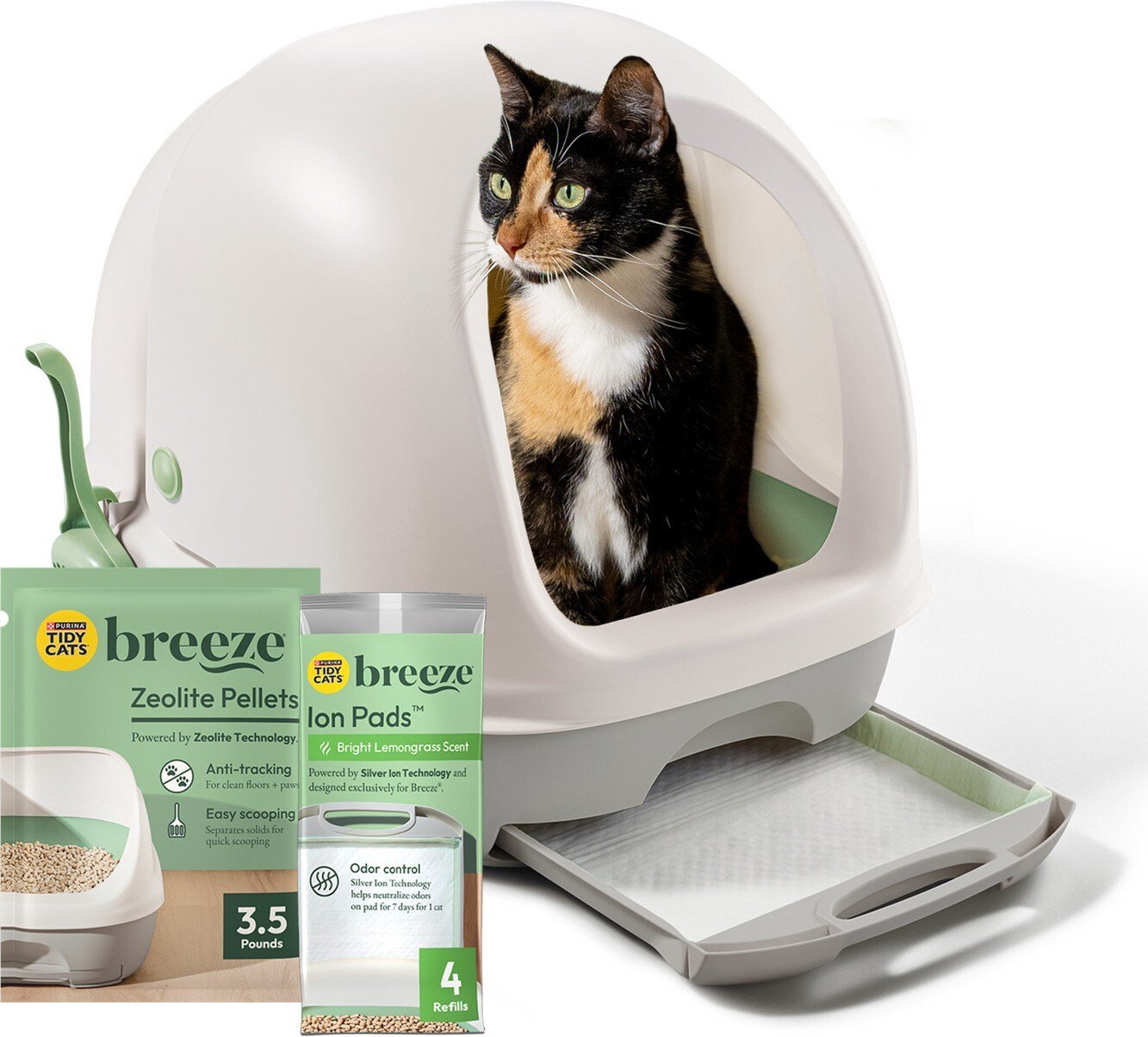
The Breeze is a different animal from every other box here: instead of clumping clay, your cat uses non-absorbent pellets. Urine drains through to an absorbent pad in a slide-out tray below; solids stay on top for easy scooping. In a small apartment that separation is gold — the pad locks away urine odor for about a week per the manufacturer, and the pellets are rated 99.9% dust-free, which means dramatically less tracking on your floors.
The hooded version adds privacy and another layer of odor containment, with a hinged top for scooping access. For renters, the practical win is floor protection: no wet clumps cemented to the pan, no dust film on everything within six feet.
The catch is commitment. The system only works with Breeze pellets and pads, so you’re buying refills on an ongoing basis — factor that into the real cost. Some cats reject the pellet texture outright, so transition slowly. And the full hooded system has a genuine footprint, so measure your spot first.
Apartment scorecard: Footprint: not verified · Installation: none; requires Breeze pellets and pads · Rental-friendly: yes · Cleaning: weekly pad swap, monthly pellet change · Best room: bathroom (pads contain urine odor best in ventilated spots)
Best compact automatic: PetSafe ScoopFree Crystal Smart Self-Cleaning
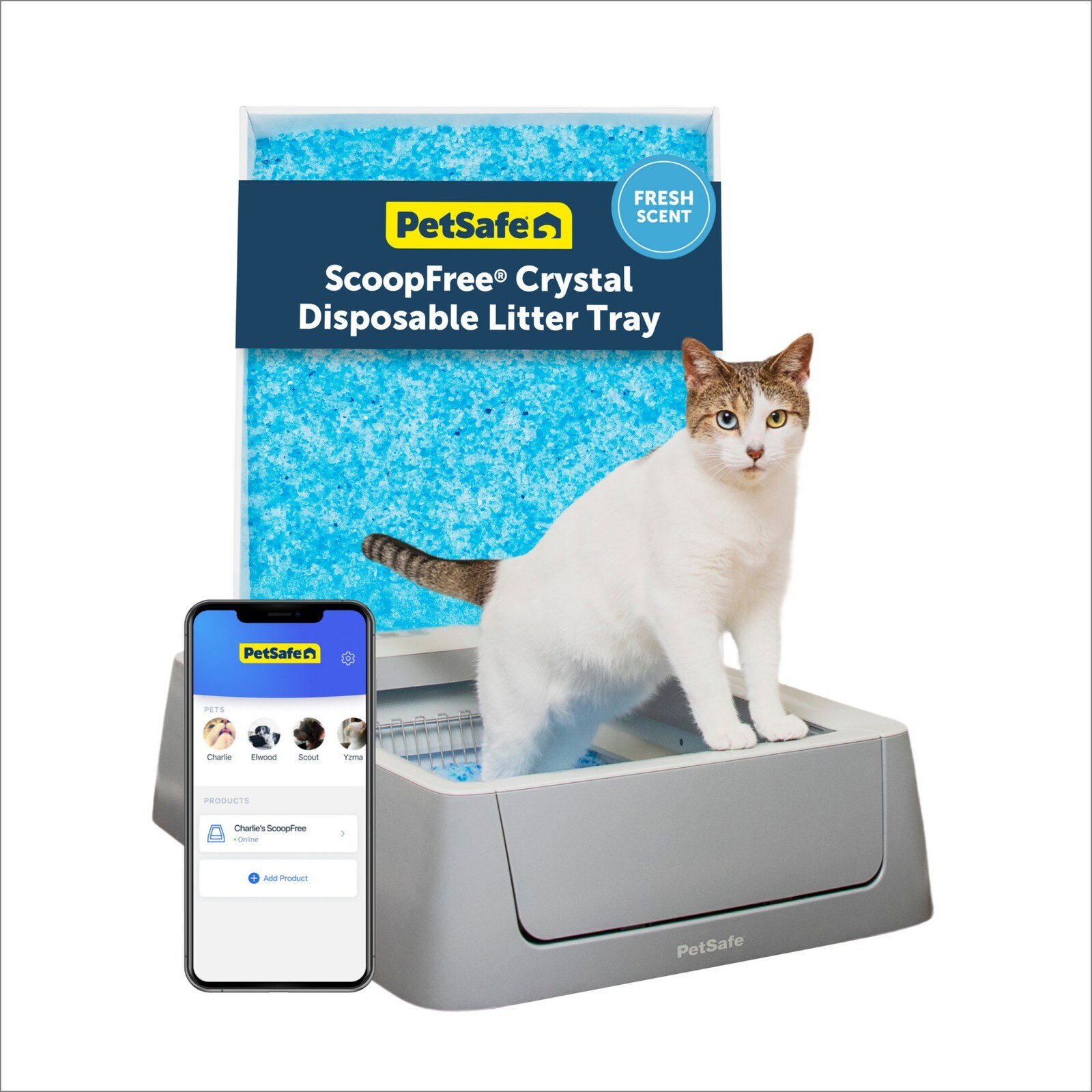
If scooping every single day sounds unsustainable in your schedule, a compact automatic earns its place. The ScoopFree rakes waste into a covered trap about 20 minutes after your cat leaves, and the disposable crystal-litter tray means the monthly cleanup is swapping a tray, not scrubbing a pan. The app tracks usage, which is a nice early-warning system for changes in bathroom habits.
For apartments, the relevant virtues are the slim profile compared to drum-style robots and the covered waste trap, which does more for odor than any manual box between cleanings. It needs an outlet nearby but no assembly and no mounting — fully renter-friendly.
Be clear-eyed about the deal: you’re buying proprietary disposable trays on repeat, which is the real long-term cost. The rake mechanism can startle nervous cats, and a small subset of cats never make peace with it. This is our one automatic pick for context — for the full comparison of small-space self-cleaning boxes, see our best small automatic litter boxes for apartments.
Apartment scorecard: Footprint: not verified · Installation: needs an outlet nearby · Rental-friendly: yes, no mounting · Cleaning: monthly tray swap · Best room: hallway nook or laundry area near an outlet
Best budget: Petmate Litter Pan, Gray, Jumbo
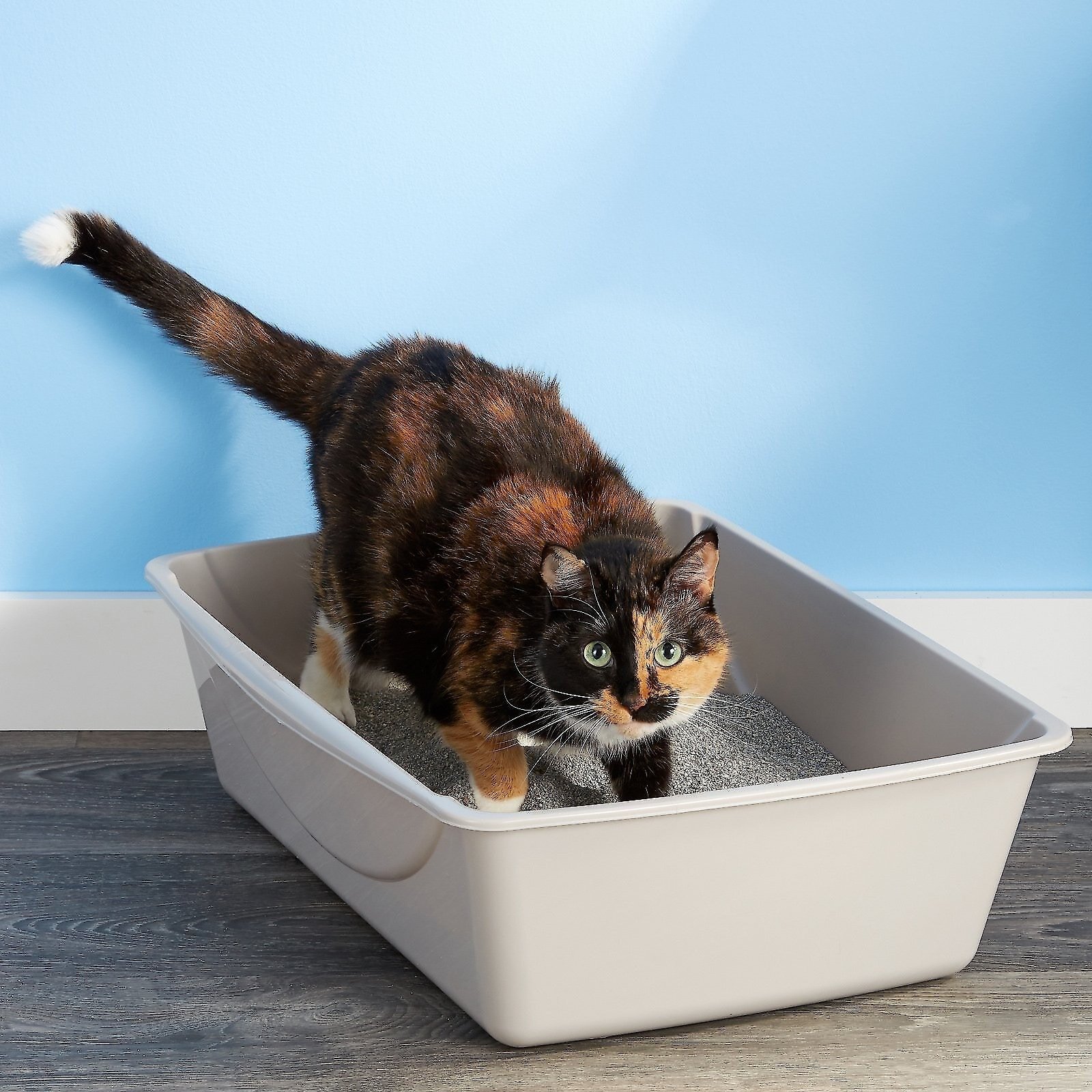
Not every apartment needs an expensive litter box. The Petmate Jumbo is a straightforward open pan — 22 by 16.5 inches, smooth flat bottom, rimmed edges for carrying — with a 4.6-star average across more than 3,500 ratings. It’s Made in the USA, the plastic includes Microban antimicrobial protection, and it costs less than a bag of decent litter.
This is the right pick when the box lives somewhere odor matters less — a ventilated laundry room, a mudroom-style entry — or as a second box. (The one-box-per-cat-plus-one rule is hard in a studio, but two cheap boxes beats one expensive box your cat avoids.) Our placement guide covers where to put a litter box in a small apartment if you’re working out the geography.
Expectations set honestly: this is an open pan with 6.5-inch walls. It contains nothing — not odor, not kicked litter. Buy the biggest litter mat you can tolerate looking at, scoop daily, and it does the job fine.
Apartment scorecard: Footprint: 22 x 16.5 in · Installation: none · Rental-friendly: yes · Cleaning: flat smooth bottom · Best room: anywhere, paired with a large mat
How we picked
We researched litter box listings on Chewy and PetSmart, compared stated dimensions, ratings, and review themes, and filtered for what actually matters in under 700 square feet: footprint, odor control, tracking, and cleaning effort. Every dimension above comes from the retailer’s listing or its Q&A — where we couldn’t verify a spec, we left it out rather than guessing. Nobody paid for placement, we didn’t claim hands-on testing, and this isn’t veterinary advice — it’s a practical roundup for renters.
Buying guide: choosing a litter box for a small apartment
Measure your spot before you fall in love
The number-one mistake is buying the box, then discovering it doesn’t fit. Measure the actual nook — bathroom corner, closet floor, laundry alcove — and compare against the footprints in the table above. Remember the box needs a few inches of clearance on the entry side for your cat to get in comfortably, plus room for a mat if you’re using an open or low-sided box.
Odor control in 400 square feet
In a house, a smelly box is a hallway problem. In a studio, it’s a whole-home problem. Covered and top-entry boxes contain odor best; open pans depend entirely on your scooping discipline and litter choice. Whatever style you pick, scoop daily — in a small space there is no “every other day” that doesn’t announce itself. A stainless steel pan or a pellet system like the Breeze buys you extra margin between cleanings.
Tracking is the real apartment enemy
Litter on the floor of a 500-square-foot apartment isn’t a minor annoyance, it’s the whole floor. Top-entry boxes and high-sided boxes cut tracking the most; hooded boxes are middling; open pans need a large textured mat to have any chance. Low-dust, larger-grain litters track less than fine clay — the litter matters as much as the box here.
Covered vs. open vs. top-entry
Covered boxes win on odor and scatter but some cats feel trapped — if yours hesitates, remove the door before giving up on the box. Open boxes win on airflow and cat acceptance but lose on odor. Top-entry splits the difference beautifully for tracking and odor, but rules out seniors, kittens, and large or arthritic cats. When in doubt, match the box to the cat, not the apartment.
Renter rules: noise, floors, and no-drill placement
Good news: no litter box on this list needs drilling, mounting, or landlord approval. The renter concerns are noise and floors. Automatic boxes hum and rake — keep them away from bedroom walls in thin-walled buildings. Steel pans can clatter on hard floors — the felt pads on the IRIS stainless exist for exactly this reason. And whatever you choose, a waterproof mat under the box protects deposits from the occasional over-the-edge incident. For the full placement playbook, see where to put a litter box in a small apartment.
Frequently asked questions
How many litter boxes do I need in a small apartment?
The standard guidance is one per cat plus one extra, but that math breaks down in a studio. Be practical: one large, well-maintained box per cat is the realistic minimum, scooped daily. If you have the floor space for a second box — even a cheap open pan in a second spot — cats with strong location preferences will thank you.
Where should I put the litter box in a small apartment?
Bathroom corners and laundry areas are the classics: hard floors, ventilation, and easy cleanup. Closets work only if the door stays open or has a cat cutout — sealed closets trap odor and moisture. Avoid the kitchen and anywhere near food and water bowls. Our full guide walks through litter box placement room by room.
Is a covered or open litter box better for a small apartment?
Covered wins for odor containment, which matters more the smaller your space. But a covered box your cat won’t enter is worse than any open box — some cats genuinely dislike hoods and doors. If your cat is hesitant, try removing the door first; most covered boxes work fine doorless with only a small odor penalty.
How do I stop litter tracking all over my apartment?
Three levers: box design (top-entry and high-sided boxes track least), a large textured mat outside the entry, and litter choice (larger, low-dust grains track less than fine clay). No single fix eliminates tracking — the combination is what keeps a small floor clean.
Can I put the litter box in a closet?
Only with airflow. A closet with the door removed or a cat-sized cutout works well and hides the box beautifully. A closed closet is one of the worst spots: it concentrates odor and humidity, and many cats will simply stop using the box.
Do stainless steel litter boxes really control odor better?
The honest version: steel doesn’t absorb odor the way scratched plastic does, so the box itself stays fresher over years of use. It doesn’t neutralize airborne odor from waste sitting in the box — only scooping and ventilation do that. Think of steel as solving the “my old box smells even when clean” problem, not the daily odor problem.
Related reading
- Best Small Automatic Litter Boxes for Apartments 2027 — the full self-cleaning roundup, for when daily scooping isn’t realistic.
- Where to Put a Litter Box in a Small Apartment — room-by-room placement, ventilation, and renter-friendly spots.
- Best Automatic Litter Box Enclosures for Apartments 2027 — hide any of these boxes inside furniture that actually looks good.
- How to Reduce Litter Box Smell in a Small Apartment — small space means smell travels fast; this guide covers what really works.
- cat litters for odor control
- hidden litter box furniture
Last updated: October 2, 2026
Pingback: Best Small Automatic Litter Box for Apartments 2027
Pingback: Best Automatic Litter Box Enclosure for Apartments 2027
Pingback: Best Place to Put Litter Box in Small Apartment
Pingback: How to Fix Litter Box Smell in Small Apartment
Pingback: Self Cleaning Litter Box vs Manual 2027: Honest Costs
Pingback: Best Cat Litter for Odor Control in Apartments 2027
Pingback: Best Hidden Litter Box Furniture for Apartments 2027
Pingback: Best Litter Mat for Small Apartments 2027
Pingback: Best Litter Box for Two Cats in One Apartment 2027