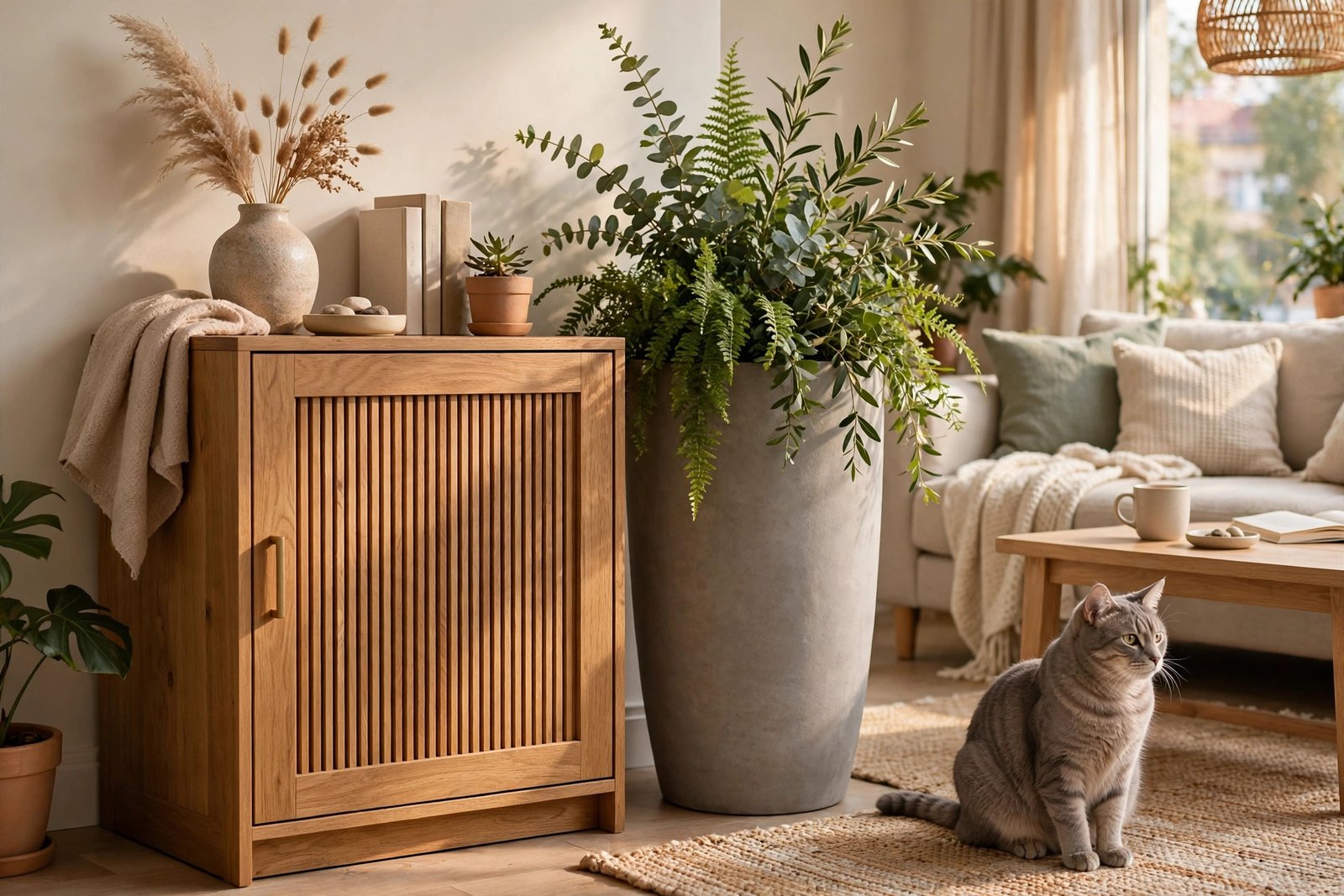
A litter box does not have to announce itself in a studio or a one-bedroom. The best hidden litter box furniture for apartments hides a standard pan inside pieces that look like they belong there — planters, side tables, benches, trunks — while giving your cat an entry they will actually use.
We researched seven furniture-style options sold at Chewy, PetSmart, and Petco, and recorded real exterior footprints for every pick, because in an apartment every inch of floor matters. Below you will find honest notes on ventilation and entry ergonomics, real drawbacks pulled from listings and reviews, and an apartment scorecard for each piece.
| Award | Product | Why it stands out | Check Price |
|---|---|---|---|
| Best planter | Good Pet Stuff Hidden Cat Litter Planter | Reads as a houseplant; 19-inch interior suits large cats | Check Price on Chewy |
| Best for large cats | Feandrea Multi-Functional Cat Litter Box Enclosure | Wide 33.5-inch cabinet the listing calls out for Maine Coons | Check Price on Chewy |
| Best side-table style | Frisco Elevated Side Table Litter Box Cover | Mid-century nightstand look with a genuine table footprint | Check Price on Chewy |
| Best moisture-proof | New Age Pet ecoFLEX Litter Loo End Table | Composite that will not swell if litter spills; 10-year warranty | Check Price on Chewy |
| Best bench | Zoovilla Kitty Litter Loo Bench | Entryway-bench look with reversible entry and removable divider | View at Petco |
| Best trunk-style chest | Designer Pet Products Cat Litter Box Enclosure | Hinged lid for top-down scooping; staggered entry controls tracking | Check Price on PetSmart |
| Best combo cabinet | Petco Hidden Litter Box and Cat Condo Cabinet | Litter box, condo hideaway, and drawers in one 37-inch cabinet | View at Petco |
Best planter: Good Pet Stuff Hidden Cat Litter Planter
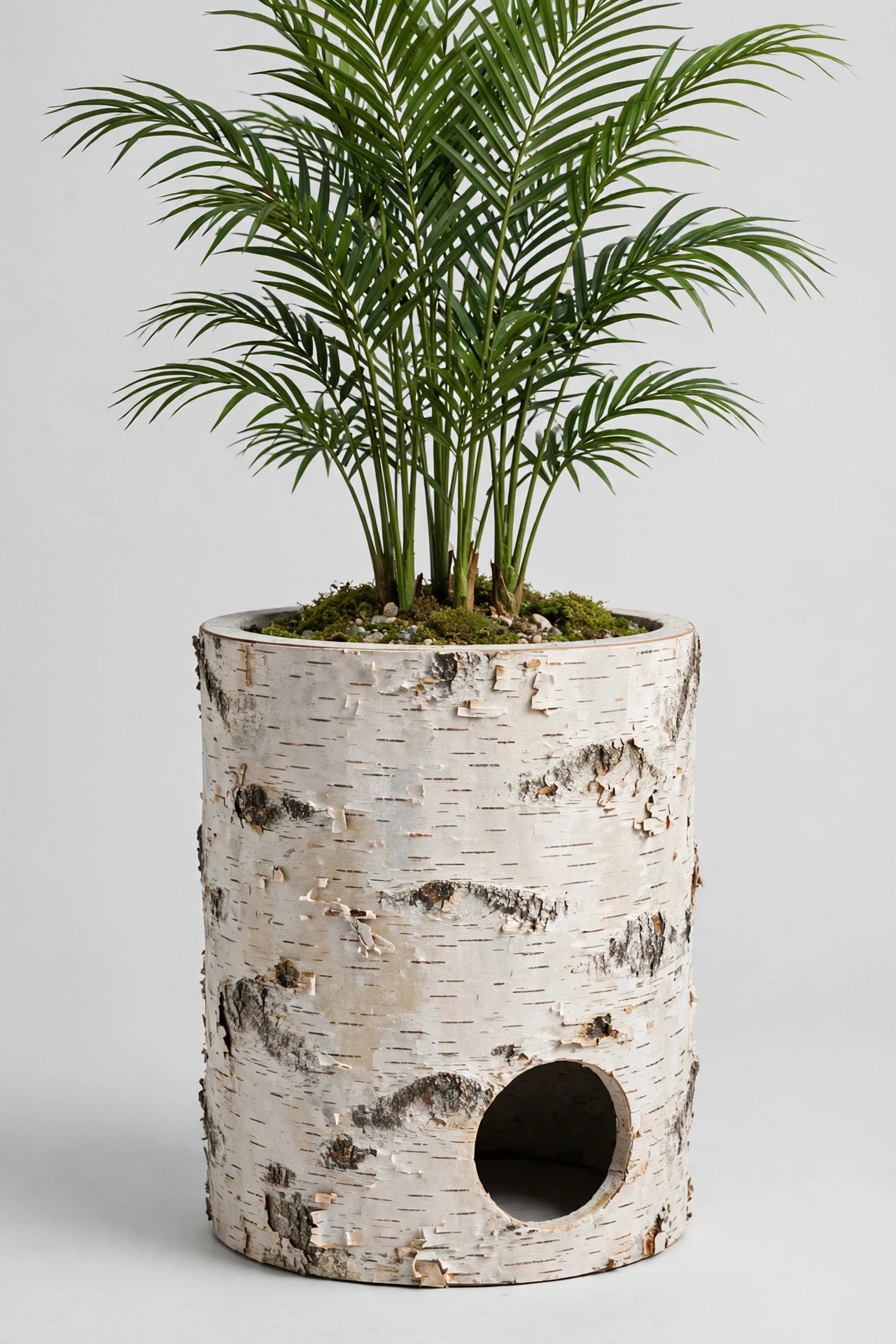
This is the original disguise: a round, clay-pot-look planter with a faux palm rising out of the top. At a glance it is a houseplant. The litter lives in the base, the cat slips in through a round side cutout, and a carbon-infused vent filter sits under the plant to take the edge off dust and odor.
The apartment case is strong. The footprint is a tidy 19⅝-inch square, so it tucks into a corner like any large potted plant, and the 19-inch interior is roomy enough for big cats and multi-cat households — most furniture cabinets force large cats to crouch. No assembly beyond snapping the planter together, and nothing to mount or drill.
The honest trade-offs: the entry cutout has no flap, so from the doorway side it still reads as a litter box — Chewy shoppers suggest turning the opening toward the wall. With the palm installed it stands 44½ inches tall, which is a lot of vertical presence in a low-ceiling room. And it is molded polypropylene, not wood, so it will never pass as fine furniture up close.
Apartment scorecard: Footprint: 19⅝” × 19⅝” (44½” tall with the faux plant) · Noise: silent — no moving parts · Installation: snap-together planter kit, no tools listed · Rental-friendly: yes — freestanding, nothing to mount · Cleaning: lift-off planter top for full access; wash the base with soap and water · Best room: living room corner, beside a bookshelf
Best for large cats: Feandrea Multi-Functional Cat Litter Box Enclosure
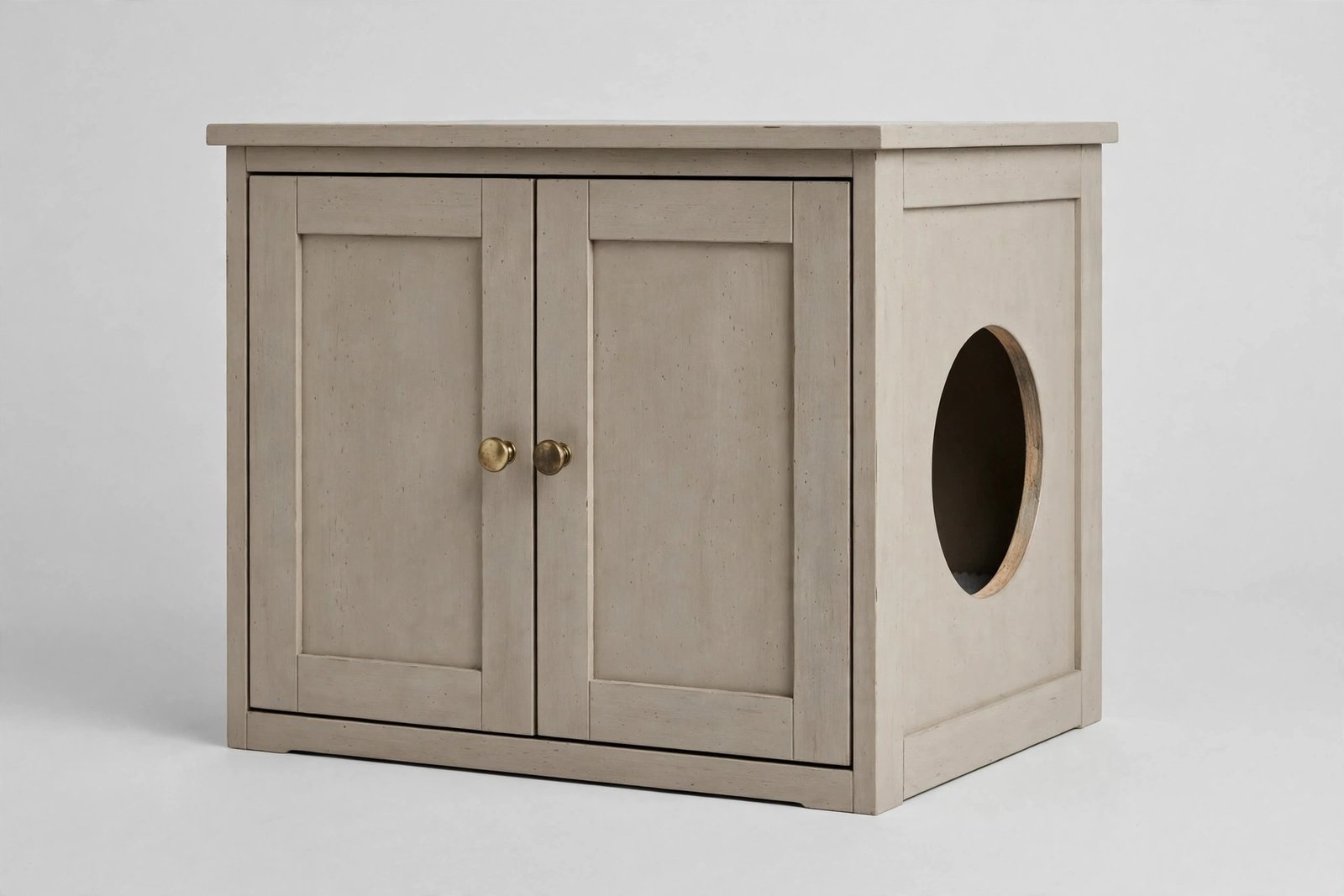
Most litter box furniture is sized for an average cat and an average pan, which leaves big-cat households stuck. Feandrea’s farmhouse-style cabinet runs 33.5 inches wide, and the listing specifically calls it out for large cats like Maine Coons. The low, 19.5-inch profile also means it can double as a plant stand — the top is a usable surface, not dead space.
In an apartment, the wide-but-low shape is the right call for a big cat: floor space for the pan, and the cat does not have to fold themselves through a tall narrow cabinet. The heather greige finish is neutral enough to sit against most rental walls without looking like pet gear.
Two honesty flags. First, the rating base is tiny — two ratings — so treat buyer sentiment as unproven. Second, the listing does not publish interior dimensions, so you must measure your own pan and confirm it fits before ordering. It is particleboard, not solid wood, so do not expect it to take abuse the way a hardwood chest would.
Apartment scorecard: Footprint: 33.5″ × 19″ · Noise: silent — passive cabinet · Installation: flat-pack assembly expected (details not verified) · Rental-friendly: yes — freestanding · Cleaning: wipe-down exterior; interior scoop access per the cabinet doors (layout not verified) · Best room: hallway or living room wall; the low top works as a plant stand
Best side-table style: Frisco Elevated Side Table Litter Box Cover
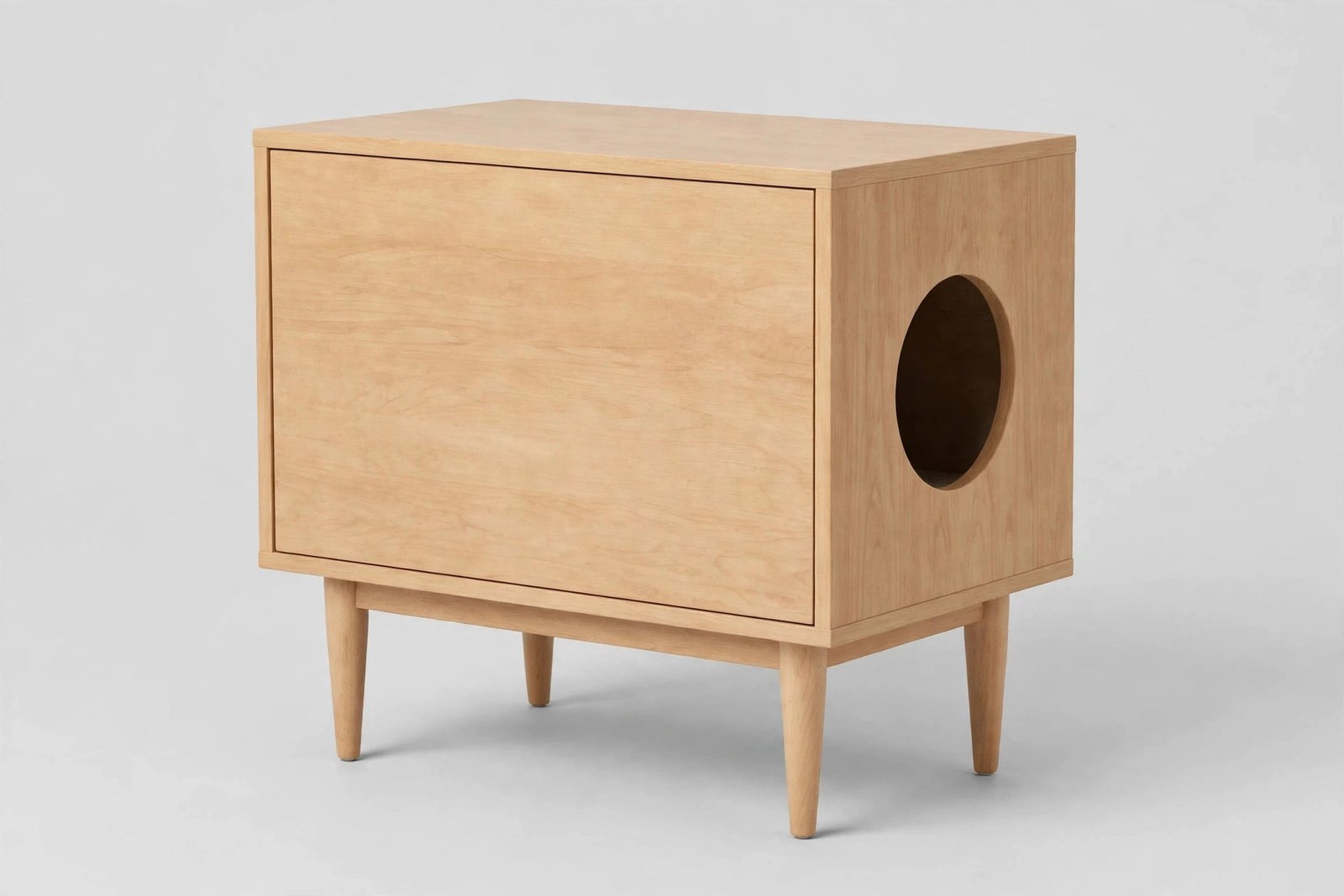
If the goal is for guests to see a nightstand, this is the pick. Tapered mid-century legs, a cabinet body, and a round side entry hole — it reads as a side table first and a litter box second. The exterior measures 20.75 by 26.75 inches, which is a genuine nightstand footprint, and the 4.4-star rating across 36 reviews is the strongest buyer signal in this roundup.
Measure before you buy, because the interior is honest about its limits: 19.25 by 15.5 by 17.5 inches, with a 7.87-by-10.5-inch entry hole. A standard pan fits; an extra-large or high-sided pan will not. The legs must be installed — there is no legless, lower-profile option — which sets the entry hole at a fixed height.
The ventilation warning comes from a reviewer, not the listing: there are no vent holes, and one owner worried the box would feel stifling for the cat over time. If odor control matters to you, this is the pick that most needs daily scooping to compensate. Large cats may also find the entry hole snug.
Apartment scorecard: Footprint: 20.75″ × 26.75″ · Noise: silent — no moving parts · Installation: assembly required; legs must be installed · Rental-friendly: yes — freestanding · Cleaning: wipe exterior with a damp cloth; scoop through the cabinet (door layout not verified) · Best room: bedroom as a nightstand, or beside the couch
Best moisture-proof: New Age Pet ecoFLEX Litter Loo End Table
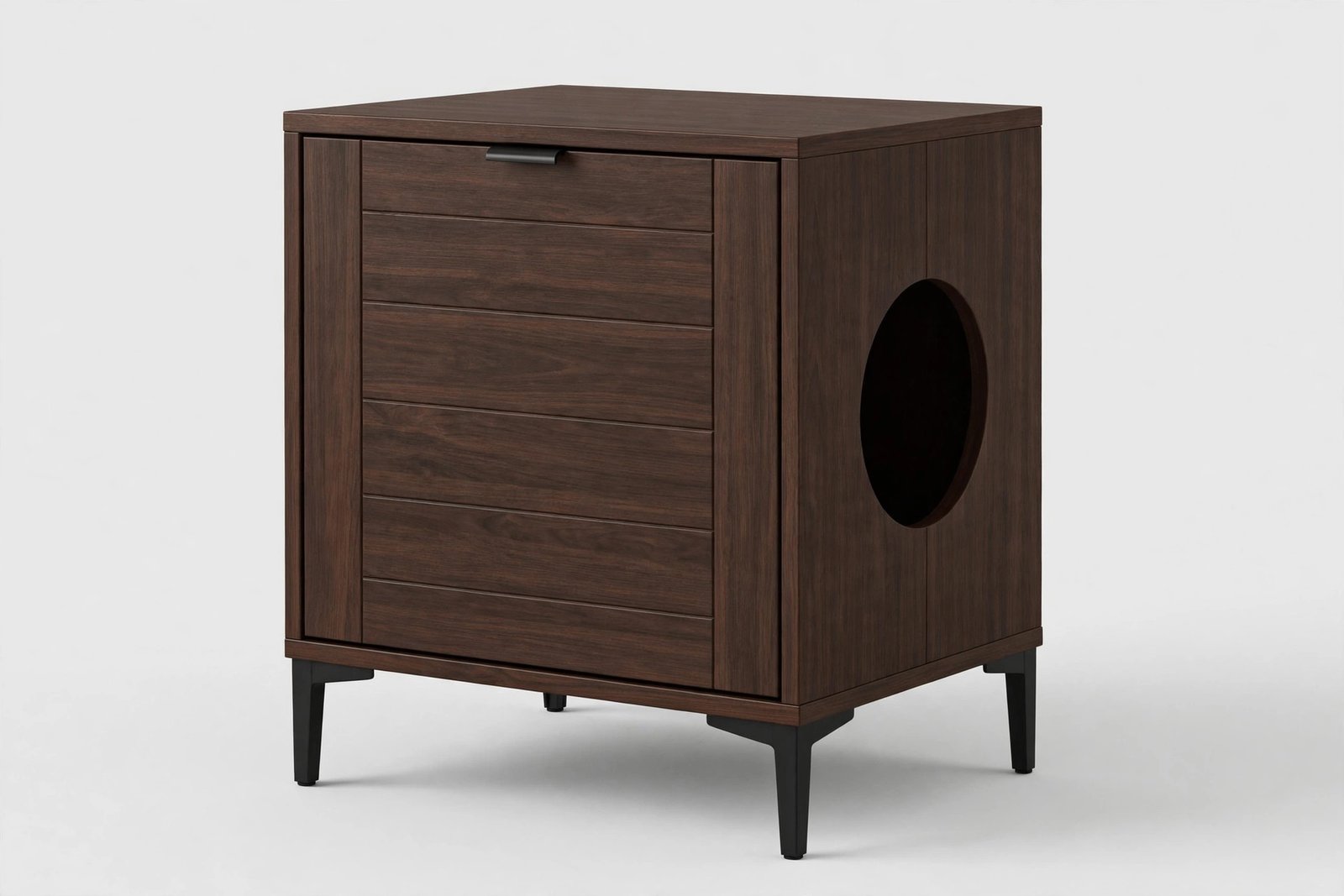
Here is the problem most wooden litter cabinets share: one missed pee and particleboard swells, and the smell never really leaves. The ecoFLEX Litter Loo is built from a recycled wood-plastic composite that is moisture-resistant by design, and it carries a 10-year manufacturer warranty — the longest backing of anything in this roundup. For a renter, that matters: a cabinet that survives accidents is a cabinet that does not cost you a security deposit.
The Standard size is a true end-table footprint at 23.6 by 18.5 inches, with a 15.7-by-21.1-by-20-inch interior that fits standard pans. The front panel flips down for full scoop access, assembly is tool-free, and the espresso finish looks like ordinary living room furniture. With 642 ratings at 4.2 stars, it is also the most-reviewed pick here.
The caveat is in the listing itself: the unit is not watertight and must be used with a litter pan inside — misses will pool on the composite rather than absorb, so wipe them up instead of assuming it is sealed. The 20-inch interior height rules out tall hooded pans, and the listing states nothing about ventilation, so plan on your normal scooping routine doing the real odor work.
Apartment scorecard: Footprint: 23.6″ × 18.5″ · Noise: silent — passive end table · Installation: tool-free assembly · Rental-friendly: yes — freestanding, and the moisture-resistant build is kind to security deposits · Cleaning: flip-down front door for full scoop access; wipe the composite clean · Best room: living room beside the sofa; also works as a bedroom side table
Best bench: Zoovilla Kitty Litter Loo Bench
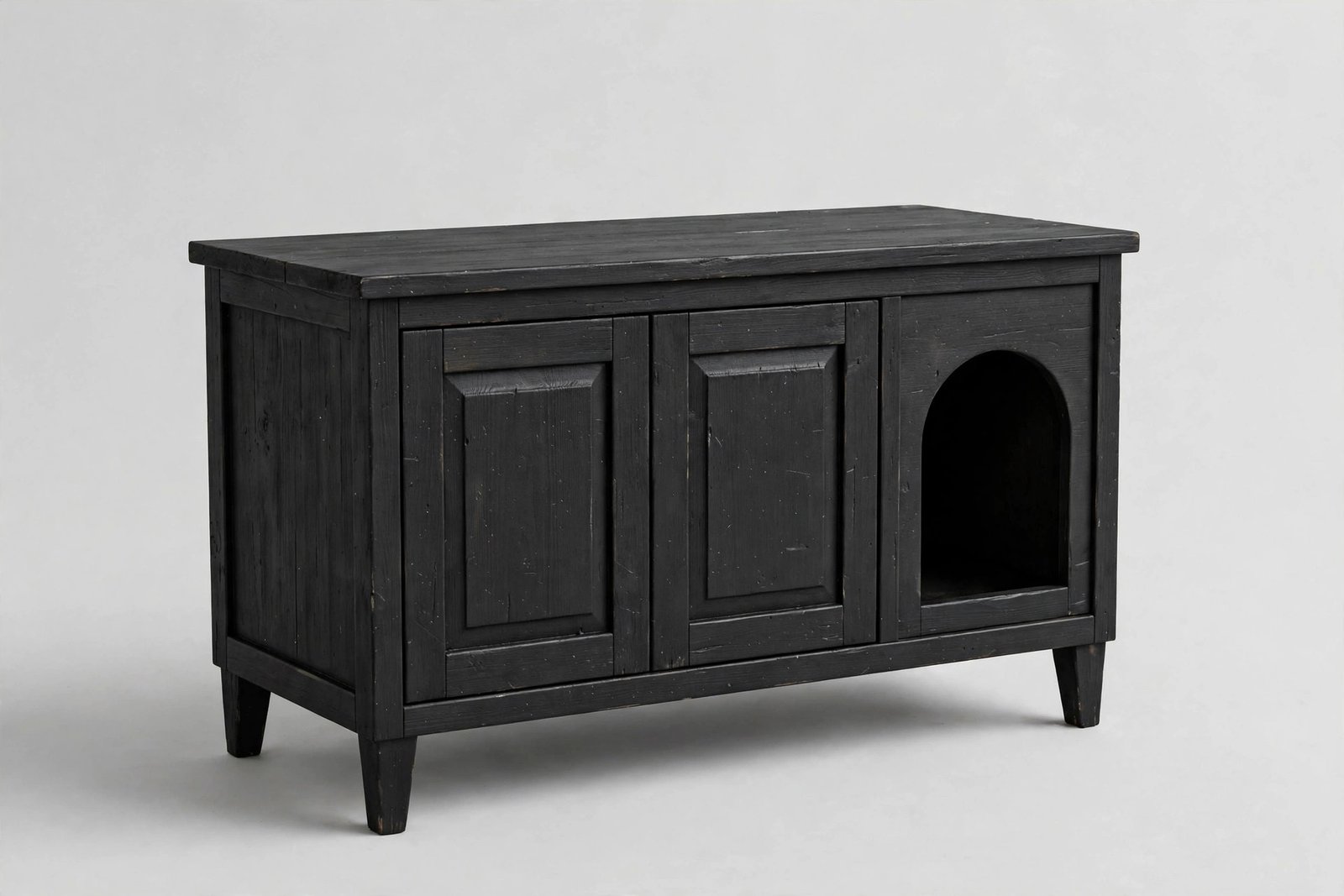
A bench earns its floor space in a way a cabinet does not: it is seating-adjacent furniture for the entryway or hallway, with your cat’s bathroom inside. The Zoovilla bench runs 29.5 by 20.8 inches, finished in black MDF with framed panels and an arched doorway that genuinely looks like a small foyer bench. The entry can be set up on the left or the right, and a removable divider lets you split the interior or open it up.
The entry-ergonomics note here is unusually specific and worth heeding. The single reviewer — who recommends the piece — warns that the lower edge of the cat access sits 4 inches above the cabinet’s floor plate, while most litter pans stand about 5 inches tall. That means a standard pan’s lip sits slightly proud of the doorway. Measure your pan’s height before ordering; a lower-profile pan solves it.
Honest drawbacks beyond that: the review base is one person, so consider buyer sentiment unproven. It is MDF with a painted finish — the same reviewer explicitly warns it is not for pets that chew. The instructions were confusing enough that they finished the build with a YouTube video. And at 42.3 pounds, you will assemble it where it lives.
Apartment scorecard: Footprint: 29.5″ × 20.8″ · Noise: silent — no moving parts · Installation: assembly required; one reviewer found the instructions confusing · Rental-friendly: yes — freestanding, and 42.3 lbs keeps it planted · Cleaning: removable divider slides out; wipe MDF with a damp cloth · Best room: entryway or hallway — the bench form earns its floor space
Best trunk-style chest: Designer Pet Products Cat Litter Box Enclosure
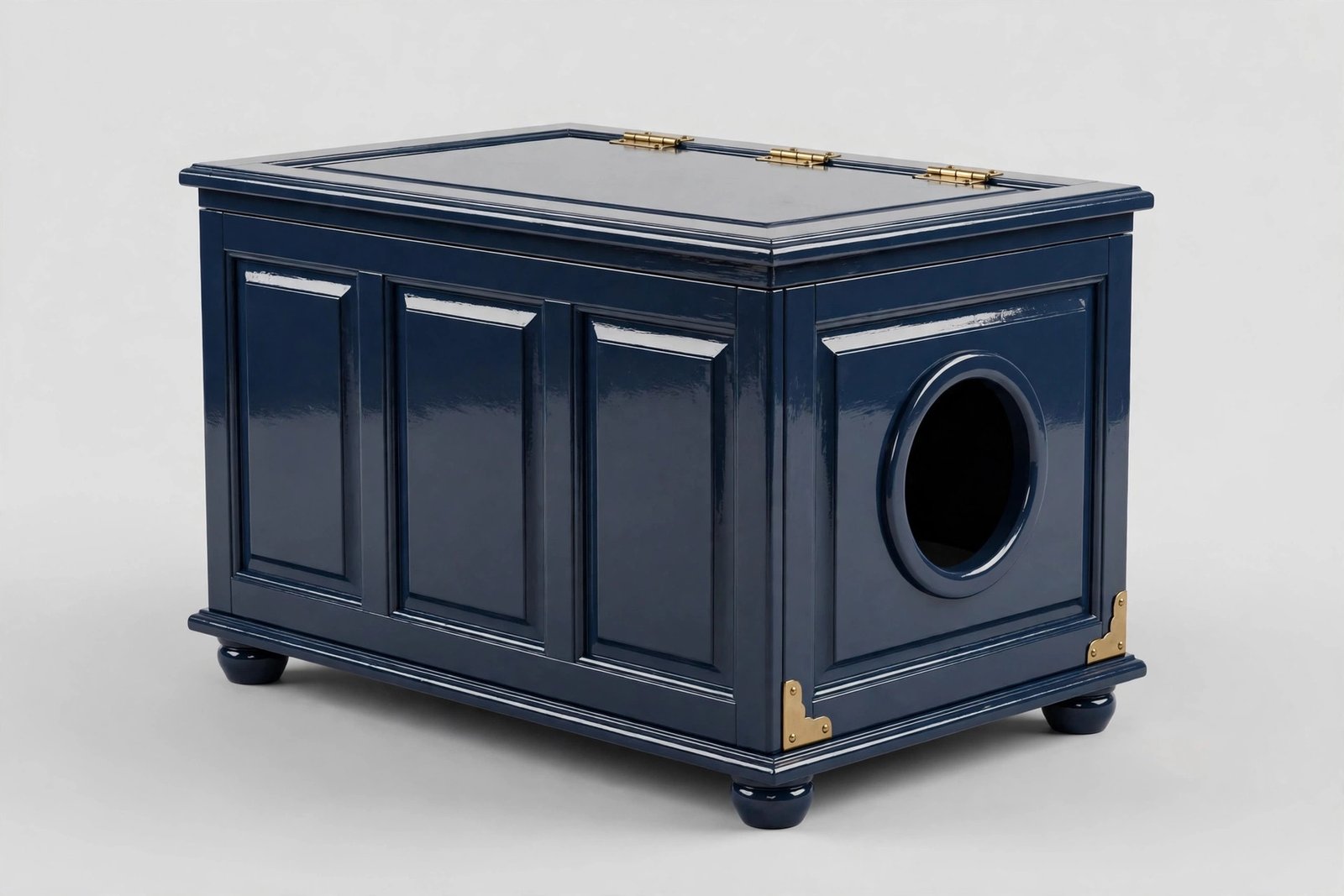
This one hides in plain sight as a wooden storage trunk — the kind of chest people park at the foot of a bed. The clever bit is the lid: it opens on an air-pressure safety hinge, so you scoop from the top standing up instead of crouching through a side door. The outer entry hole can be set on the left or the right, and a staggered interior panel sits between the entrance and the pan so kicked litter hits the panel instead of your floor.
That staggered entrance is the best litter-tracking design in this roundup, and it matters most in apartments where the box sits a few feet from where you eat or sleep. The chest is rated for cats up to 40 pounds and is sized for a standard large pan — 18.5 by 15.25 inches — with room for a scoop hook inside.
The trade-offs are weight and height. At 41.4 pounds it is the heaviest pick here, so plan its spot before the box arrives. Assembly needs a Phillips screwdriver. The 16.25-inch interior height means high-sided pans over about 10 inches tall will not fit with the panel installed. And the lid needs clearance above it to open, so it cannot slide under a low shelf.
Apartment scorecard: Footprint: 29.9″ × 24.6″ · Noise: silent — passive chest with a hinged lid · Installation: assembly with a Phillips screwdriver · Rental-friendly: yes — freestanding; the trunk look passes as storage · Cleaning: hinged lid lifts for full top-down access; scoop hook included · Best room: bedroom at the foot of the bed, or living room as a storage chest
Best combo cabinet: Petco Hidden Litter Box and Cat Condo Cabinet
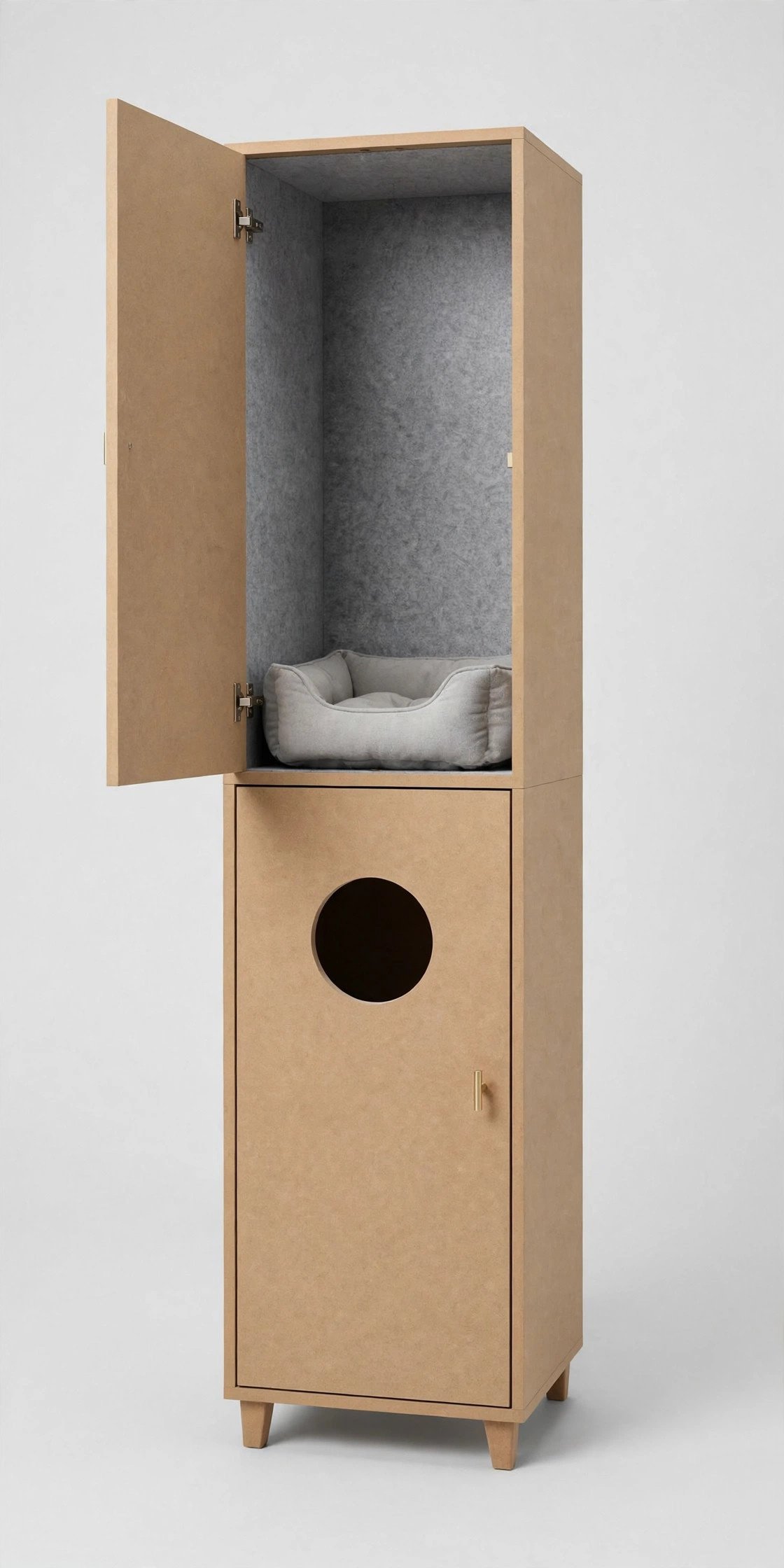
Two pieces of cat furniture, one footprint. This 37.4-inch cabinet combines a concealed litter box compartment with a cat condo hideaway — plus drawers and a hanging toy — so it replaces both the litter corner and the cat bed in a single piece of furniture. The single subtle entry point keeps the box discreet, and the top is a usable display surface. In a studio, consolidation like this is worth real money in floor space.
Now the honesty you will not get from the listing: the only review is a 3-star that does not recommend it. The veneer arrived chipped in places, the doors do not sit level, no litter pan is included despite the look, and the finish reads as a yellowish fake wood. The same reviewer, though, calls it relatively sturdy and says the shape fits a midcentury-styled apartment well. Expect flat-pack furniture, not fine cabinetry.
It is also the longest pick here at 37.4 inches — measure your wall before ordering. The listing does not publish full interior dimensions, so confirm your pan fits the compartment, and note it is spot-clean only, which is the weakest cleaning story in this roundup.
Apartment scorecard: Footprint: 37.4″ × 18.9″ · Noise: silent — passive cabinet · Installation: assembly required · Rental-friendly: yes — freestanding; consolidates two furniture pieces into one · Cleaning: spot clean only; cabinet doors for scoop access · Best room: living room wall — it doubles as a cat hangout
How we picked
We researched litter box furniture listings on Chewy, PetSmart, and Petco — the same three retailers linked above — and compared published dimensions, materials, entry designs, ratings, and owner reviews. Every pick hides a standard litter pan; we deliberately excluded enclosures sized for automatic self-cleaning boxes, which we cover in a separate guide.
We did not hands-on test these pieces. Picks are editorial, based on researched specs and review evidence. Nothing here is a paid placement, and this is not veterinary advice — it is furniture guidance for apartment living.
Buying guide
Measure your space and your pan
Furniture listings love exterior glamour shots and hide the interior numbers. Measure three things: the floor space where the piece will live, your litter pan at its widest, longest, and tallest points, and the doorway or hallway it has to travel through on delivery day. Then compare the pan against the interior dimensions, not the exterior — several picks in this roundup publish one but not the other, and we flagged those.
Ventilation is the feature nobody advertises
Almost none of these listings mention ventilation, which tells you something: most litter box furniture has none. An unvented cabinet concentrates odor, and the fix is routine, not a product feature — daily scooping matters more in a closed cabinet than it ever did with an open pan. If you are sensitive to smell, favor the pieces with vent filters or vent holes, and be realistic about the rest.
Entry ergonomics: sill height and hole size
Cats care about the doorway, not the finish. Check two numbers: the entry hole’s width and height, and how high the sill sits off the floor. A 7-inch-wide hole is fine for an average cat and tight for a 15-pounder. A sill that sits 4 inches up while your pan stands 5 inches tall — the exact situation one Zoovilla reviewer flagged — means litter gets dragged over the lip. Senior cats and kittens do best with low, wide entries.
Materials: what survives apartment life
Most litter box furniture is particleboard or MDF with a veneer. It looks good and keeps the price down, but it swells if urine soaks in and it chips if you move it often. The composite build of the ecoFLEX pick is the exception — moisture-resistant by design. If you go with MDF, use a high-sided pan or a liner, and treat the cabinet as semi-disposable over a multi-year horizon. Renters who move yearly should weight this heavily.
Cleaning access you will actually use
You will open this piece of furniture every single day. A flip-down front door or a hinged top lid beats unscrewing panels or dragging the whole cabinet away from the wall. Before buying, picture the scooping motion: can you reach the far corners of the pan without disassembling anything? If the answer is no, the furniture will quietly train you to scoop less often — and then the smell trains your guests to notice.
FAQ
How to hide a litter box in the living room?
Use furniture that belongs in a living room: a planter-style box in a corner, a side-table cabinet next to the couch, or a trunk at the foot of a chair. Turn the cat entry toward a wall or furniture so it is not the first thing a guest sees, keep the top styled like any other surface, and scoop daily — a hidden box that smells is worse than a visible one that does not.
Where to hide a litter box in a small apartment?
The best spots are dead spaces: the end of a hallway, a bedroom corner, beside the washing machine, or inside a closet with the door propped open. A bench-style piece earns its place in an entryway; a side-table cabinet disappears next to a bed. Avoid blocking the cat’s path with furniture they have to squeeze past — if it is hard to reach, some cats will simply choose your rug.
Will my cat actually use a furniture-style litter box?
Most cats adapt if you introduce the piece gradually: set it up with the doors or lid open for a few days, put the familiar used pan inside rather than a brand-new one, and keep the old box nearby until the new one is clearly accepted. Cats that reject enclosed spaces usually object to the flap or the smell, not the furniture — remove flaps during the transition and keep the interior clean.
Do hidden litter box cabinets smell worse?
They can, because an enclosed space concentrates odor the way an open pan does not. The cabinet is not the problem; the scooping schedule is. Scoop daily, change litter on schedule, and favor pieces with vent filters or airflow holes if you are sensitive to smell. A moisture-resistant build also helps, since soaked particleboard holds odor permanently.
What size litter box fits inside this furniture?
Measure your pan at its widest, longest, and tallest points and compare against the interior dimensions — not the exterior footprint. Leave room for the cat to turn around, not just for the pan to slide in. As a rule of thumb, standard pans fit most of the picks above; extra-large and high-sided pans only fit the roomier cabinets, and we noted the interior numbers for each pick where the listing publishes them.
Related reading
Best Litter Boxes for Small Apartments — start with the right pan: the box inside the furniture matters as much as the furniture itself.
The Renter’s Apartment Cat-Proofing Checklist — room-by-room fixes that keep your deposit safe while the new furniture settles in.
Last updated: October 9, 2026