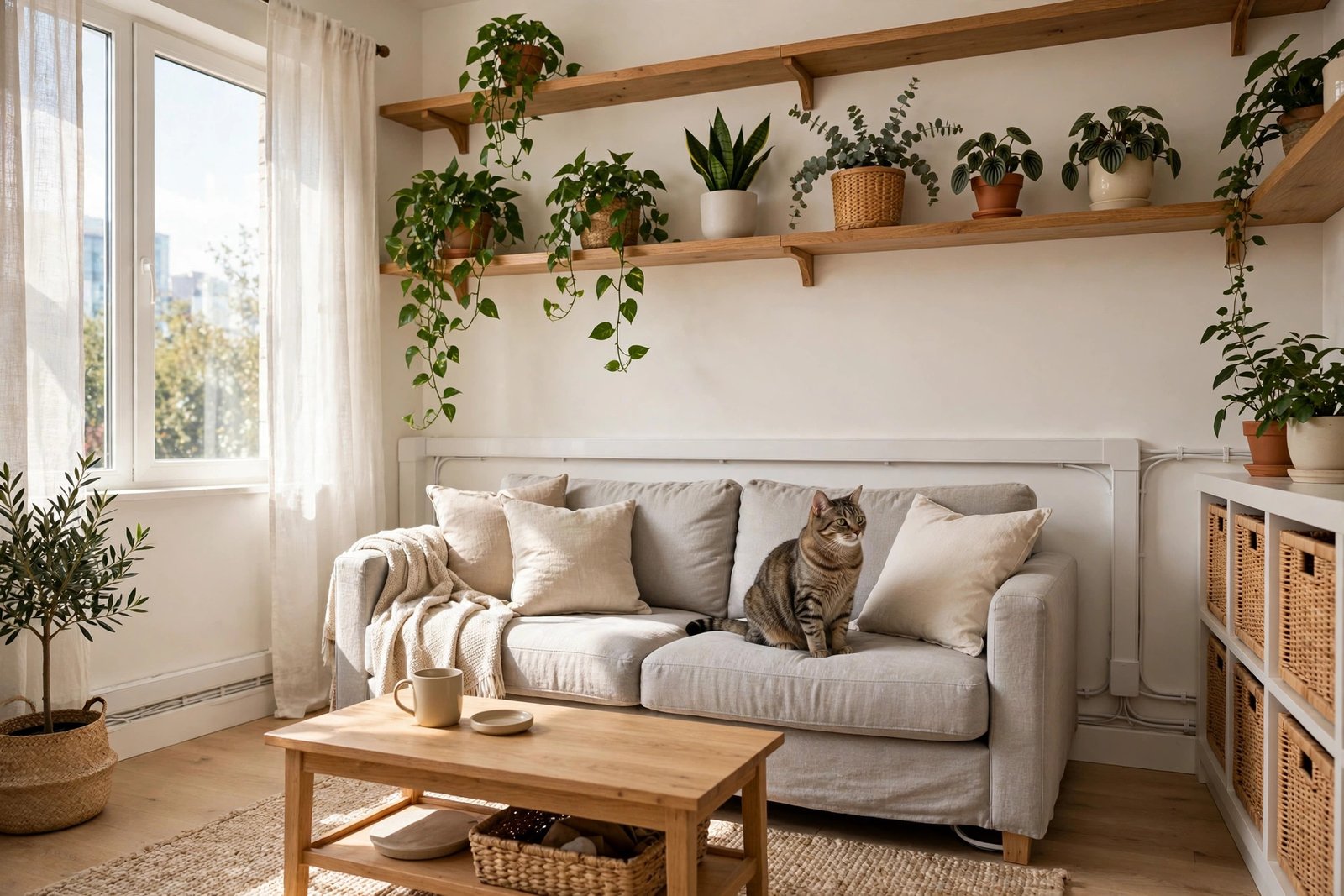
Bringing a cat into a rental is a different project than cat-proofing a house you own. You can’t drill into walls, you can’t replace the blinds, and every scratch on the landlord’s furniture comes out of your deposit. This cat proofing apartment checklist for renters is built around that reality: every fix here is removable, damage-free, and designed for rooms you don’t own.
Work room by room, check items off as you go, and finish with the 1-hour sprint at the end — the fastest path from “cat arriving tomorrow” to “ready.” No drilling, no damage, no deposit drama.
Living Room
The living room is where most cat-renter conflicts happen: the couch, the curtains, the electronics.
- Protect the couch corners. Scratching starts where the cat already stretches — usually the arm of the sofa. Place a tall, sturdy scratching surface right next to the corner the cat targets, so the approved option is closer than the furniture. Our guide to the best tall cat scratching posts explains why height and stability matter — a wobbly post won’t win against a solid couch arm.
- Secure the TV and shelving. A cat launching onto a bookshelf can topple anything unstable. Push heavy items to the back of shelves, move breakables off open shelving, and check that freestanding bookcases don’t rock. For anything tall, use removable furniture straps — no drilling needed.
- Cover exposed cords. Lamp cords, charger cables, and speaker wires are chew targets. Run them through cord covers or spiral cable wrap, and tuck power strips behind furniture. (More on cords in the dedicated section below.)
- Check the curtains. Climbing cats destroy blinds and sheer curtains fast. If your lease includes blinds, consider tension-rod curtains you can remove later, and keep cords tied up and out of reach — dangling blind cords are a strangulation hazard.
- Give the cat a sanctioned high spot. Cats climb because they need vertical territory, not because they’re defiant. A stable cat tree near a window redirects the climbing instinct away from your shelves. See our best cat trees for small apartments for options that fit rental-sized rooms.
Bedroom
The bedroom is usually the cat’s favorite room — which means it needs the most boundary-setting.
- Decide the bed rule early. Either the cat sleeps on the bed or it doesn’t — “sometimes” is the hardest rule for a cat to learn. If yes, add a washable throw over your bedding. If no, provide a warm alternative nearby (a bed on a nightstand or a perch by the window) from day one.
- Secure the closet. Cats love closets and will camp in them, shed on everything, and occasionally get shut inside. Keep closet doors closed or install a simple door draft stopper that lets the door stay cracked without swinging shut.
- Hide small objects. Hair ties, earrings, buttons, earbuds — anything small enough to bat under the dresser is a choking or ingestion risk. Do a floor-level scan: lie down at cat height and look around. You’ll be surprised what you find.
- Check under the bed. Box springs with torn fabric liners become cat hammocks, and the space under the bed collects dust, lost medication, and forgotten objects. Either block access with under-bed storage bins or make it a safe hide with a washable blanket.
Kitchen
The kitchen has the most genuine dangers: heat, sharp objects, and toxic foods.
- Stove safety. Cats jump onto stoves. If you have gas burners, use knob covers (child-safety ones work) and never leave the stove unattended while cooling — a still-hot burner looks like a warm perch. For electric coil stoves, burner covers double as cat deterrents.
- Lock away cleaning supplies. Move anything toxic — bleach, dish pods, drain cleaner — into a latched cabinet. Simple adhesive child-safety latches work on rental cabinets and peel off cleanly.
- Secure the trash. A lidded trash can is non-negotiable. Cats learn to knock over open bins in a day, and kitchen trash contains bones, wrappers, and food scraps that are dangerous if eaten.
- Know the toxic foods. Onions, garlic, grapes, raisins, chocolate, xylitol (in some peanut butters and sugar-free products), and raw dough are the big ones. Don’t leave food unattended on counters — the cat will get to it before you do.
- Check the dishwasher and appliances. Cats climb into open dishwashers, dryers, and ovens. Make it a habit: check before you close, every time. This one sounds paranoid until the first time you find a cat where a cat shouldn’t be.
Bathroom
Small room, real hazards — and often the room where the litter box lives.
- Lock the toilet lid habit. Kittens can fall in and struggle to climb out; some cats also learn to drink from the bowl, which means chemical cleaners become a problem. Keep the lid closed — or the bathroom door shut.
- Store medications and toiletries up high. Anything in a low cabinet or on the counter edge is fair game. Move medications to a high shelf or a latched cabinet.
- If the litter box lives here, protect the ventilation. The bathroom exhaust fan is your best odor ally — run it on a timer if yours doesn’t have one built in. Keep cleaning chemicals far from the box area. For more on litter setup, our best litter boxes for small apartments covers odor-friendly picks sized for tight bathrooms.
- Secure the shower. Wet tubs are slippery, and some cats drink soapy residue. Keep the shower door or curtain closed, and rinse the tub if you use strong cleaners.
Balcony and Windows
This section matters more than most renters expect. Falls from balconies and windows are one of the most common serious cat injuries in apartments — “high-rise syndrome” is a real veterinary term.
- Never leave windows open without screens. A cat lunging at a bird doesn’t understand the fifth floor. Check that every screen is secure and intact — push on them. Old rental screens pop out easily; reinforce loose ones with removable screen locks.
- Treat the balcony as a no-go zone unless it’s enclosed. An open balcony railing is not safe for a cat, full stop. If you want the cat to enjoy the balcony, enclose it with removable cat-proof netting secured with zip ties or tension poles — fully removable at move-out, no drilling required.
- Check for gaps. Balcony railings, AC unit gaps, and the space between the balcony door and frame are all squeeze-through risks. A cat can fit through any gap wider than its head. Walk the perimeter and close what you find with mesh or foam gap filler.
Cords, Plants, and Small Objects
These three hazards show up in every room, so they get their own sweep.
- Cords: Bundle and cover every accessible cord — behind the TV, beside the bed, under the desk. Cord covers and spiral wrap are cheap, removable, and prevent both chewing (electrical burns are a real emergency) and the 3 a.m. lamp crash.
- Plants: This is the big one renters underestimate. Lilies are the headline danger — every part of a true lily is potentially fatal to cats, including the pollen — but pothos, philodendron, dieffenbachia, sago palm, and aloe are also toxic. Identify every plant you own; move toxic ones to a room the cat can’t enter or rehome them. When in doubt, look the plant up on the ASPCA’s toxic plant list before the cat arrives.
- Small objects: Rubber bands, hair ties, string, ribbon, dental floss, and small toys are ingestion risks — linear objects like string can cause serious intestinal damage. Store them in closed drawers, not open bowls. Do the floor-level scan in every room.
Renter-Friendly Fixes (No Drilling, No Damage)
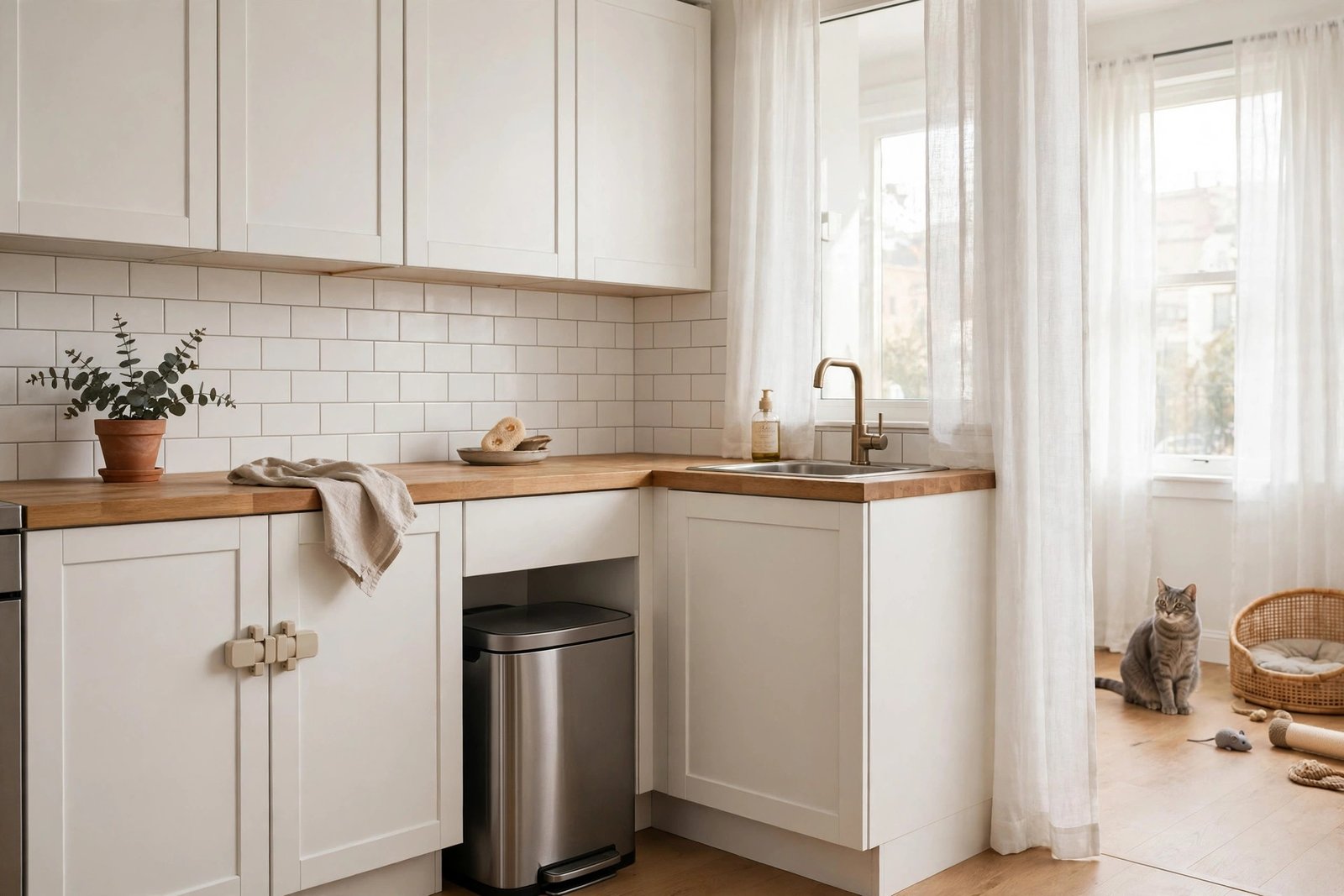
Every solution in this checklist uses one of these damage-free methods:
- Removable adhesive strips and hooks — for lightweight items, cord clips, and small shelves. Check the weight rating; cheap strips fail on anything heavy.
- Tension rods and tension poles — for curtains, balcony netting, and room dividers. They grip by pressure alone.
- Furniture straps with adhesive pads — keep bookcases and TVs from tipping without screws.
- Child-safety latches (adhesive) — for cabinets with cleaning supplies or medications. They peel off at move-out.
- Door draft stoppers and door wedges — manage which rooms the cat can enter without changing the doors.
- Washable furniture covers and throws — protect the landlord’s couch and your bedding without altering anything.
The principle: if you can’t return the apartment to its original condition in an afternoon, find a different fix.
The 1-Hour Cat-Proofing Sprint
Cat arriving tomorrow and no time for the full checklist? Do these ten things in one hour:
- Close toilet lids and keep bathroom doors shut or latched (5 min).
- Move all toxic plants into one closed room (10 min).
- Cover or bundle accessible cords in the living room and bedroom (10 min).
- Put child latches on the under-sink cabinet (5 min).
- Set up the litter box in its ventilated spot with litter and a mat (10 min).
- Set up food and water far from the litter box (5 min).
- Place a scratching post next to the couch corner (5 min).
- Do the floor-level small-object scan in every room (10 min).
- Check window screens — push on each one (5 min).
- Close the balcony door and keep it closed until netting is installed (1 min).
That’s an apartment that’s safe tonight. The rest of the checklist can happen over the first week.
Frequently Asked Questions
How do I cat-proof a rental without drilling any holes?
Use the damage-free toolkit: removable adhesive strips and hooks for light items, tension rods for curtains and barriers, adhesive furniture straps for tip-over prevention, and adhesive child-safety latches for cabinets. Everything in this checklist comes off cleanly at move-out.
Which houseplants are the real danger to cats?
Lilies are the most dangerous — every part, including pollen, is potentially fatal to cats. Also toxic: pothos, philodendron, dieffenbachia, sago palm, and aloe. Identify every plant before the cat arrives and move toxic ones to a closed room or rehome them. The ASPCA’s toxic plant list is the reference to check.
Can my cat go on the balcony?
Not on an open balcony — falls from height are a leading cause of serious cat injury in apartments. The safe option is enclosing the balcony with removable cat-proof netting on tension poles or zip ties, which comes down cleanly when you move. Until then, keep the balcony door closed.
Where should the litter box go in a rental?
The most ventilated spot the cat will reliably use — often the bathroom with the exhaust fan running, or near a crackable window. Avoid sealed closets and spots next to food and water. If you’re choosing between box types, our best litter boxes for small apartments covers renter-friendly picks.
Related reading
- Best Tall Cat Scratching Posts — protect the couch by giving the cat a better target.
- Best Cat Trees for Small Apartments — sanctioned vertical territory for climbers.
- Best Litter Boxes for Small Apartments — odor-friendly boxes sized for tight rental spaces.
Last updated: October 9, 2026