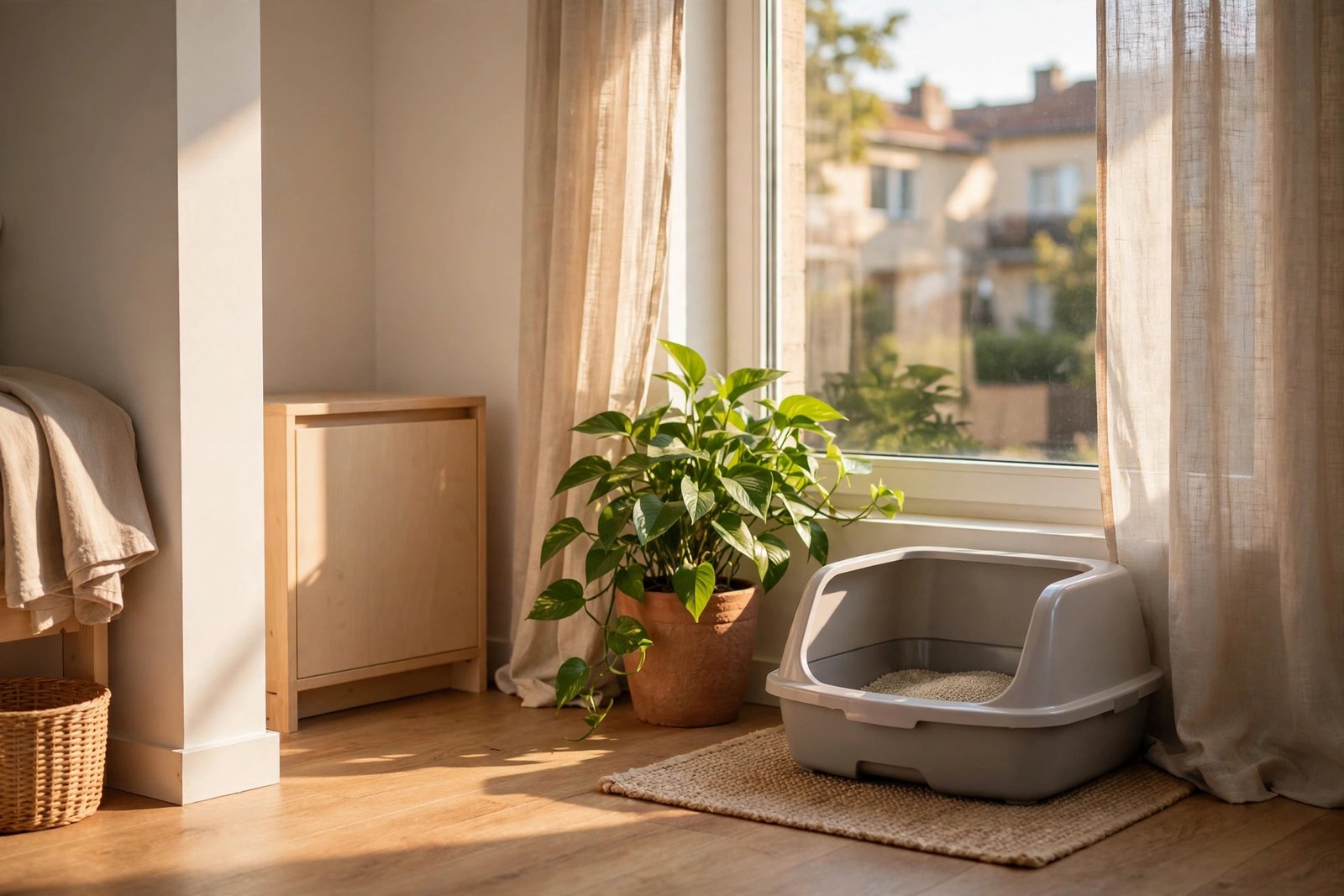
In a house, the litter box lives in the laundry room and nobody thinks about it twice. In a 500-square-foot apartment, that same box is suddenly fifteen feet from your bed, your couch, and your dinner table — and the best place to put a litter box in a small apartment becomes one of the most important decisions you make as a cat owner.
Get it right and the box practically disappears into your routine: no smell when friends come over, no litter ground into your socks, no 3 a.m. scratching concert outside your bedroom door. Get it wrong and you’ll be fighting odor, accidents, and a cat who has decided your bath mat is the better option. Here’s how to pick the right spot, room by room.
Why Placement Matters More in a Small Apartment
Cats are particular about where they do their business. They want a spot that feels safe, is easy to reach, and stays reasonably clean. In a big house you can satisfy all three by sticking the box in a spare room and forgetting about it. In a small apartment, every candidate spot comes with a tradeoff — the bathroom has the right flooring but barely fits the box, the closet is private but traps smell, the living room has space but zero discretion.
Placement also affects you more than you might expect. Odor travels fast in an open-plan studio. Litter tracks across hard floors and into places you’d rather not think about. And if the box ends up somewhere inconvenient, you’ll scoop less often — which is the single biggest cause of litter box smell, more than any product or deodorizer. The right spot is one your cat will actually use and you’ll actually maintain.
The Best Spots, Room by Room
The bathroom: usually the winner
If your bathroom has even a spare two feet of floor, this is the easiest answer. Tile or vinyl floors handle litter scatter and the occasional miss far better than carpet or hardwood, and bathrooms already have a fan built in for ventilation. Most cats accept a bathroom box without complaint, and guests never have to see it with the door closed — just remember to leave the door ajar or cracked at all times. A cat who gets locked out of the bathroom will find somewhere else to go, and it won’t be convenient.
The honest drawback: small apartment bathrooms are often genuinely tiny, and wedging a box between the toilet and the tub can make the room feel cramped. If that’s your situation, a compact, low-sided box works better than a big covered one — our roundup of the best litter boxes for small apartments focuses on boxes with small footprints for exactly this reason. Also keep the box away from the shower’s splash zone; damp litter clumps into concrete and smells worse.
A laundry corner
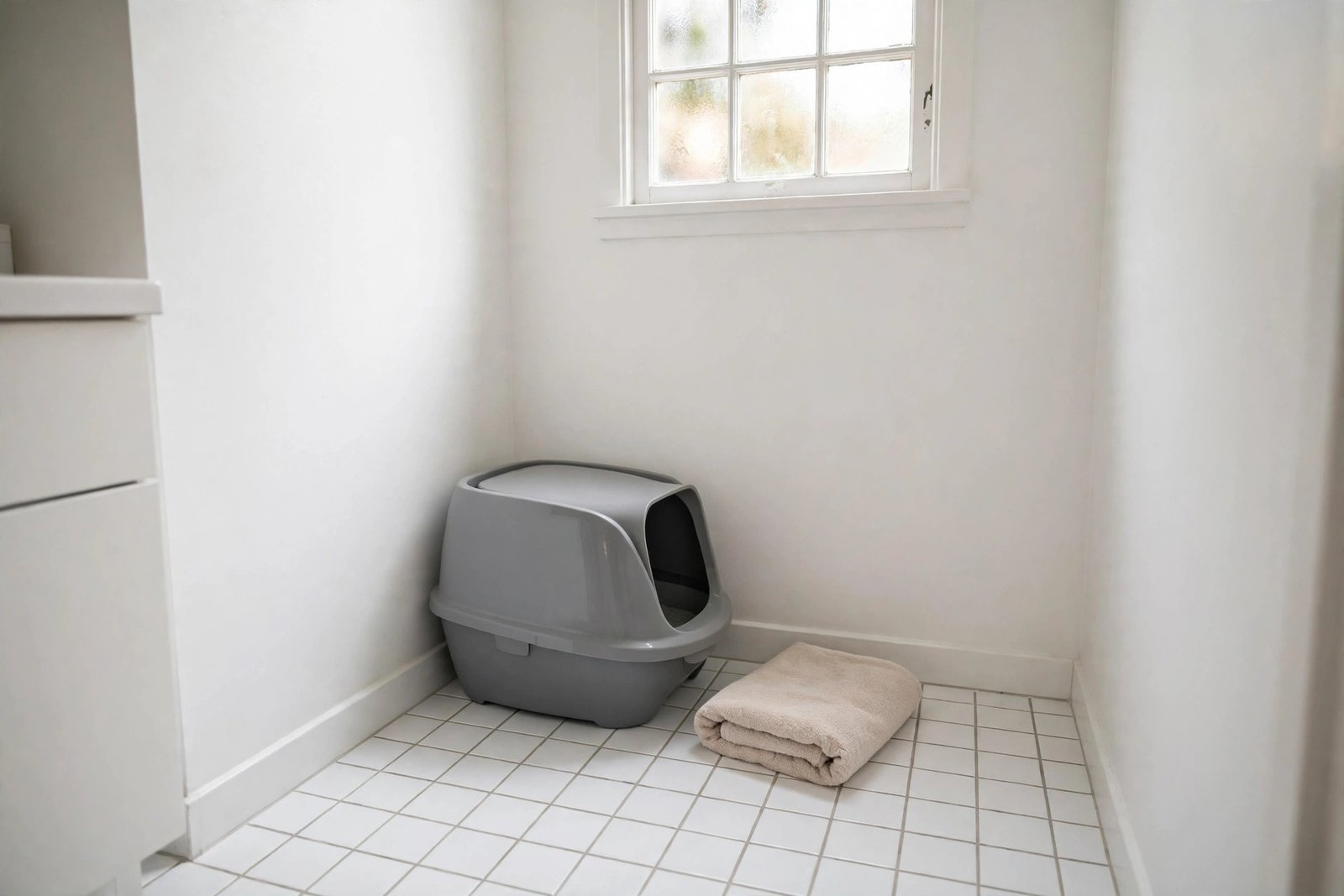
A stackable washer-dryer closet or a laundry nook is a classic litter box spot: out of sight, easy-clean floors, and already a “utility” zone of the apartment. It works well as long as your machines aren’t running constantly. The catch is noise and vibration — a dryer kicking into a spin cycle right next to the box can genuinely startle a nervous cat, and some cats will start avoiding a box they associate with sudden loud noises. If your cat is skittish, this spot is a gamble.
Practical tip: keep the box on the opposite side of the nook from the machines if you can, and never store detergent or dryer sheets right above the box. Strong fragrances near the litter area put some cats off, and a cat who dislikes the smell of the spot may hold it or go elsewhere.
A closet nook
An entryway or hallway closet with the door propped open (or removed entirely, if your lease allows) can be an excellent litter station: private, out of the main living area, and easy to screen off with a curtain. The renter warning matters here, though — cutting a cat door into a closet door is a classic deposit-killer. Don’t do it in a rental unless you have written permission. A simple doorstop or a curtain rod with a fabric panel gives your cat access without modifying anything.
Ventilation is the real issue with closets. An enclosed, unventilated closet concentrates odor fast, and a box in a dark, stuffy closet can feel like a trap to a cat. If you go this route, keep the door wide open or use a louvered/screen setup, and plan on scooping daily — there’s no airflow to forgive a skipped day.
The living room, hidden in plain sight
Sometimes there’s genuinely nowhere else, and that’s fine — plenty of apartment cats have their box in the living room. The trick is making it look intentional rather than apologetic. A litter box enclosure cabinet that doubles as a side table or console works well, but be honest about the tradeoffs: enclosed furniture traps odor inside (bad for you when you open it, bad for the cat who has to breathe it), and cleaning a box inside a cabinet is more annoying than cleaning one in the open, which means you’ll do it less.
If you use an enclosure, pick one with real ventilation — slatted sides or a vent gap, not a sealed box with a tiny cat hole. Place it against a wall away from the main walkway and away from where you eat. And skip the “hidden in a potted plant” style setups you see on social media; they’re hard to clean and most cats hate them.
The bedroom: last resort
Nobody dreams of sleeping ten feet from a litter box, but in a studio it may be unavoidable. If the bedroom is your only option, put the box as far from the bed as the room allows — ideally in a corner near a window or vent — and commit to a covered box or a self-cleaning model to keep odor and noise down overnight. A good litter mat is non-negotiable here; you do not want litter in your sheets.
The bigger issue is sleep disruption. Cats are most active at dawn and dusk, which means scratching and digging sounds right when you’re trying to sleep. Light sleepers should think twice and exhaust every other option first. If you must do it, an automatic litter box in a ventilated enclosure is the most bedroom-tolerable setup, since it handles waste before odor builds up.
Spots to Avoid
Some locations cause problems no matter how convenient they look:
- Next to food and water. Cats are hardwired to keep their eating area separate from their toilet area. A box next to the food bowl can put a cat off both the box and the food. Keep them in different zones, ideally different rooms.
- The kitchen. Same reason, plus hygiene — litter dust and food prep don’t mix, and most leases’ pest clauses won’t love it either.
- Right beside the front door. It’s the highest-traffic spot in the apartment, every entry startles the cat, and it’s the first thing guests smell.
- On carpet, if you can avoid it. Carpet absorbs odor and is miserable to clean after a miss. If carpet is your only option, a large waterproof mat under and around the box is essential.
- Balconies and drafty window ledges. Temperature swings, rain, and strong drafts make cats avoid the box, and an open balcony is an escape risk. A spot near a window for airflow is great; a spot on the balcony is not.
- Anywhere the cat can get locked out of. A box behind a door that sometimes closes is worse than no box at all — it teaches the cat that the box is unreliable.
Odor and Tracking Tips for Each Spot
Placement solves half the problem; routine solves the other half. Wherever the box ends up, these habits matter more than any gadget:
- Scoop daily. In a small apartment there is no “out of sight, out of mind” — waste odor builds up in hours, not days. A two-minute daily scoop does more than any deodorizer.
- Match the mat to the spot. Hard floors (bathroom, laundry) need a textured mat that actually traps granules; carpeted areas need a waterproof layer under the mat. Shake the mat out over the trash, not back onto the floor.
- Ventilate, don’t perfume. A cracked window or a running bath fan near the box beats scented litter and plug-in air fresheners, which many cats dislike. If you use a deodorizer, keep it unscented and away from the box itself.
- Top-entry or high-sided boxes cut tracking. In a small space, litter on the floor ends up everywhere fast. A box with higher walls keeps more litter inside — just make sure kittens and senior cats can still climb in comfortably.
- Wash the box itself monthly. Plastic absorbs odor over time. A monthly scrub with unscented soap and a full litter change resets it. If the box still smells after washing, the plastic is saturated and it’s time to replace it.
The Multi-Cat Rule for Small Apartments
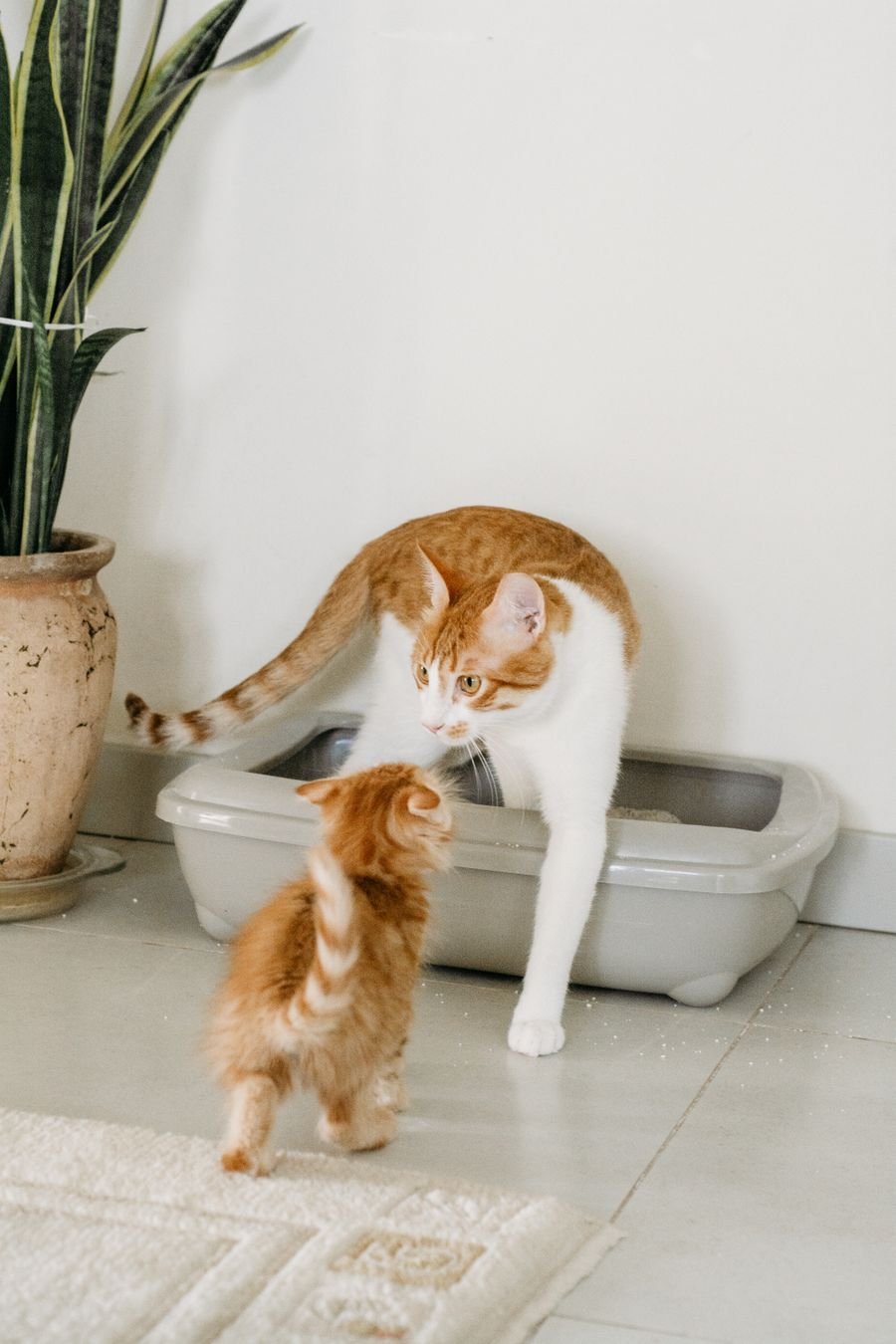
The standard guidance is one box per cat, plus one extra. In a small apartment, three boxes for two cats can feel impossible — but the reason behind the rule still applies: cats can guard resources, and a cat who gets ambushed at the only box will stop using it. If you genuinely can’t fit the full count, the compromise that works is two boxes in separate zones — bathroom and living room, for example — rather than two boxes side by side. Separated boxes can’t be guarded at once, and they give each cat an escape route.
What doesn’t work: one box for two cats in a studio with no backup plan. That’s the most common setup behind “my cat pees outside the box” complaints in small apartments. If space is truly maxed out, a self-cleaning box counts as more than one regular box in practice, since it’s always clean — which is part of why they’re popular in studios despite the footprint.
Gear That Helps (Without Taking Over Your Apartment)
You don’t need much beyond the box itself, but a few things genuinely earn their floor space in a small apartment. A well-chosen box with a small footprint makes bathroom and closet placements feasible — see our researched picks in best litter boxes for small apartments. If scooping daily sounds unrealistic with your schedule, a self-cleaning model changes the odor equation entirely; our guide to automatic litter box enclosures covers which ones fit small spaces and which are too bulky to bother with. Beyond that, a good mat and a lidded trash can with a liner near the box are the only accessories worth buying.
Frequently Asked Questions
Can I put the litter box in my bedroom?
You can, but treat it as a last resort. Keep it as far from the bed as possible, near a window or vent, use a covered or self-cleaning box, and put a large litter mat underneath. Light sleepers should know that dawn digging sessions are loud — exhaust the bathroom, closet, and living room options first.
Can I put a litter box in the kitchen?
It’s not recommended. Cats dislike toileting near where they eat, litter dust doesn’t belong near food prep, and the smell will greet you every time you cook. If the kitchen is truly your only option, place the box as far from food storage and prep surfaces as possible and scoop religiously — but a bathroom or closet corner is almost always better.
Is it okay to put the litter box in a closet?
Yes, with two conditions: the cat must always be able to get in (door propped open, door removed, or a curtain instead of a door — don’t cut a cat hole in a rental door without written permission, or you’ll lose part of your deposit), and the closet needs airflow. A sealed, unventilated closet concentrates odor and can make cats avoid the box.
How do I keep my small apartment from smelling like a litter box?
Scoop daily — that’s 80% of it. Then: ventilate (bath fan or cracked window near the box beats any scented product), use unscented clumping litter, wash the box monthly, and replace the box itself when the plastic starts holding odor permanently. Placement near airflow matters more than any deodorizer.
How many litter boxes do I need in a small apartment?
The rule is one per cat plus one extra, but in a small space the practical minimum is two boxes in separate zones for two cats — separated so one cat can’t guard both. One box for multiple cats in a studio is the most common cause of out-of-box accidents in apartments.
Should the litter box go near a window?
Near a window is great for airflow and odor control, as long as the box itself isn’t in a direct draft, getting rained on, or sitting on a balcony. A window-adjacent indoor corner gives you ventilation without the temperature swings and escape risk of an actual outdoor spot.
Related reading
- Best Litter Boxes for Small Apartments — our researched picks for boxes with genuinely small footprints, including low-sided and top-entry options that fit bathroom and closet placements.
- Best Automatic Litter Box Enclosures — self-cleaning boxes and ventilated cabinets for apartments where daily scooping isn’t realistic or the box has to live in the bedroom.
- How to Hide a Litter Box in a Small Apartment — once you pick the spot, here is how to make the box disappear into the room.
Last updated: October 2, 2026
Pingback: Best Litter Box for Small Apartment: 8 Odor-Smart Picks 2027
Pingback: How to Choose Litter Box Small Apartment 2027: 7 Rules