
Finding the best automatic litter box for multiple cats is mostly an exercise in dividing by the number of cats you own. Every maker quotes its hands-free interval for one cat — two weeks here, thirty days there — and every one of those numbers shrinks the moment a second and third cat join the rotation. What actually decides whether an automatic box works in a multi-cat apartment is less glamorous: how much waste the drawer really holds, how often the machine cycles at 2 a.m., whether its sensors still work on your flooring, and what the refills cost you per cat, per month.
So that is how we scored this list. Every pick below is plug-in and freestanding — nothing here needs a water line, a drain, or a landlord’s permission — and every capacity figure is either a verified drawer size from the retailer listing or an interval reported by a multi-cat owner on that listing. Where a maker does not state a figure on the listing, we leave it out rather than borrowing a number from a review site. If your real constraint is floor space rather than cat count, our best litter boxes for small apartments roundup is the broader guide; this one assumes the cats are many and the square footage is not.
Quick picks
| Award | Product | Why it stands out | Check Price |
|---|---|---|---|
| Best overall | Whisker Litter-Robot 4 | The only pick whose maker rates it for up to four cats on the listing; sealed drawer, per-cat app tracking; 4.4★/954 | Check Price on Chewy |
| Best large-capacity | Neakasa M1 Plus Open Top Self-Cleaning Cat Litter Box | Largest verified waste bin here at 11.23 L; open top suits big cats, 2.2-33 lb per cat; 4.3★/197 | Check Price on Chewy |
| Best for bedrooms | Casa Leo Leo’s Loo Too (Covered) | The only verified footprint in the set (24 x 22 in) and the quietest claim — 30 dB, per the maker; 4.7★/349 | Check Price on Petco |
| Best litter flexibility | PETKIT PuraMax 2 Self Cleaning Cat Litter Box | Sealed cylinder with triple deodorization, and it sifts tofu litter as well as clay; 4.1★/41 | Check Price on Chewy |
| Best for tight spaces | PetSafe ScoopFree SmartSpin | Compact globe with a do-not-disturb mode for nights; honest math: a 6 L drawer; 3.8★/276 | Check Price on Chewy |
| Best budget | Els Pet Orbitie | Globe automation at the value end, with an app sleep mode that stops night cycles; 4.3★/58 | Check Price on Chewy |
| Best no-app option | PetSafe ScoopFree Crystal Pro Front-Entry | No app, no drum — a rake and disposable crystal trays; multi-cat tray costs add up fast; 3.7★/55 | Check Price on Chewy |
Best overall: Whisker Litter-Robot 4
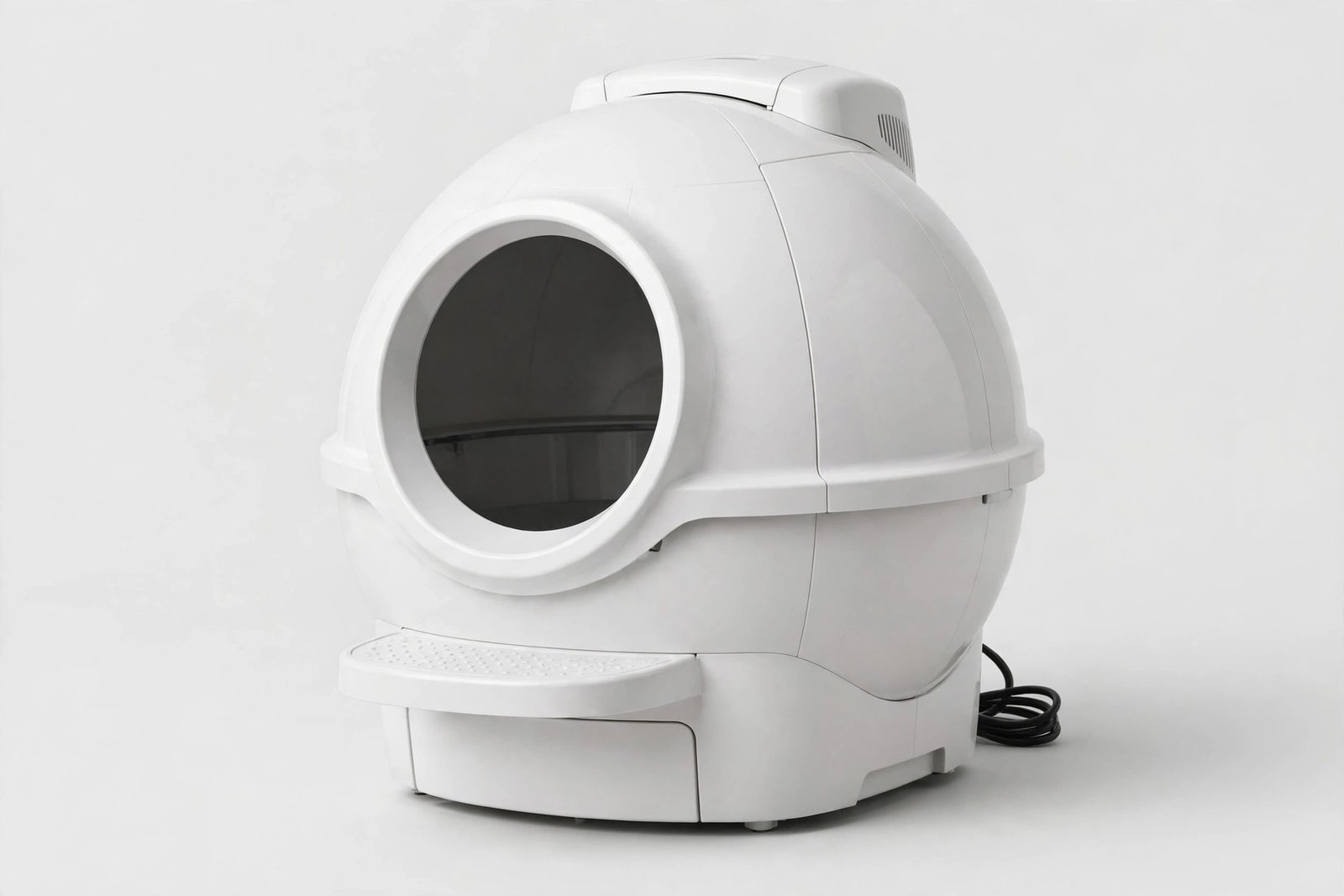
The Litter-Robot 4 is the only box in this roundup whose maker states a cat count on the retailer listing: up to four cats, per the Chewy listing’s About section and Q&A. That single sentence does a lot of work for a multi-cat household, because every other maker here either gives a weight ceiling or says nothing at all. The mechanism is a rotating globe (Whisker calls it QuietSift) that sifts after each cat exits and drops clumps into a tightly sealed waste drawer, and the Whisker app tracks each cat’s usage and weight individually, plus litter and drawer levels — genuinely useful when one cat’s habits change and you need to know which one. It is rated 4.4★ across 954 ratings on Chewy, the deepest review base in this set, and Chewy’s own feature ratings on the listing put its noise level at 81% positive. It runs on almost any clumping litter — no proprietary litter — and reviewers on the listing report that standard 13-gallon trash bags fit the drawer, with optional OdorTrap packs if you want them.
The honest drawbacks are in the listing’s own reviews. Recurring complaints include Wi-Fi disconnects and “offline” app errors, cycles that stop halfway and need a manual restart, and — in several 1-star reviews — urine leaking through a gap in the globe and pooling in the base, causing exactly the persistent smell an apartment cannot hide. Size is the other caveat: Chewy’s listing does not state the dimensions, so we will not print them, but reviewers repeatedly call the unit big, and this is also the premium-priced design in the roundup. Buy it for the four-cat rating and the tracking, with your eyes open about the app threads.
Apartment scorecard: Noise — no decibel figure published; slow rotating-globe sift, with an 81% positive noise rating from Chewy reviewers. Installation — plug-in (15 V DC adapter); the app and Wi-Fi are optional for core function; no plumbing. Rental-friendly — yes; freestanding, nothing fixed — floor space is the only apartment caveat. Cleaning — swap the drawer bag as it fills; wipe the globe interior every 1-3 months (per the listing Q&A). Best room — laundry room or bathroom, wherever you have the most floor to spare.
Best large-capacity: Neakasa M1 Plus Open Top Self-Cleaning Cat Litter Box
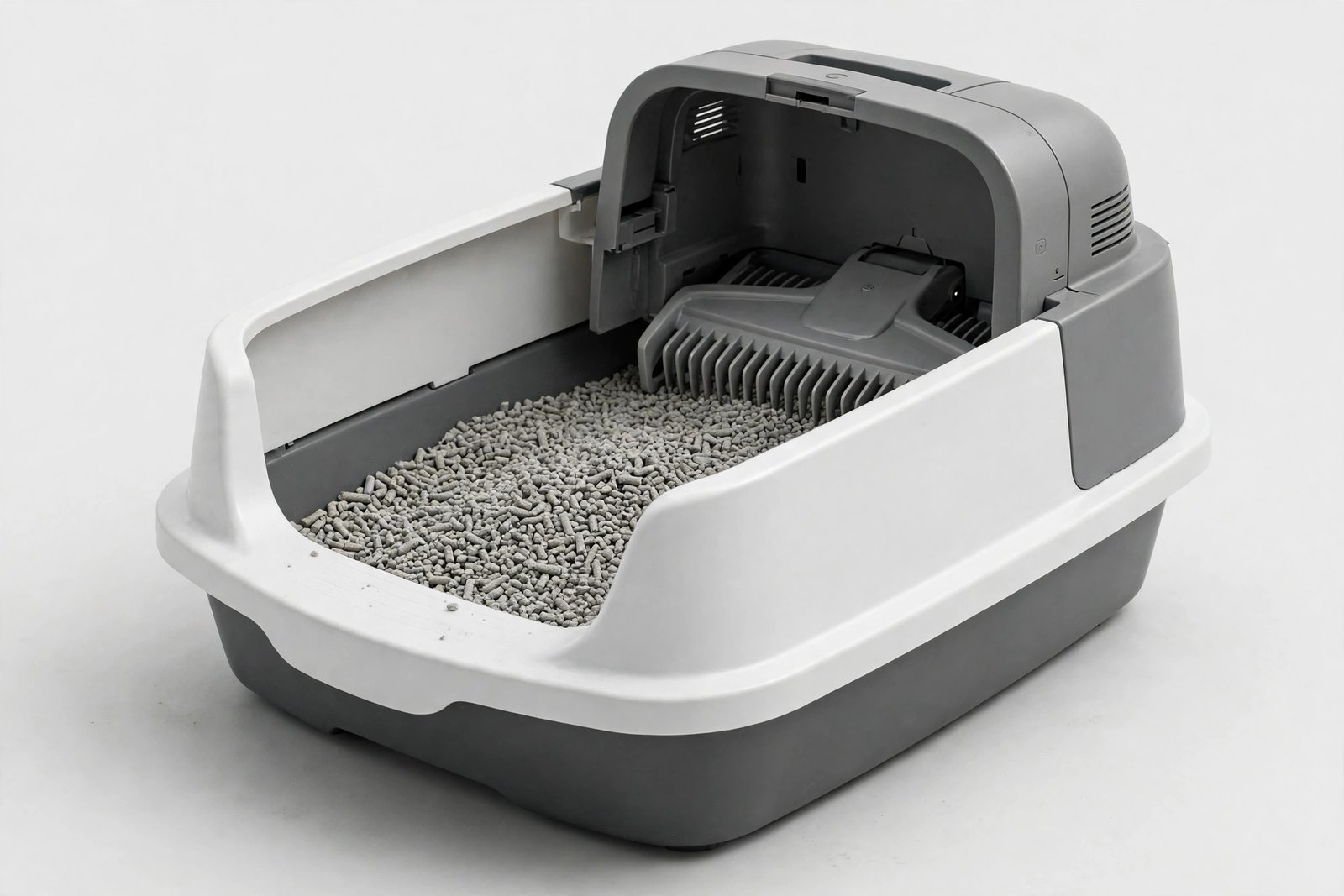
The M1 Plus is the open-top answer for cats that refuse enclosed globes, and it carries the largest waste capacity we could verify on a retailer listing in this set: an 11.23 L waste compartment, per the Chewy listing’s FAQ. Waste is pull-and-wrap sealed — contactless disposal in about three seconds — and the verified cat range is the widest here, 2.2 to 33 lb per cat, with the listing’s FAQ specifically calling out large breeds like Maine Coons and Ragdolls; the open top itself measures 17 in across per the Petco listing. It works with any bag that fits the waste drawer (two rolls and a litter mat are included), runs on ordinary clumping litter, and works without Wi-Fi if you skip the app. It is rated 4.3★ across 197 ratings on Chewy — though Petco’s listing for the same unit shows 3.4/5 from only 7 reviews, a small-sample spread worth knowing about.
Now the honest multi-cat math, because the maker’s framing is one-cat framing: the listing FAQ suggests emptying roughly every 1-2 weeks, about 14 days for one cat. Owners reviewing the unit on Petco tell the real story — three cats fill it in about 6 days, and one two-cat household empties twice a week. Plan on that rhythm. The drawbacks are physical: the entry is high and raised, and reviewers report senior cats unable to climb in even with a step, so this is not a kitten or arthritic-cat box. The open sides let standing or spraying cats overshoot the walls, litter scatters around the raised base, and the grate can trap waste and resist deep-cleaning. Add reported waste-door motor failures, false “bin full” alerts, and an app that only works on 2.4 GHz Wi-Fi, and you have a big, capable, slightly demanding machine.
Apartment scorecard: Noise — no decibel figure published; reviewer opinion is split — some call it quieter than rivals, one calls it slightly louder. Installation — snap-in legs and plug-in; runs without Wi-Fi; no plumbing. Rental-friendly — yes; freestanding, nothing attached. Cleaning — pull-and-wrap bag swap; the grate is the deep-clean pain point. Best room — laundry room or bathroom, not next to a bed, with scatter-mat space around it.
Best for bedrooms: Casa Leo Leo’s Loo Too (Covered)
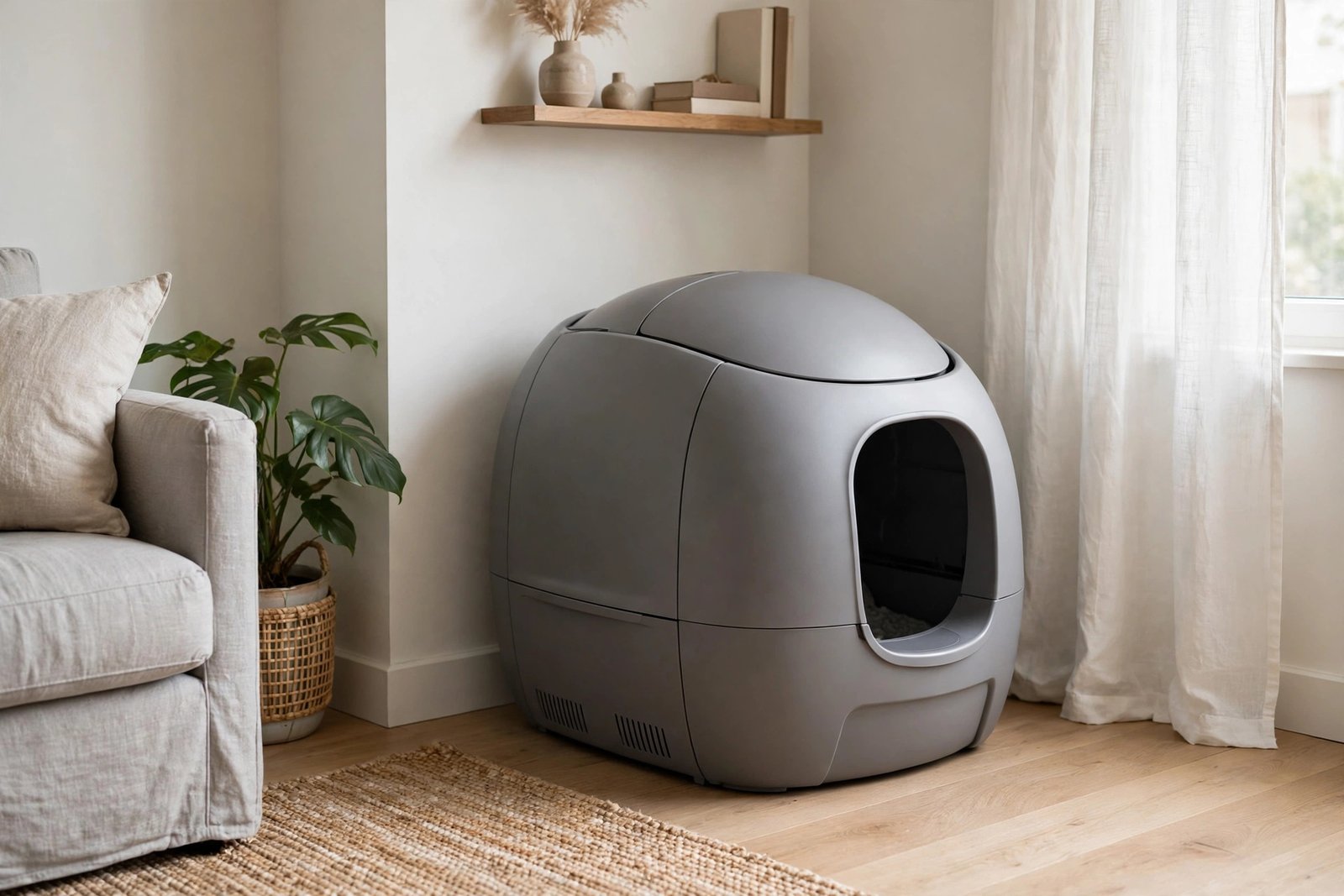
Leo’s Loo Too is the one pick in this roundup whose numbers we can print without an asterisk: the Petco listing’s own specifications table gives dimensions of 24 in long x 22 in wide x 27.6 in tall and a weight of 27.5 lb — the only fully verified footprint here — and the listing carries the only decibel figure in the set, a manufacturer claim of 30 dB, which makes it the quietest claim on paper and the natural bedroom candidate. The design is a covered, furniture-like drum: waste drops into a fully contained drawer with a lid, bamboo filters, and a sanitizing UV light, and the app reports visits, waste levels, and each cat’s weight and activity, with Alexa and Google voice control on top. It is rated 4.7★ across 349 reviews at Petco (read our note in How we picked about where many of those reviews come from). Auto features work for cats of 2 lb and up, on clumping clay litter only.
There is no maker-stated cat maximum on the listing, so the multi-cat evidence comes from Petco’s own review summary: owners with several cats confirm it handles high usage, most empty the drawer once or twice a week, and a few warn the drawer fills quickly with multiple cats — the standard divide-by-cats story. The drawbacks are the long-term kind. One reviewer came home from a trip to a filthy, unusable box because the unit does not restart itself after a power outage. A two-year owner reports the flexible floor deteriorating while replacement parts stay out of stock. Deep-cleaning is awkward — water cannot be poured out past the recessed front lip, and litter sticks to the rubber floor — and the drawer-full light can trigger after very little waste. It also needs a hard, flat surface: no carpet. Finally, budget for the brand’s own waste bags; a reviewer on the listing found regular trash bags fit poorly.
Apartment scorecard: Footprint — 24 x 22 in, 27.6 in tall (verified on the listing). Noise — 30 dB manufacturer claim stated on the listing — the quietest claim in this set. Installation — plug-in plus app setup; hard, flat surface required, no carpet. Rental-friendly — yes; freestanding — the hard-floor requirement is the caveat. Cleaning — drawer bag swap; deep-cleaning the drum is awkward. Best room — bedroom or living room, where the quiet claim and furniture-like looks matter most.
Best litter flexibility: PETKIT PuraMax 2 Self Cleaning Cat Litter Box
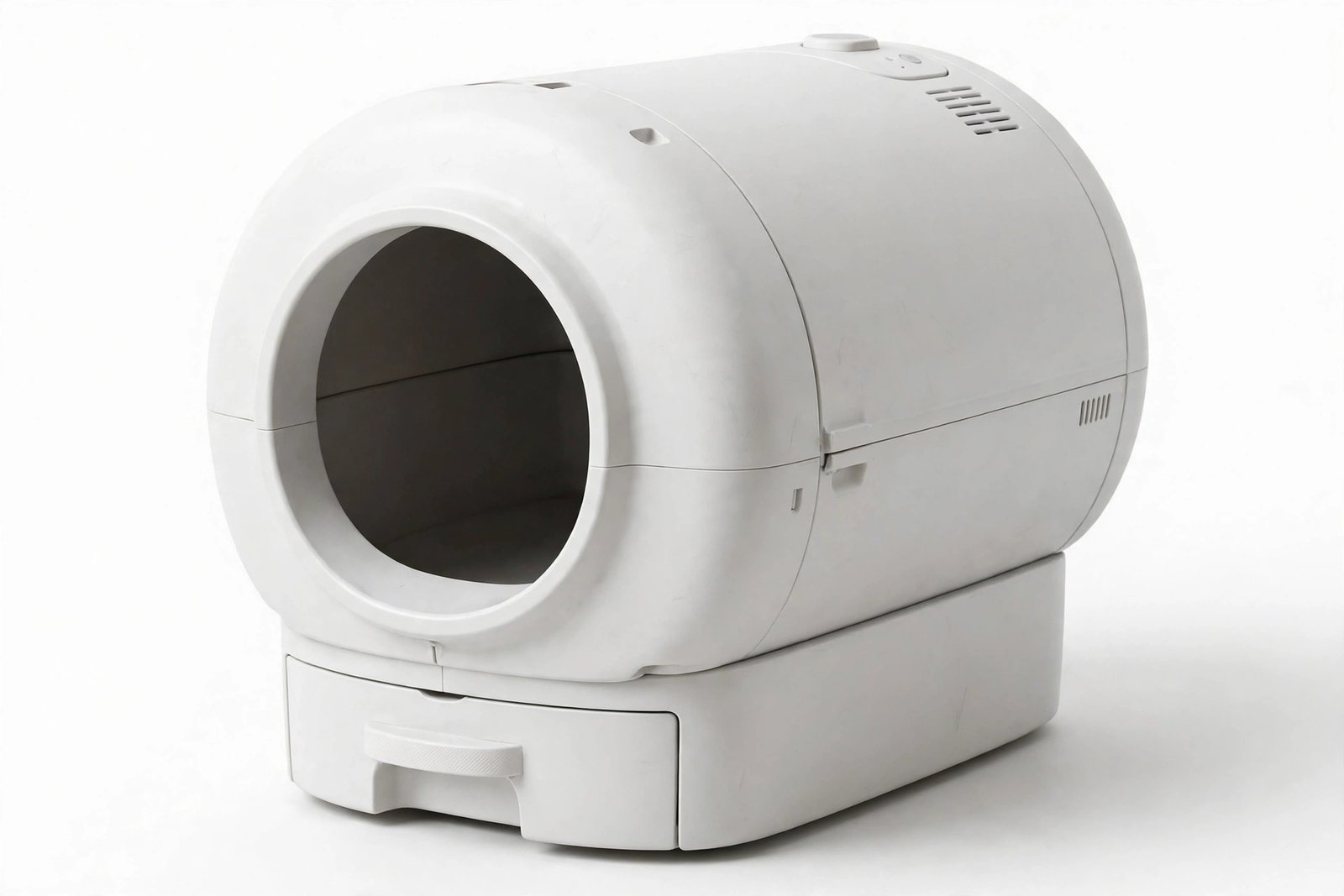
The PuraMax 2 is the pick for households whose litter choice is the constraint. PETKIT markets it on the Chewy listing explicitly as a litter box “for multi-cat households,” and the hardware backs a specific version of that claim: two sifters are included — one for larger particles like tofu and mixed litters, one for fine bentonite and clay — the widest verified litter compatibility in this roundup (just keep pieces under 12 mm, per the listing Q&A). The cylinder is sealed with what PETKIT calls triple deodorization, the entry is low, and the app registers individual cats and identifies which one used the box by weight. It is rated 4.1★ across 41 ratings on Chewy — a small review base, stated plainly — and Chewy’s feature ratings on the listing are strong where they exist: 89% positive for ease of cleaning, 86% for odor control. One honest limit up front: PETKIT states no maximum cat count on the listing, and neither do we.
The rental caveat is the headline drawback: the weight sensors will not register on carpet. A reviewer on the listing discovered this the hard way and improvised a board underneath, which tells you both the problem and the workaround — this box belongs on a hard, level floor, full stop. A detailed listing review also reports urine running through a gap under the cylinder and pooling beneath it, plus waste sticking in the chute; PETKIT’s design has reportedly changed in later models, but the review stands on the listing. Setup is described as a little complicated, and one household’s cats took two months to fully adopt it. Running costs mean PETKIT’s own trash bags (one roll included; replacements are sold separately) and deodorizer refills for the triple-deodorization system. It is also a big unit — Chewy classes it X-Large at 24 in, full dimensions are not stated on the listing, and two reviewers flag that it takes up a lot of room.
Apartment scorecard: Noise — no decibel figure published; listing reviewers describe it as quiet, one says “super quiet.” Installation — plug-in plus app setup; a hard, level floor is required for the weight sensors. Rental-friendly — conditional; freestanding and no plumbing, but the hard-floor-only rule excludes carpeted rooms. Cleaning — the sealed cylinder wipes down and the bin takes a bag swap; the chute can need manual clearing. Best room — laundry room or living room on hard flooring.
Best for tight spaces: PetSafe ScoopFree SmartSpin
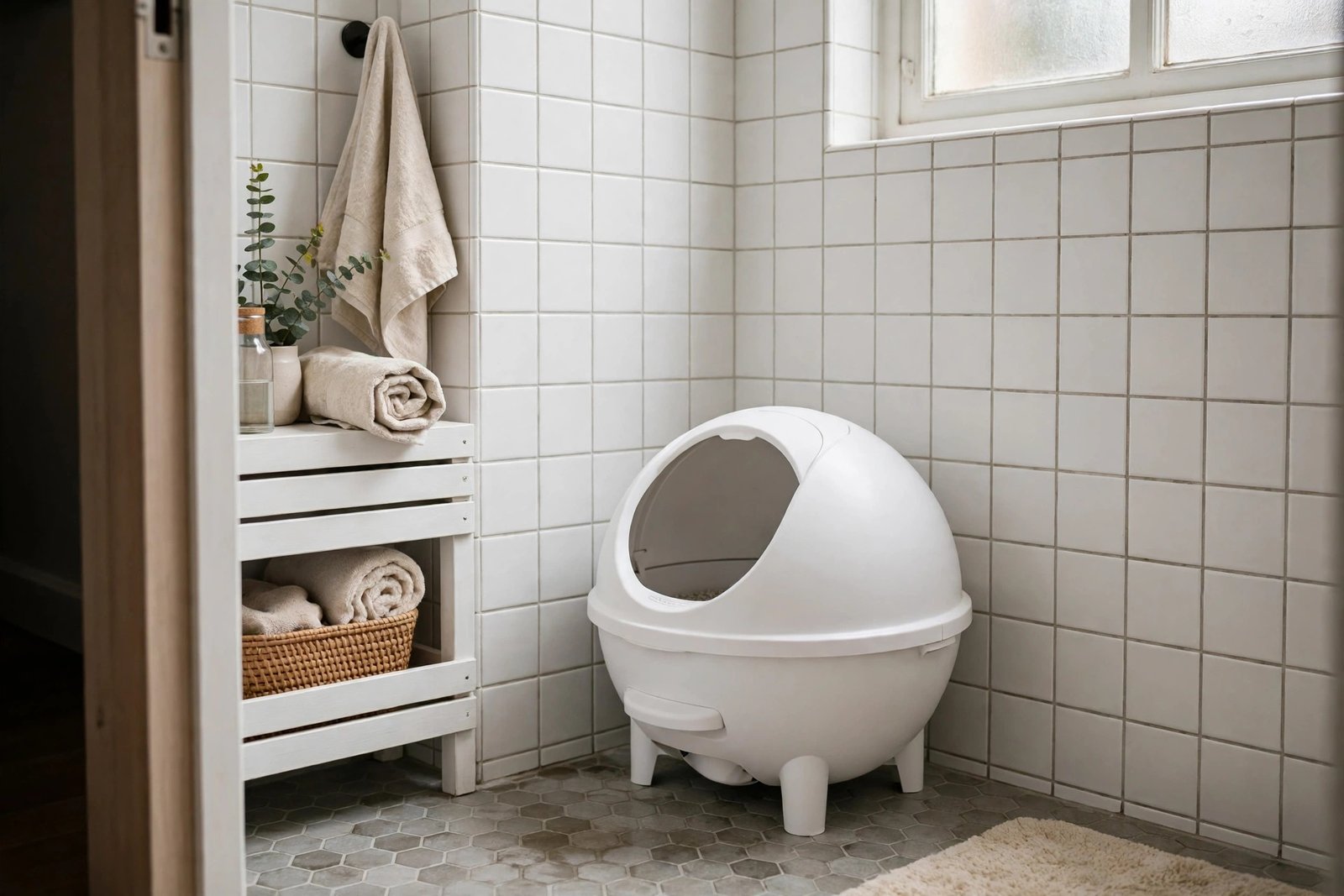
The SmartSpin is the compact globe in the set — listing reviewers describe it as smaller than rival globes, which is exactly the quality a small bathroom rewards — and it brings one feature aimed straight at studio living: a do-not-disturb mode in the app, so the box stops cycling while you sleep. On multi-cat suitability, the listing’s Q&A is specific in a different way than a cat count: it confirms the box can be used for multiple cats, with a total weight limit of up to 33 lb for the unit. The sealed waste drawer holds 6 L, the smallest verified drawer here. The app tracks usage and weight, the box itself runs without Wi-Fi (the connection only powers app features), and it takes ordinary clumping litter — no proprietary litter, though bin liners and essential-oil deodorizer packs are its consumables. It is rated 3.8★ across 276 ratings on Chewy, the lowest score in this roundup, and we are not going to dress that up.
The honest math first: PetSafe’s “up to two weeks of hands-free cleaning” is the one-cat framing, and the listing’s own FAQ adds “depending on the number of cats using it.” A reviewer running three cats empties the drawer twice a week — with a 6 L drawer, believe the reviewer. The low rating has traceable causes on the listing: sensors foul with litter and throw “infrared sensor blocked” stalls that can leave the waste drawer sitting open (an odor event in a small space), some early sensor failures — though reviewers note PetSafe replaced units quickly — and clumps sticking to a silicone mat that is hard to remove and wash. There is no litter-empty mode, so old litter gets dumped by hand, and the entry sits about 12 in off the ground with no step included: one five-cat household on the listing found only two of their five cats would use it.
Apartment scorecard: Noise — no decibel figure published; listing reviewers call the cycle “very quiet,” and do-not-disturb mode covers the night. Installation — plug-in, assembly required; the app is optional and the box runs without Wi-Fi. Rental-friendly — yes; freestanding, no plumbing. Cleaning — drawer bag swap; the silicone base mat is the difficult part to wash. Best room — small bathroom or laundry room; a bedroom is workable thanks to do-not-disturb.
Best budget: Els Pet Orbitie
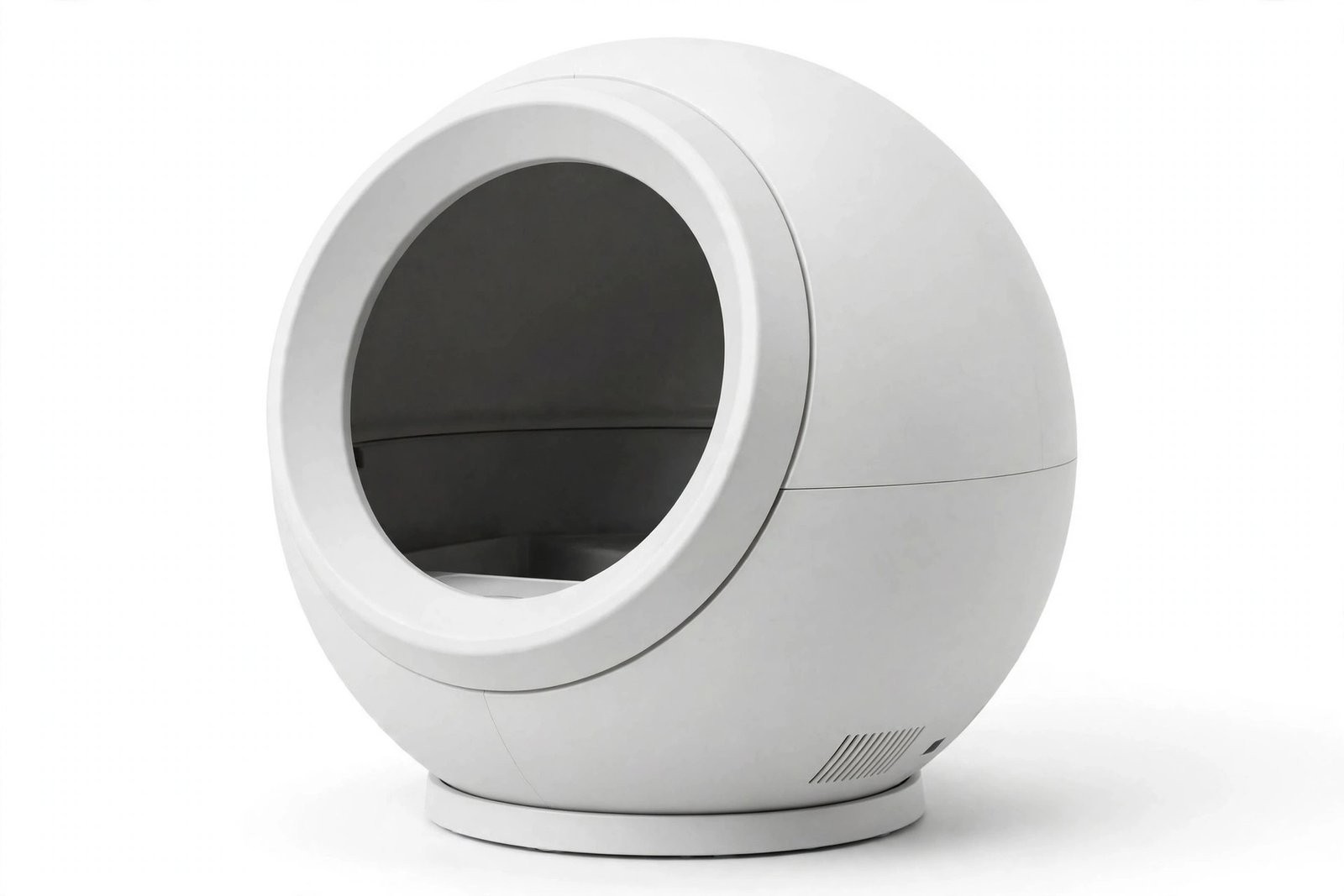
The Orbitie is globe-style automation at the value end of this roundup — listing reviewers repeatedly cite its price point approvingly — and it has the one feature a studio apartment feels every night: an app sleep mode that stops the box cycling while you sleep. It is rated 4.3★ across 58 ratings on Chewy, with Chewy’s feature ratings at 91% positive for odor control and 92% for size and capacity. Els Pet states no maximum cat count on the listing, and we will not invent one; what the listing does document is real multi-cat use — reviewers run two- and three-cat households on it, including cats of 13 lb, 20 lb and more using the wide opening. One two-cat reviewer changes the waste bag every 5-7 days. It takes clumping litter (fill up to 5 L, below the MAX lines), and a litter mat is included.
The trade-off for the price is one specific, well-documented failure: false “waste bin is full” errors. The listing’s own Q&A records the box beeping loudly and stopping mid-cycle with the waste port exposed — odor escaping, box unusable until emptied — even when the bin is not actually full. In a thin-walled apartment, a loud beep plus an open waste port is the worst failure mode in this roundup, and it is the honest price of the budget tier. Some cats also refuse it outright: one multi-cat reviewer reports none of their four cats would use it. Setup estimates in reviews run 15-40 minutes with a quick-start guide reviewers call confusing, and reviewers reference the brand’s own litter catch bags for the bin — whether generic bags fit is not stated on the listing, so expect to buy the brand’s.
Apartment scorecard: Noise — no decibel figure published; reviewers repeatedly call the cycle quiet, and sleep mode prevents night runs — the false-full beep is the exception. Installation — assembly plus plug-in; the app is optional; no plumbing. Rental-friendly — yes; freestanding. Cleaning — close the bag, remove it, replace it. Best room — small bathroom (one reviewer fits it in a “smallish bathroom”); a bedroom is viable with sleep mode on.
Best no-app option: PetSafe ScoopFree Crystal Pro Front-Entry

The Crystal Pro is the low-tech outlier here: no drum, no app, no Wi-Fi. An automatic rake sweeps solid waste into a covered trap while crystal litter absorbs the urine, and a simple on-unit counter tracks uses; a removable hood is included. The listing promises no scooping, seeing, or touching waste for up to 30 days — and that is single-cat framing, which matters more for this pick than for any other in the roundup. It is rated 3.7★ across 55 ratings on Chewy, and setup is minimal: one reviewer on the listing had it running in about two minutes.
Here is the multi-cat reality, from the listing’s own reviewers, stated plainly because it decides whether this pick belongs in your home. One reviewer running it for three cats found the tray lasted about three weeks with effectively one regular user, and warns the tray cost “would be hard for the average cat owner” if several cats actually used it. Another titles their review “Not cost effective for multi-cat households” and estimates four to seven trays a month for three cats. The disposable crystal trays are required by design (one is included; a reusable tray is sold separately), so the running cost scales directly with cat count — the strongest consumable lock-in in this set. As a second box, or the only box for one or two cats in a small bathroom, the simplicity is real. As the main box for three or more cats, its own reviewers argue against it. Smaller notes: rake noise splits reviewers — several call it quiet, one reports the scooping sound scares two of their three cats — the low sides will not contain a cat that does not squat unless the hood is on, and kicked-out crystals are, in one reviewer’s words, painful to walk on.
Apartment scorecard: Noise — no decibel figure published; a short rake sweep after each use, and reviewer opinion is split (see above). Installation — plug-in near an outlet; no Wi-Fi, no app. Rental-friendly — yes; freestanding, nothing installed — the caveat is storing spare trays. Cleaning — none, in the usual sense: lift out the whole disposable tray and replace it. Best room — small bathroom or utility corner; the lowest-profile format here.
How we picked
We verified every pick against the live retailer listing we link — usually Chewy, occasionally Petco — and recorded the dimensions and figures as written there. Where a retailer listing does not state a figure, we say so rather than borrowing a number from another seller, a review aggregator, or a product page in another country. Where a maker states a figure in its manual and not on the listing, we say so, and the figure is labeled as a manual figure. Where ratings come from the listing we link — almost always Chewy — the count is stated; where a review count is not the same across sellers, we say so. The Chewy feature ratings we quote are from the listing’s feature-rating fields, not our interpretation. Prices are deliberately omitted: they change weekly, and anyone can check the price on the listing from the links above. No paid placements, no hands-on testing, no veterinary claims — and no prices anywhere on this page.
A note on the Casa Leo review count, because it is an outlier: the Petco listing shows 349 reviews for the unit we link, and almost all of those reviews are for the uncovered Leo’s Loo Too. Because a review count for a variant is not evidence about the covered version we link, we cite the count as the listing shows it and put the warning here, in How we picked, rather than in the Casa Leo section. If you lean on the ratings, lean on the Litter-Robot 4, Neakasa and PETKIT ones, where the review count belongs to the product linked.
Buying guide: what matters in an apartment
Do the drawer math yourself
The maker of every box here quotes a hands-free interval for one cat, and every one of those numbers shrinks the moment a second and third cat join the rotation. There are two ways to estimate a real interval: divide the maker’s number of days by the number of cats, or divide the drawer volume by your cats’ daily use — and the honest shortcut is to listen to the reviewers on the listing, who report the real intervals in their own words. Take the Litter-Robot 4’s two weeks with one cat and turn it into about four days with three; take the Neakasa’s 14 days for one cat and turn it into six days for three; take the SmartSpin’s two weeks for one cat and turn it into twice a week for three; take the Crystal Pro’s 30 days and turn it into three weeks for one regular user of three cats, and four to seven trays a month when all three cats use it. Plan the emptying schedule before you buy the box — and on the small drawers, plan on twice a week.
Start from the maker’s rated cat count. Before the drawer math, read the maker’s own number — not the marketing photo. Only one pick in this roundup states a cat count on its retailer listing, and only two state a weight range at all. Where a listing states nothing, the table says so, because a missing number is itself the answer: that maker has not rated the box for your household size, and the drawer math is doing the work instead.
| Pick | Maker-stated cat count | Weight range | Per-cat ID |
|---|---|---|---|
| Whisker Litter-Robot 4 | Up to 4 cats (listing) | Listing does not state a weight range | Weight-based (app tracks each cat’s weight) |
| Neakasa M1 Plus | Listing does not state a cat count | 2.2–33 lb (listing) | Not stated on the listing |
| Casa Leo Leo’s Loo Too Covered | Listing does not state a cat count | Listing does not state a weight range | Weight-based (app shows per-visit weight) |
| PETKIT PuraMax 2 | Listing does not state a cat count | Listing does not state a weight range (3.3–22 lb per the manual) | Weight-based (app recognizes pets by registered weight — listing Q&A) |
| PetSafe ScoopFree SmartSpin | No limit (listing Q&A) | Up to 33 lb total (listing Q&A) | Weight-based (app tracks weight and usage) |
| Els Pet Orbitie | Listing does not state a cat count | Listing does not state a weight range | Not stated on the listing |
| PetSafe ScoopFree Crystal Pro | Listing does not state a cat count | Listing does not state a weight range | None — counter on the box only, no app |
Two readings of that table. First, “no limit” is not a capacity: the SmartSpin’s listing Q&A says there is no limit on the number of cats, but the same Q&A caps the total weight at 33 lb — so the limit is weight, not headcount, and a household of heavy cats hits it sooner than a household of light ones. Second, the Litter-Robot 4’s “up to 4 cats” is the only headcount on the page, which is why the FAQ leans on it; every other pick is bought on drawer size and reported emptying rhythm instead.
Can the box tell your cats apart? On this page, the answer is weight or nothing. Four picks track per-cat use by weight — the Litter-Robot 4, Leo’s Loo Too, the PuraMax 2 and the SmartSpin all weigh the cat and log the visit against that weight — and weight-only tracking cannot reliably tell two similar-weight cats apart, so neither cat gets a separate usage or health profile. The Neakasa and the Orbitie state no per-cat identification on their listings at all, and the Crystal Pro has no app: a counter on the box, and that is the whole record. Camera and facial-recognition boxes exist — the PETKIT Purobot Max Pro 2 and the Petlibro Luma are the ones competitors name — but neither is on this list, and no pick here should be read as having it. Whether it matters depends on what you need the record for: if a cat that stops using the box is your earliest warning, a separate profile per cat is worth paying for; if you only need the drawer emptied, weight tracking is enough.
Kittens, sensors, and what happens mid-cycle. Every automatic box has a minimum weight its sensors need before it will run a cycle, and every one of them has a kitten rule — but the rules are not the same, and one pick’s sources disagree with each other. The Litter-Robot 4 needs 3 lb for Automatic Mode (manual); under 3 lb, leave it off and run manual cycles only. The Neakasa M1 Plus takes kittens from 2.2 lb in automatic mode (listing FAQ); under 2.2 lb it has a Kitten Mode with no auto-cleaning — clean manually about five minutes after use. The SmartSpin needs a kitten of at least 2.5 lb and 6 months old (manual); otherwise leave it unplugged or Auto-clean off and scoop manually. The Crystal Pro is 6 months old, no weight figure stated (manual): under 6 months, leave it unplugged and scoop manually. The PuraMax 2 is 3.3–22 lb and not for pets under 6 months, with a Kitten Protection Mode that disables auto and periodic cleaning — both per the manual, not the listing. The Orbitie has a Kitten Mode under 2.5 lb (semi-automatic, manual clean only, wait five minutes after use) per the maker’s site and manual — and the maker disagrees with itself on the maximum weight, so no single maximum is stated here. Casa Leo is the one to be careful with: its listing Q&A says 2 lb, but its manual says do not use Automatic Mode at 3 lb or under — follow the manual’s stricter figure, and check the manual before switching a kitten’s box to automatic.
If a cat walks in mid-cycle. The Litter-Robot 4’s OmniSense stops the globe if a cat tries to enter mid-cycle and resumes 15 seconds after the cat is no longer detected, and a re-entry resets the clean-cycle countdown timer; its anti-pinch sensors at the waste-drawer chute stop the globe and retract it. The Neakasa pauses when a cat touches or enters the unit and stays still until the cat exits. The SmartSpin’s weight sensor triggers on a change over 2.5 lb; after the cat leaves there is a three-minute countdown, then the cycle — and if the cat re-enters during the countdown, the timer stops and resets once the cat leaves again. The Crystal Pro waits twenty minutes after the cat leaves before the rake runs, and a return during the countdown stops and resets the timer; the rake can also be paused mid-motion with the rake button and auto-resumes in ten minutes. Casa Leo’s radar wall stops rotation when a cat is nearby, its four weight sensors only start a cycle when the drum is empty, and its anti-pinch sensor stops and reverses rotation if a cycle is somehow initiated with a cat inside. The PuraMax 2’s eleven sensors (manual) pause the cycle when a cat approaches or is inside, and its anti-pinch structure keeps the entrance open.
Entry height is the silent dealbreaker
Two floors, two problems. A raised entry means a cat with stiff joints climbs with effort — or never uses the box at all. Several of this roundup’s entries are notably high: the Neakasa is high and raised even with a step, the SmartSpin entry sits about 12 in off the ground with no step included, and the Crystal Pro’s entry is low, but its low sides will not contain a cat that does not squat unless the hood is on. The best way to spot a refusal is to put a step, ramp or a sturdy box beside the entry — owners who did that saw their cats adopt boxes that had previously been refused. A low entry matters more than a pretty drum.
Check your floor before the box
Some of this roundup’s boxes will not work on carpet. The Litter-Robot 4 is fine on soft surfaces, and the M1 Plus (per a listing reviewer) sits on a thin rug without issue; but the weight sensors on the PuraMax 2 and Casa Leo are explicit: a hard, flat, level surface is required, and both listings mention that carpet is the problem. If you need a box that sits on carpet, pick a box that does not depend on weight-sensing to function — and if your bathroom is carpeted, expect to use a board or a plywood square under the box.
Do not put it in the bathroom. Two of the makers on this list say so themselves. PetSafe’s setup guidance for the ScoopFree says: “Do not place in a high-humidity area such as a bathroom or laundry room” — bathroom moisture shortens the crystal tray’s life. Litter-Robot’s manual says the same in its own words: place the unit “in a low-humidity area” and “avoid placing it in hot, humid areas, even temporarily”. The bathroom is the most tempting spot in a small apartment and the worst one for a motorized box: the humidity shortens tray life, and the box is bigger and noisier than the manual picks that belong there. Our best litter box for small bathroom guide covers what does belong in a bathroom instead.
Night noise
Night noise is the one thing you cannot get from a decibel rating, because only one maker in this roundup publishes one — Casa Leo’s 30 dB claim on the Petco listing — and the rest offer only reviewer opinion. What we can say from the listings is which boxes give you a way to stop the night cycles entirely: the Orbitie’s sleep mode and the SmartSpin’s do-not-disturb mode are app-controlled, and the Crystal Pro’s rake runs on a timer you control. The Litter-Robot 4, Neakasa, Casa Leo and PuraMax 2 all cycle after a cat exits, with no overnight pause — so for those, the only quiet night is a cat that does not use the box at night. Where to put a noisy box matters more than the number: a laundry room absorbs a cycle that a bedroom amplifies, and a closed door absorbs more than either.
Count the refills, not the box price
Running costs decide whether a multi-cat box stays affordable, and they scale with cat count: the disposable crystal trays for the Crystal Pro — four to seven trays a month for three cats, per reviewers — are the extreme end of that scale; the waste bags and litter are the recurring costs everywhere else. For three cats in one apartment, every consumable is bought in bulk: litter by the largest size, bags by the box. The pick with no consumables at all is the Neakasa — standard clumping litter and any bag that fits the drawer. Where a pick requires a brand-specific bag, we say so; where the brand bag is not the only option, we say that too.
Frequently asked questions
Which automatic litter box is best for 3 cats?
The Litter-Robot 4, because it is the only one here whose maker rates it for up to four cats on the listing, and it tracks each cat’s usage and weight in the app. For three cats, expect to empty the drawer about every four days. The Neakasa M1 Plus is the large-capacity alternative: its 11.23 L bin is the largest verified here, and owners with three cats empty it about every six days.
Do automatic litter boxes really work for multiple cats?
Yes, if you do the drawer math. Every interval here — two weeks, 14 days, 30 days — is the one-cat number, and it shrinks roughly by the number of cats: three cats turn a two-week drawer into about four to six days, depending on the box. The boxes themselves are built for multi-cat use; the waste drawer is the limit, not the motor.
How many litter boxes do I need for 3 cats?
The general rule is one box per cat, plus one extra — four boxes for three cats. That is the recommendation for manual boxes, and it still applies if you want to avoid queues and turf disputes. A single automatic box can serve three cats if you empty it on schedule — every four to six days on the large drawers here — but a second box, manual or automatic, is the safer setup for a multi-cat apartment. If you need a second box for a small bathroom, our best litter box for small bathroom guide covers the compact options.
Do cats share automatic litter boxes?
Most cats will, if the box is clean and the entry is easy: several of the listings here document multi-cat households running two and three cats through a single box. A cat that refuses a covered drum or a high entry will not share it, no matter how good the app is. If one cat refuses, try a second, open-top box rather than forcing the issue — the Neakasa’s open top is the easiest adoption path in this roundup.
How often should you clean an automatic litter box with multiple cats?
Empty the waste drawer on the schedule your cats set, not the maker’s: about every four days for three cats on the Litter-Robot 4, about every six days for three cats on the Neakasa, twice a week for three cats on the SmartSpin, and every 5-7 days for two cats on the Orbitie. Wipe the interior and clean the sensors as the listing instructs — a fouled sensor is the most common cause of a stalled cycle in this roundup — and do a full wash every one to three months, per the makers’ guidance.
Do automatic litter boxes smell with multiple cats?
They smell less than a manual box with the same cats, because waste is sealed in a drawer instead of sitting in an open pan — and they smell more than the maker’s one-cat claim, because three cats fill a drawer in days, not weeks. The sealed drawers here (Litter-Robot 4, PuraMax 2, Casa Leo) contain odor best; the open-top Neakasa and the Orbitie’s exposed waste port when it stalls contain it worst. Empty on schedule and the odor stays a non-event; leave a full drawer for a week and it becomes one.
Which automatic litter box is best for two cats?
For two cats, the drawer math is kinder: the Litter-Robot 4’s two-week interval becomes about a week, the Neakasa’s 14 days becomes about a week, and the Orbitie’s bag lasts 5-7 days with two cats, per a reviewer on the listing. Any pick in this roundup can serve two cats if you empty it on that schedule; the choice turns on floor space, entry height and noise, not on capacity alone. If your two cats are large, start with the Neakasa’s open top and 2.2-33 lb range; if they sleep in your bedroom, start with the Casa Leo’s 30 dB claim or a sleep-mode box.
Related reading
If your constraint is floor space rather than cat count, see our best litter boxes for small apartments guide. For a steel option, see our best stainless steel litter box guide. For a bathroom-sized box, see our best litter box for small bathroom guide. If you are comparing motorized boxes in general, see our best automatic litter box guide.
Last updated: November 20, 2026
Pingback: Best Automatic Litter Boxes for Large Cats 2027
Pingback: Best Affordable Automatic Litter Boxes 2027
Pingback: Best Automatic Sifting Litter Box Picks for Apartments 2027
Pingback: Best Covered Automatic Litter Box Picks for Apartments 2027