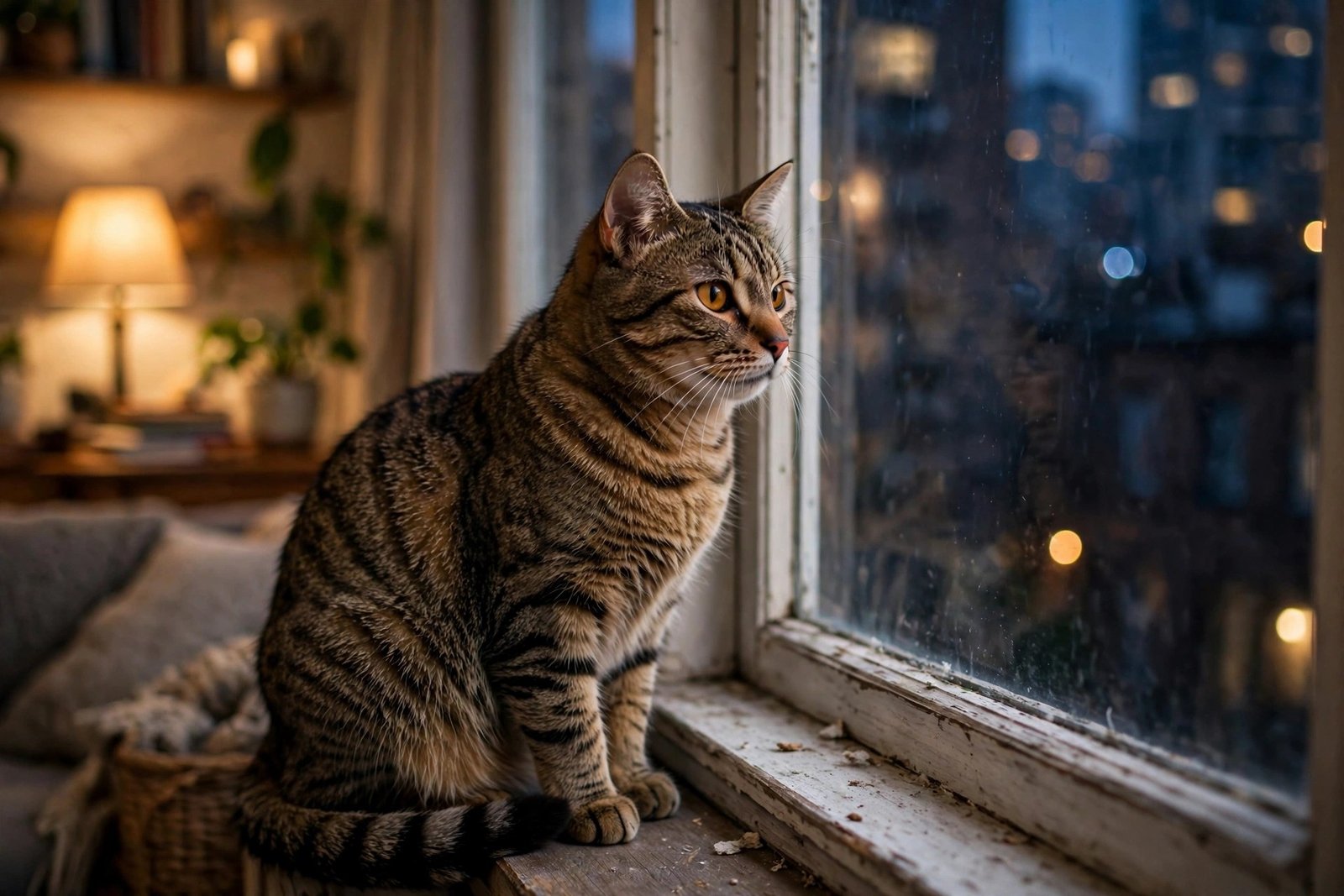
Most of the “bad behavior” cats get blamed for in apartments — shredded couch arms, 3 a.m. hallway sprints, the slow-motion shove of your water glass off the table — isn’t spite. Learning the signs your indoor cat is bored is the difference between fighting your cat and fixing the actual problem: an under-stimulated hunter living in 600 square feet with nothing to hunt.
Here’s the nuance worth knowing up front: veterinary behaviorists point out that cats don’t experience boredom quite like humans do. What looks like boredom is usually frustration or stress from a lack of stimulation. That distinction matters because it changes the fix — you’re not entertaining a bored roommate, you’re giving a small predator appropriate outlets for stalking, chasing, climbing, and problem-solving. Each sign below comes with the specific fix that addresses it.
One important caveat before we start: sudden behavior changes can also signal medical issues. If a new behavior appears out of nowhere — especially appetite changes, hiding, or litter box avoidance — rule out a health problem with your vet first. Boredom is a useful clue, not a diagnosis.
Why indoor cats get bored in apartments
An outdoor cat’s day is full of novelty: changing smells, moving prey, territory to patrol, vertical escapes. An indoor apartment cat gets the same four walls, the same couch, the same window view, day after day. The hunting sequence cats are wired for — stalk, chase, pounce, “kill,” eat, groom, sleep — gets compressed into “stare at wall, eat, sleep” when there’s nothing to stalk.
Apartments add a specific twist: you can’t just let the cat burn energy across a big house or yard, and your neighbors share your walls. So the enrichment has to be deliberate, compact, and (ideally) quiet. The good news is that cats don’t need square footage as much as they need things to do — and most fixes below cost little and take up almost no floor space.
Sign 1: Your couch is losing the war
Scratching is normal feline behavior — cats scratch to stretch, mark territory, and shed old claw sheaths. But when a cat bypasses a perfectly good scratching post to shred the couch arm, that’s usually a sign the available outlets don’t match what the cat wants. Vertical scratchers for cats who scratch furniture arms, horizontal pads for carpet-scratchers: the fix is matching the surface and angle, not just owning “a scratcher.”
In apartments, placement does half the work. Put the scratcher right next to the spot being destroyed — not across the room in a corner. Cats choose scratching spots partly by location (near where they sleep, near room entrances). Once the cat uses the new scratcher reliably for a couple of weeks, you can inch it toward a better spot. For the full breakdown of post styles that actually redirect furniture scratchers, see our roundup of small cat scratching posts that save furniture.
Sign 2: The 3 a.m. zoomies
Those frantic random sprints — behaviorists call them FRAPs — are a normal energy release. But when they happen nightly at 3 a.m., rattling down the hallway and off your bed, it usually means the cat’s hunting sequence never got completed during the day. A cat that “hunts” (plays), “eats,” grooms, and sleeps in the evening will still zoom occasionally — but far less destructively.
The apartment-friendly fix is a structured pre-bedtime play session: 10–15 minutes of interactive wand play about an hour before your bedtime, followed by a small meal or treat. Play → eat → groom → sleep mirrors the natural cycle and takes the edge off the midnight crazies. Keep the toys quiet — bells and squeakers at 11 p.m. are a fast track to neighbor complaints — which is why we rounded up quiet cat toys designed for apartments.
Sign 3: Inhaling food, then begging for more
A cat that eats too fast and immediately pesters for more isn’t necessarily still hungry — eating is one of the few “activities” in a boring day, so food becomes entertainment. Fast eating can also cause vomiting, which is nobody’s idea of a good time on apartment carpet.
Puzzle feeders turn a 30-second inhale into a 15-minute project. The cat has to bat, paw, and problem-solve to extract kibble, which engages the “work for food” part of the hunting sequence that bowls completely skip. Start easy — a feeder that’s too hard just frustrates — and work up. Our puzzle feeder guide for cats covers beginner-friendly options through advanced boards.
Sign 4: Your ankles are prey now
Stalking your feet, ambushing your hands, biting during petting — this is play aggression with nowhere appropriate to go. The cat’s hunting drive is intact and healthy; it just has no approved target. Punishment (spraying, yelling) doesn’t teach the cat what to do, and it adds stress that usually makes the behavior worse.
Redirect, don’t punish. Wand toys are the single best tool here because they put distance between the “prey” and your body — the cat learns that the feather on the string is the fun target, not your ankles. Two short wand sessions a day, where the cat gets to actually “catch” the toy at the end (never end on a frustrated miss), drain the ambush impulse fast. See our interactive cat toys roundup for wand picks that hold up to daily use.
Sign 5: Sleeping 20 hours a day and ignoring every toy
Cats sleep 12–16 hours normally, so some napping is just cat. The boredom tell is what the waking hours look like: a well-enriched cat is alert, curious, and prowling when awake; a bored one lies around with glazed disinterest, ignoring toys it used to like. Sleep becomes the way to pass time when there’s nothing worth waking up for.
The fix here is novelty, not more toys. Cats habituate — a toy that’s been on the floor for three weeks is furniture. Rotate: keep two-thirds of the toys in a closet and swap the active set every week or so. “New” old toys get genuine interest. Also try varying the type of play — some cats are bird-chasers (feather wands), some are ground-hunters (crinkle balls to bat), some are puzzle-solvers. Match the toy to the hunting style and the sleeping lump often wakes up.
Sign 6: Everything on shelves must fall
The gravity experiments — the slow, deliberate push of objects off tables and shelves — are part curiosity, part “this got a reaction last time.” It’s also a climbing-adjacent behavior: the cat is up on the shelf because shelves are interesting vantage points, and once up there, objects are irresistible.
Two fixes work together. First, give the cat a better high place: a window perch or wall-mounted shelf that’s more appealing than your bookshelf. Cats knock things off surfaces they’re already on; a dedicated perch redirects the traffic. Second, make the forbidden shelves boring — museum putty under the objects you care about, and the most knockable items moved elsewhere. Our no-drill window perches for renters add a prime vantage point without a single hole in the wall.
Sign 7: Over-grooming or pulling at fur
Cats groom up to half their waking hours, so telling normal grooming from over-grooming takes knowing your cat’s baseline. The warning signs: bald patches, thinning fur in specific spots, skin irritation, or noticeably more hairballs. Over-grooming is a self-soothing behavior — the feline equivalent of nail-biting — and it can become compulsive if the underlying stress or boredom isn’t addressed.
Enrichment helps, but this is the sign to take most seriously on the medical front: persistent over-grooming warrants a vet visit to rule out allergies, pain, or skin conditions before you treat it as boredom. If the vet clears the cat, increase structured play and environmental novelty — and consider whether something changed in the home (new schedule, new pet, moved furniture) that added stress on top of boredom.
The 15-minute daily play routine that prevents most of this
You don’t need an hour a day. Most behaviorists suggest two to three 10–15 minute interactive play sessions daily, and for apartment life, consistency beats duration. Here’s the simple version:
- Morning (5 min): a quick wand session before you leave — takes the edge off the daytime alone stretch.
- Evening (10 min): the main hunt — wand play with varied movements, ending with a “catch,” followed by dinner.
- Weekly: rotate the toy box, and leave one puzzle feeder out for solo daytime shifts.
Pair the routine with the environment upgrades matched to your cat’s worst sign above, and most “bad behavior” fades within a couple of weeks — not because the cat learned a lesson, but because the need behind the behavior finally got met.
Gear that helps (matched to each sign)
Rather than buying random toys, match the gear to the sign you’re seeing:
- Furniture scratching → small scratching posts that redirect couch scratchers
- Night zoomies → quiet toys for apartment play sessions
- Fast eating → puzzle feeders that slow down gobblers
- Ankle ambushes → interactive toys, especially wand teasers
- Shelf clearing → a window perch that’s a better vantage point
Frequently asked questions
Do indoor cats get bored?
Yes. Veterinary behaviorists note that what looks like boredom is often frustration or stress from lack of stimulation — but the practical meaning is the same: indoor cats without enrichment develop behavior problems. Daily interactive play, vertical space, scratching outlets, and food puzzles prevent most of it.
How much playtime does an indoor cat need?
Most cats do well with two to three 10–15 minute interactive play sessions per day. Consistency matters more than marathon sessions — a reliable daily routine beats an occasional hour-long playfest.
Why does my cat knock things off tables?
Usually curiosity plus learned cause-and-effect: objects on high surfaces are interesting, and knocking them down gets a reaction. Give the cat a better high place (a window perch or cat shelf) and make forbidden surfaces less rewarding, rather than punishing the behavior.
Is my cat bored or sick?
Boredom builds gradually and tracks with routine and environment; illness usually shows sudden changes — appetite shifts, hiding, litter box changes, lethargy beyond normal napping. When in doubt, a vet visit comes before any behavior plan. Never treat persistent over-grooming, appetite change, or hiding as “just boredom.”
Will getting a second cat fix boredom?
Sometimes, but it’s a gamble — not a prescription. A compatible companion can add social enrichment, but two under-stimulated cats in a small apartment can also mean twice the chaos, plus territorial stress. Fix the enrichment first; consider a second cat as a lifestyle decision, not a behavior treatment.
Do cats get bored of their toys?
Yes — cats habituate to toys left out constantly. Rotating the available toys weekly keeps novelty alive without buying new ones. If a cat ignores every toy type, try matching the toy to its hunting style: feather wands for bird-chasers, ground toys for mousers, puzzles for problem-solvers.
Related reading
- Best Interactive Cat Toys for Indoor Cats 2027 — the full roundup behind the fixes above, with apartment-quiet picks.
- Best Puzzle Feeders for Cats — turn mealtime into mental work for fast eaters and bored grazers alike.
- Best No-Drill Cat Window Perches for Renters 2027 — a better vantage point than your bookshelf, zero holes in the wall.
Last updated: October 8, 2026
Pingback: 6 Best Window Perch for Cats: Sunny Spots That Actually Hold 2027
Pingback: Best Interactive Cat Toys for Indoor Cats 2027