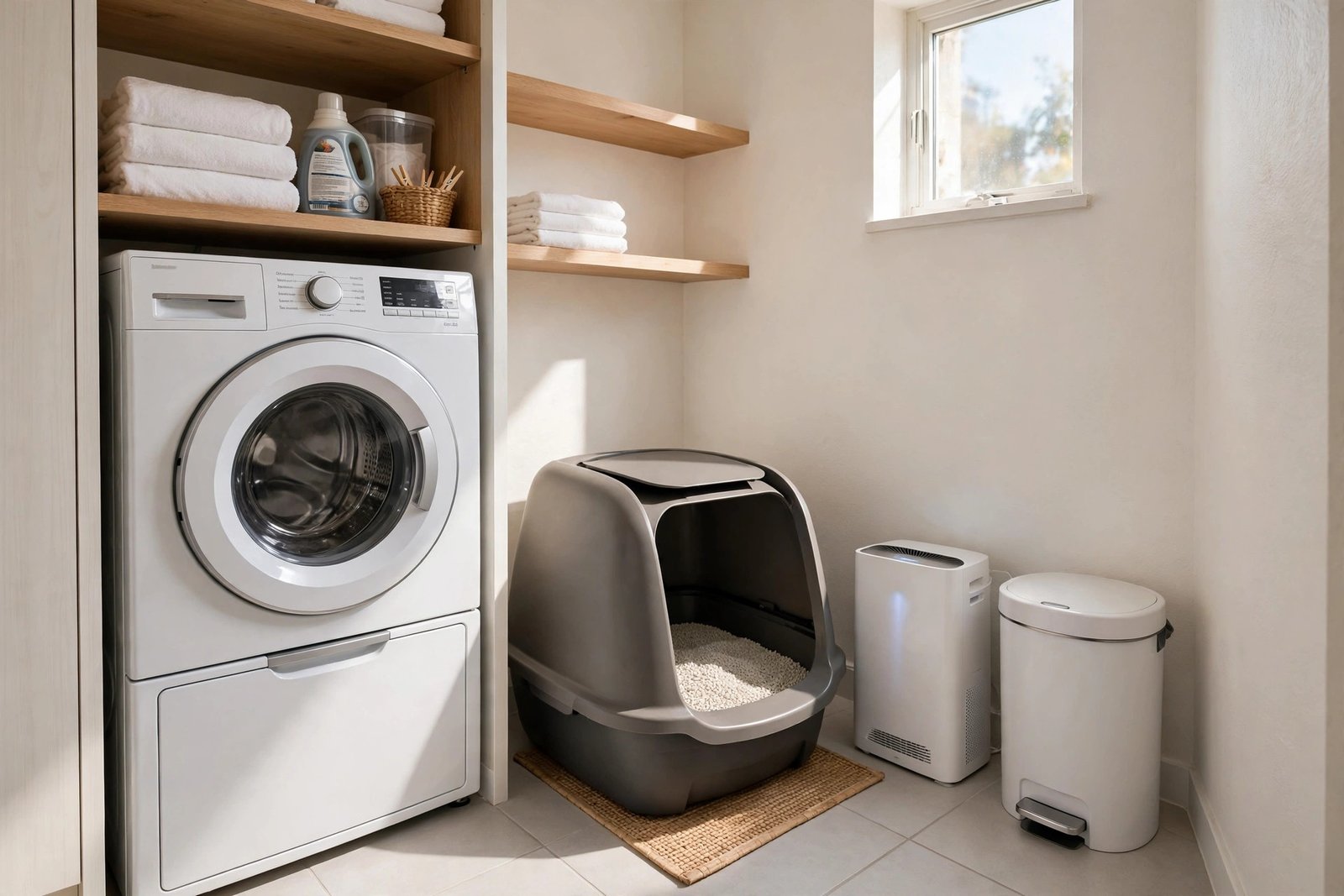
Here is the uncomfortable truth about litter box smell in small apartment living: it is not that your cat is smellier than anyone else’s. It is that you have less air. In a house, odor molecules spread through thousands of cubic feet before they reach your nose. In a studio or one-bedroom, there is nowhere for them to go, so the same box that would be unnoticeable in a hallway upstairs announces itself in your living room.
The good news is that odor control in a small space is a solvable problem, and it does not require an expensive gadget or a complete routine overhaul. It comes down to a few habits that remove waste faster, a litter choice that traps odor instead of covering it, and airflow that moves clean air past the box instead of letting smell pool around it. Here is what actually works.
Why a Small Apartment Smells Faster
Understanding the “why” makes every other tip on this page make sense. Odor from a litter box comes mostly from urine breaking down into ammonia. In a large home, that ammonia dilutes into a big volume of air. In a 400-square-foot studio, the concentration climbs fast — the same amount of waste produces a smell you notice in hours instead of days.
This is why advice written for house dwellers (“just scoop daily”) often falls short for apartments. The volume of your space is working against you, so your routine has to work harder. The fix is not stronger fragrance. It is removing the source faster and giving the air somewhere to go.
Scoop Twice a Day — the Single Biggest Fix
If you take one thing from this article, make it this: scoop morning and evening. In a small apartment, twice-daily scooping is the difference between a box you never notice and one your guests smell from the door. Urine that sits in litter keeps breaking down into ammonia all day; removing it within hours stops most of the odor before it starts.
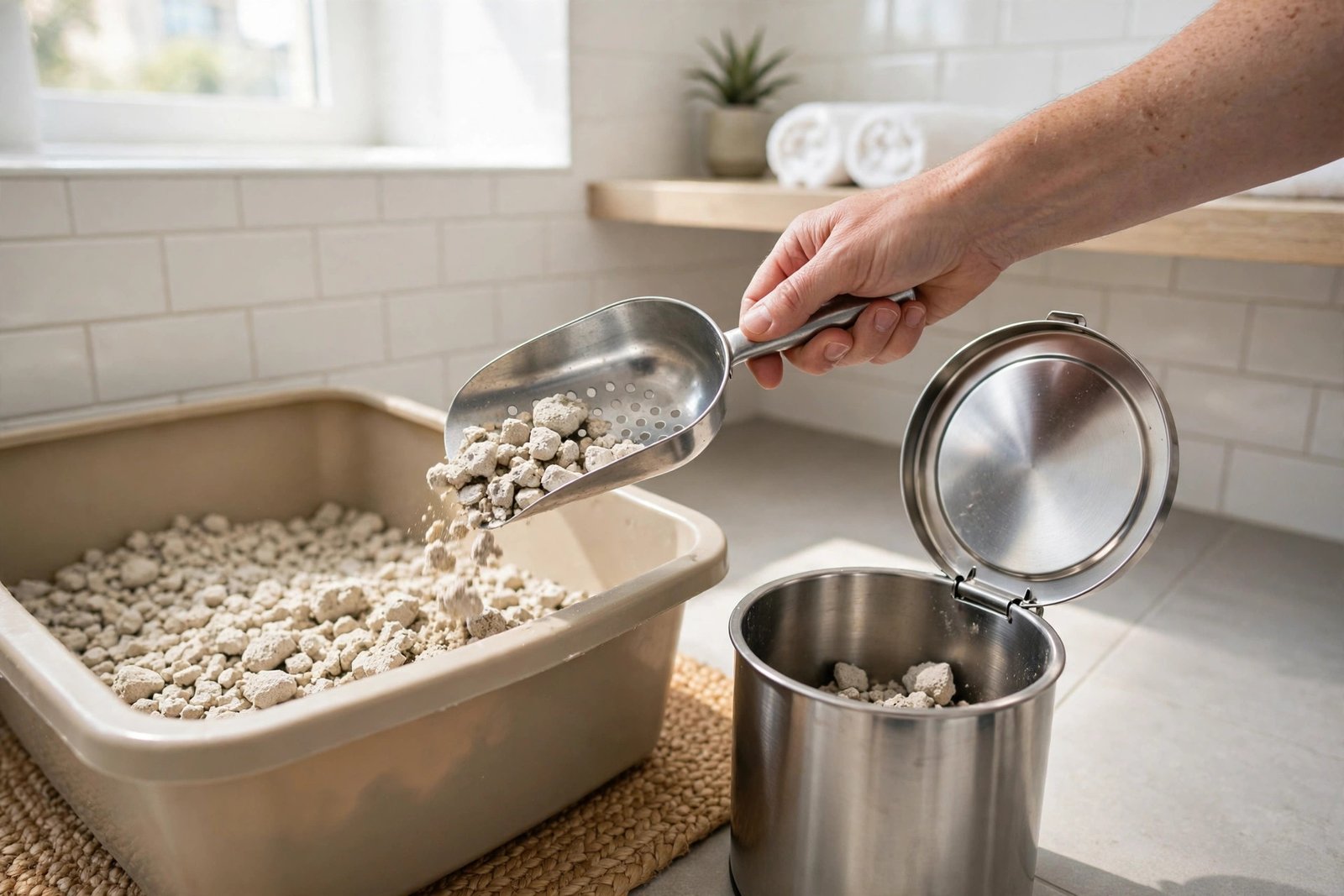
It takes about ninety seconds per scoop. Keep the scoop and a sealed waste container right next to the box so there is no friction — the easier the routine, the more likely you stick with it. If twice a day feels like a lot, start with once daily plus a quick evening check. You will notice the difference within two days.
Choose a Litter That Traps Odor Instead of Covering It
Not all litters handle smell equally, and in a small space the difference is obvious. A tight-clumping unscented litter is the best baseline: it seals urine into firm clumps you can remove completely, so nothing seeps down to the bottom of the box and festers.
Litters with activated charcoal or silica crystals can help in tight quarters because they absorb odor at the source rather than masking it. What you want to avoid is heavily scented litter. The fragrance does not reduce odor — it layers perfume on top of it — and many cats find the smell overwhelming enough to start avoiding the box, which creates a much worse problem than the one you started with.
Keep the litter deep enough, too. A thin layer lets urine reach the plastic bottom, where it dries into the box itself and smells no matter how often you scoop. Two to three inches gives clumps room to form properly.
Covered vs. Open Boxes: the Airflow Trade-Off
This one surprises people. A covered box seems like the obvious answer for smell — lid on, problem contained. And it does keep odor from drifting into the room. But it also traps ammonia inside with your cat, and some cats find that unpleasant enough to avoid the box or go right at the entrance.
In a small apartment, the better setup is usually an open or top-entry box in a ventilated spot, paired with the habits in this article. If you do use a covered box — and they are perfectly fine for many cats — make sure it has ventilation slots and that you scoop it even more diligently, since trapped air concentrates smell faster. Watch your cat’s behavior: if a cat starts hesitating at the door of a covered box, the trapped odor may be the reason.
Ventilation Tricks That Actually Work
Placement is half the battle. The best spot for a litter box in a small apartment is the most ventilated place you have that your cat will still use — near a bathroom exhaust fan, by a window you crack open, or in a laundry area with airflow. What you want to avoid is a sealed closet or an airless corner: still air lets odor pool, and closets concentrate it into a wall of smell every time you open the door.
A small air purifier with an activated carbon filter, running on low near the box, is one of the few gadgets worth it. Note the “carbon” part — a HEPA filter alone catches dust and dander, but it takes activated carbon to neutralize ammonia and odor molecules. You do not need a big unit; a compact one within a few feet of the box does the job.
On laundry day or when you have guests coming, cracking a window near the box for twenty minutes moves more air than any spray ever will.
Seal the Waste Loop
Here is the step most people skip: what happens to the waste after you scoop it. Tossing clumps into an open kitchen trash bag undoes half your scooping work — the smell just relocates from the box to the bin, which sits in the same small room.
Keep a small lidded pail or a dedicated diaper-style disposal bin right beside the litter box and drop scooped waste straight into it. Seal it, and take the bag out on your regular trash schedule. This one change closes the loop: waste goes from box to sealed container to outside, and never sits open in your living space.
Wash the Box Itself — and Know When to Replace It
Sometimes the smell is not the litter at all. It is the box. Urine that seeps under the litter bed dries onto the plastic, and over months, scratches in the plastic hold residue that soap cannot fully reach. If your box still smells right after a full wash and dry, the plastic itself is the source.
Deep-clean the box every couple of weeks with warm water and an unscented mild soap — skip harsh chemicals and strong fragrances, which leave their own smells behind. For accidents outside the box, use an enzymatic cleaner, which breaks down the odor compounds instead of just covering them. And every year or so, honestly assess the box: if it is heavily scratched and smells even when clean, replacing it is cheaper than another year of fighting the odor.
What Doesn’t Work (Save Your Money)
Apartment dwellers get marketed a lot of odor “solutions.” A few honest notes:
- Scented litters and plug-in air fresheners mask odor for human noses while doing nothing about the source — and the fragrance can bother your cat more than it bothers you.
- Vinegar or ammonia-based cleaners can smell like more litter box to a cat’s nose, which is the opposite of what you want near the box.
- Baking soda helps a little when mixed lightly into litter, but it is a minor addition, not a substitute for scooping. Heavy amounts change the litter texture and some cats reject it.
- Hiding the box in a sealed cabinet or closet with no airflow concentrates odor and often makes the cat avoid the box. Ventilation matters more than concealment.
Food, Water, and Smell: What to Know
Diet does affect how strong waste smells — a sudden food change can make stool noticeably smellier for a few days while your cat adjusts. That is normal and usually temporary. Keeping fresh water available and feeding a consistent, quality diet is just good general care.
One important note: if your cat’s litter box odor suddenly gets much worse, or you notice big changes in how often your cat goes, that is worth a conversation with your veterinarian. This article is about household odor control, not health advice — sudden changes can occasionally signal something medical, and only a vet can say for sure.
Gear That Helps
Habits do most of the work, but the right setup makes the habits easier. If scooping twice a day sounds unsustainable with your schedule, an automatic litter box removes waste on its own timer — our guide to the best small automatic litter boxes for apartments covers compact models that fit tight spaces. And if your current box is old, scratched, or just the wrong shape for your space, the best litter boxes for small apartments rounds up odor-friendly picks sized for real apartments.
Frequently Asked Questions
Does baking soda really help with litter box smell?
A little. A light sprinkle mixed into the litter absorbs some odor, but it does not stop the bacterial breakdown that produces ammonia. Treat it as a minor helper alongside twice-daily scooping — never as a replacement for it. If you use a lot, the texture change can put some cats off the box.
Are covered litter boxes better for odor in apartments?
They contain odor for you but concentrate it for your cat. In a small apartment, an open or top-entry box in a ventilated spot usually works better, because airflow matters more than a lid. If you prefer covered, choose one with ventilation slots and scoop it diligently.
Why does my litter box smell right after I clean it?
The smell is usually coming from the box itself, not the litter. Urine that seeped under the litter bed dries onto the plastic, and scratches trap residue that soap cannot reach. Try a full wash with unscented soap and a complete dry; if the odor survives that, replace the box.
How often should I change all the litter in a small apartment?
Scoop twice daily, top off litter to keep the depth consistent, and do a full litter refresh every one to two weeks depending on your litter type and how many cats use the box. In a small space, do not stretch the refresh schedule — odor builds faster than you think.
Will an air purifier get rid of litter box smell?
It helps, with a caveat: you need one with an activated carbon filter, not just HEPA. HEPA catches particles like dust; activated carbon neutralizes the ammonia and odor molecules. A compact unit running on low within a few feet of the box makes a real difference, but it works best layered on top of good scooping habits.
Related reading
- Where to Put a Litter Box in a Small Apartment — placement and ventilation go hand in hand; this guide covers the best spots room by room.
- Best Litter Boxes for Small Apartments — odor-friendly box picks sized for tight spaces.
- Best Small Automatic Litter Boxes for Apartments — for when twice-daily scooping does not fit your schedule.
Last updated: October 6, 2026
Pingback: Best Litter Box for Small Apartment: 8 Odor-Smart Picks 2027