In a studio or one-bedroom, the litter box is never more than a few steps away. You see it from the couch, guests see it from the door, and on a bad day you smell it from everywhere — which is exactly why this hide litter box small apartment guide exists. The good news: you don’t need a bigger apartment. You need a smarter hiding spot.
This guide walks through the concealment tricks that actually work in tight rentals — furniture that swallows the box whole, no-drill screens and curtains, closet and cabinet conversions — plus the ventilation and access rules that keep a hidden box from turning into a smelly, cat-rejected disaster.
Start with the golden rule: hidden from you, never hidden from your cat
Every method below has to satisfy two audiences at once. You want the box invisible; your cat wants it obvious, easy to reach, and well-ventilated. Cats that feel trapped or can’t find the entrance will simply pick a new spot — usually your rug. So before you commit to any hiding place, check three things: your cat can walk straight in without squeezing past anything, there’s airflow around the box, and you can reach it for daily scooping without moving furniture. If a hiding spot fails any of those three, it’s not a hiding spot — it’s a future accident.
Furniture enclosures: the box becomes the furniture
The most popular way to hide a litter box is also the most convincing: an enclosure that looks like an ordinary cabinet, bench, or side table. From the outside it’s furniture. Inside, it’s a litter box with a cat-sized entry hole. Because these are freestanding, they’re renter gold — no drilling, no damage, and they move with you.
The trick is sizing. Measure your actual litter box first, then shop for an enclosure with at least a couple of inches of clearance on every side. A box crammed into a cabinet it barely fits will make scooping miserable and trap odors. Look for enclosures with a second opening or a removable panel so you can reach in for daily cleaning without dragging the whole box out, and give the interior a wipeable liner — litter dust and the occasional miss will happen, and raw wood or MDF does not forgive.
One honest drawback: enclosures concentrate odor in a smaller airspace, so they’re only as good as your scooping routine. Scoop daily, and an enclosure works beautifully. Skip two days, and you’ve built a smell amplifier.
Closet and laundry nooks: use space you already have
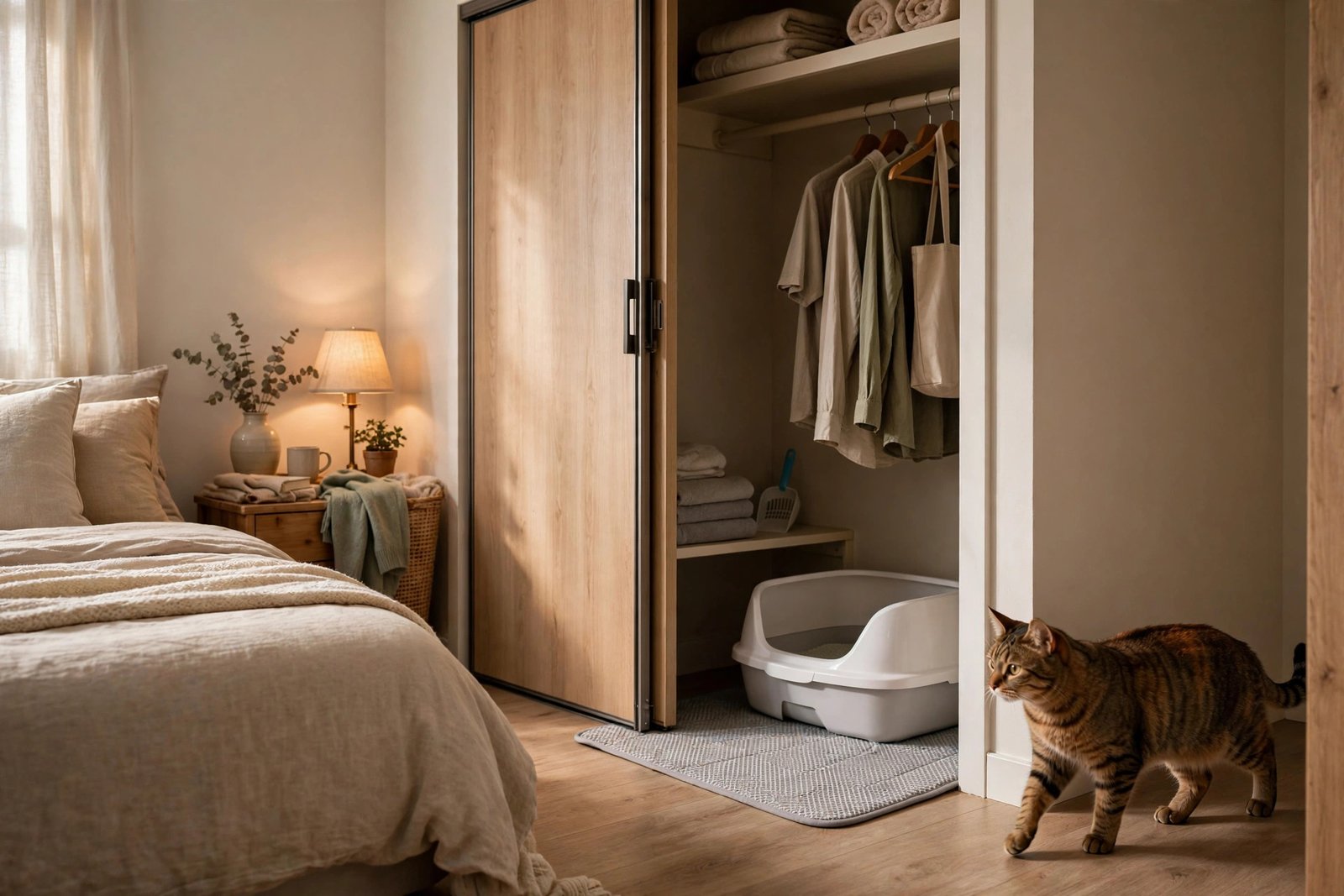
A bedroom or hallway closet with the door left ajar is one of the easiest hiding spots in a small apartment, because the space already exists. Slide the box to one side of the closet floor, put a washable mat underneath, and keep the door propped open a few inches with a doorstop so your cat always has access. Sliding closet doors work especially well since you can leave one panel permanently cracked.
Laundry closets are the other classic. The ambient smell of detergent and dryer sheets masks box odor surprisingly well, and the space is already utilitarian. But there are two caveats renters should know: the dryer makes the space warm and humid, which amplifies odor rather than hiding it when the machines run, and some cats find the vibration and noise stressful. Watch your cat’s behavior for the first week — if they’re dashing in and out or avoiding the box, the laundry room isn’t working for them.
Never put the box in a closet you need to keep closed for guests or kids. A box your cat can’t reach is a box that doesn’t exist.
Room dividers and decorative screens: the no-drill classic
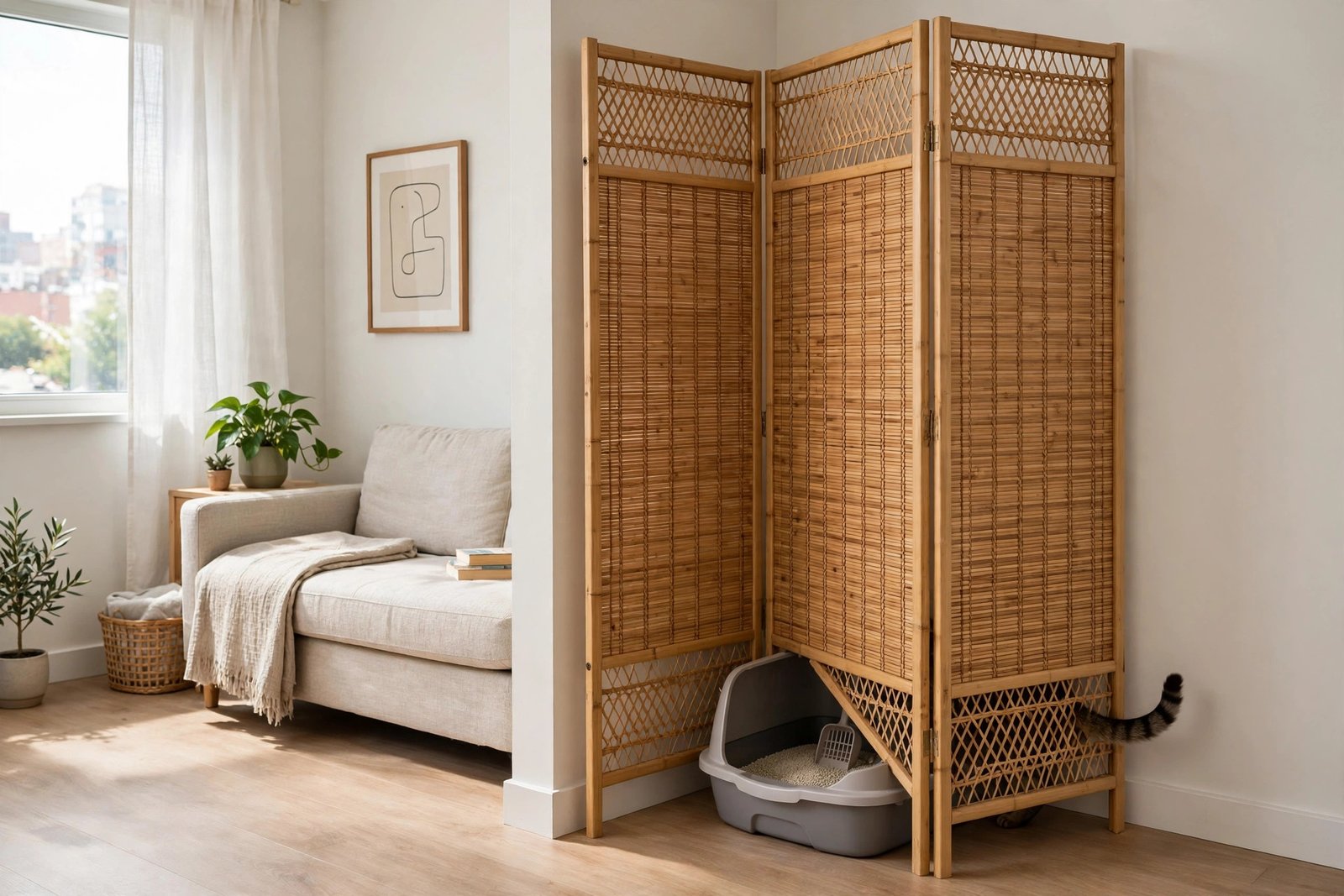
A folding screen or room divider is the lowest-commitment way to hide a litter box. No tools, no holes, nothing to explain to your landlord. Angle a two- or three-panel screen around the box in a corner and you’ve created a private little nook that reads as intentional decor from across the room.
This method works best when the box already sits somewhere sensible — a quiet corner, the end of a hallway — and you just need it out of the sightline. Bamboo, rattan, and fabric screens are light enough to nudge aside for scooping, and they let air circulate, which is the big advantage over sealed furniture: odor dissipates instead of concentrating.
The limitation is honesty: a screen hides the box from view, not from noses or from litter tracking. Pair it with a good mat and a clumping litter, and keep the scooping routine tight. In a studio where the box sits ten feet from the bed, a screen plus diligent scooping is often all you need.
Under-sink and cabinet conversions: the DIY route
If you’re handy and your lease allows minor modifications, converting a lower cabinet — under a bathroom sink, a kitchen base cabinet, or a freestanding storage cabinet — makes the box disappear completely. The standard approach: cut or remove a section for a cat entry (a jigsaw and an hour of work), line the interior with a washable tray or contact paper, and add a small vent or charcoal filter near the top for airflow.
Before you cut anything, confirm the cabinet is actually yours to modify. In most rentals, built-in cabinetry is off-limits, so this trick is best reserved for a cheap freestanding cabinet you own outright — a secondhand find works perfectly. Measure twice: the entry hole needs to be big enough for your cat to enter comfortably and turn around, which for most cats means at least 7–8 inches across, larger for big breeds.
Ventilation is non-negotiable here. A sealed cabinet with no airflow becomes a humid odor chamber, and cats notice before you do. A few drilled vent holes high on the back panel, or a small stick-on charcoal filter, makes the difference between a clever conversion and a mistake.
Ventilation and odor: the part everyone skips
Here’s the uncomfortable truth about hiding a litter box: every concealment method that blocks your view also blocks airflow, and blocked airflow means concentrated odor. The box doesn’t smell less because you can’t see it. It often smells more.
Three things keep a hidden box honest. First, scoop every single day — no method survives a neglected box. Second, keep some airflow: a cracked closet door, vent holes in a cabinet, a screen instead of a sealed box. Third, choose a low-dust clumping litter and change it fully on a regular schedule; old saturated litter is the real odor source, not the box itself.
What doesn’t work as well as people hope: scented plugins or sprays inside the hiding spot. Strong fragrances layered over litter odor tend to smell worse than either alone, and some cats dislike perfumed air enough to avoid the box. Ventilation and scooping beat fragrance every time.
What NOT to do
A few hiding ideas sound clever and end badly. Don’t seal the box in an airtight container or a cabinet with zero ventilation — odor concentrates, humidity builds, and your cat will likely refuse it. Don’t hide the box somewhere with a door that can accidentally close: a bathroom door that swings shut or a closet someone tidies up means a cat with no bathroom. Don’t place it next to the furnace, water heater, or any appliance that cycles heat — warmth amplifies odor fast.
And don’t hide it so well that you forget the routine. The number one cause of a smelly hidden box isn’t the hiding spot — it’s an owner who scoops less often because the box is out of sight. Out of sight should never mean out of mind.
Gear that helps
If you’d rather buy than build, purpose-made enclosures do the furniture-disguise job without any DIY. Our guide to the best automatic litter box enclosures for apartments covers cabinet-style hides sized for small spaces, including what to check for ventilation and cleaning access before you buy. And if you’re still deciding where the box should live in the first place, our room-by-room breakdown of where to put a litter box in a small apartment will help you pick the right corner before you hide it.
Frequently asked questions
Will my cat actually use a hidden litter box?
Most cats will, as long as the hiding spot meets their terms: easy walk-in access with no squeezing, enough room to turn around inside, and decent airflow. Introduce the change gradually — put the box in the new spot uncovered for a few days first, then add the enclosure or screen. If your cat starts avoiding it, the hiding spot is the problem, not the cat.
Does hiding the litter box reduce the smell?
Not by itself. Hiding blocks the view, not the odor — and enclosed hiding spots can actually concentrate smells if airflow is poor. Odor control still comes down to daily scooping, a good clumping litter, and ventilation around the box. Think of hiding as the visual half of the job; scooping is the other half.
Can I put the litter box in a closet and close the door?
Only if the door can’t actually close on your cat. A propped or sliding door left permanently ajar works; a door that might swing shut does not. Cats locked out of their box will find somewhere else to go, and in a small apartment that somewhere is always the worst possible spot.
What’s the cheapest way to hide a litter box in a rental?
A folding screen or a tension-rod curtain — both are cheap, need no tools or holes, and move with you. A curtain hung under a console table or inside an open closet hides the box for the price of a rod and a fabric panel, and your cat can always slip behind it.
Is it okay to hide the litter box in the kitchen?
It’s not ideal — food prep areas and litter boxes are an unpleasant combination for most people, and cooking heat and humidity amplify odor. If the kitchen is your only option, tuck the box in the farthest cabinet or corner from food areas, keep it scrupulously scooped, and use a covered or enclosed setup. A hallway or closet is almost always a better choice.
How do I keep litter from tracking all over a small apartment?
A large textured mat under and in front of the box catches most of it — size the mat generously, since cats fling litter farther than you’d expect. Low-tracking litter formulas help too, but the mat does most of the work. Shake it out every couple of days as part of the routine.
Related reading
- Where to Put a Litter Box in a Small Apartment — room-by-room placement guide for studios and one-bedrooms.
- Best Automatic Litter Box Enclosures for Apartments — furniture-style hides that conceal the box completely.
- Best Litter Boxes for Small Apartments — compact boxes worth hiding in the first place.
Last updated: October 6, 2026
Pingback: Best Automatic Litter Box Enclosure for Apartments 2027