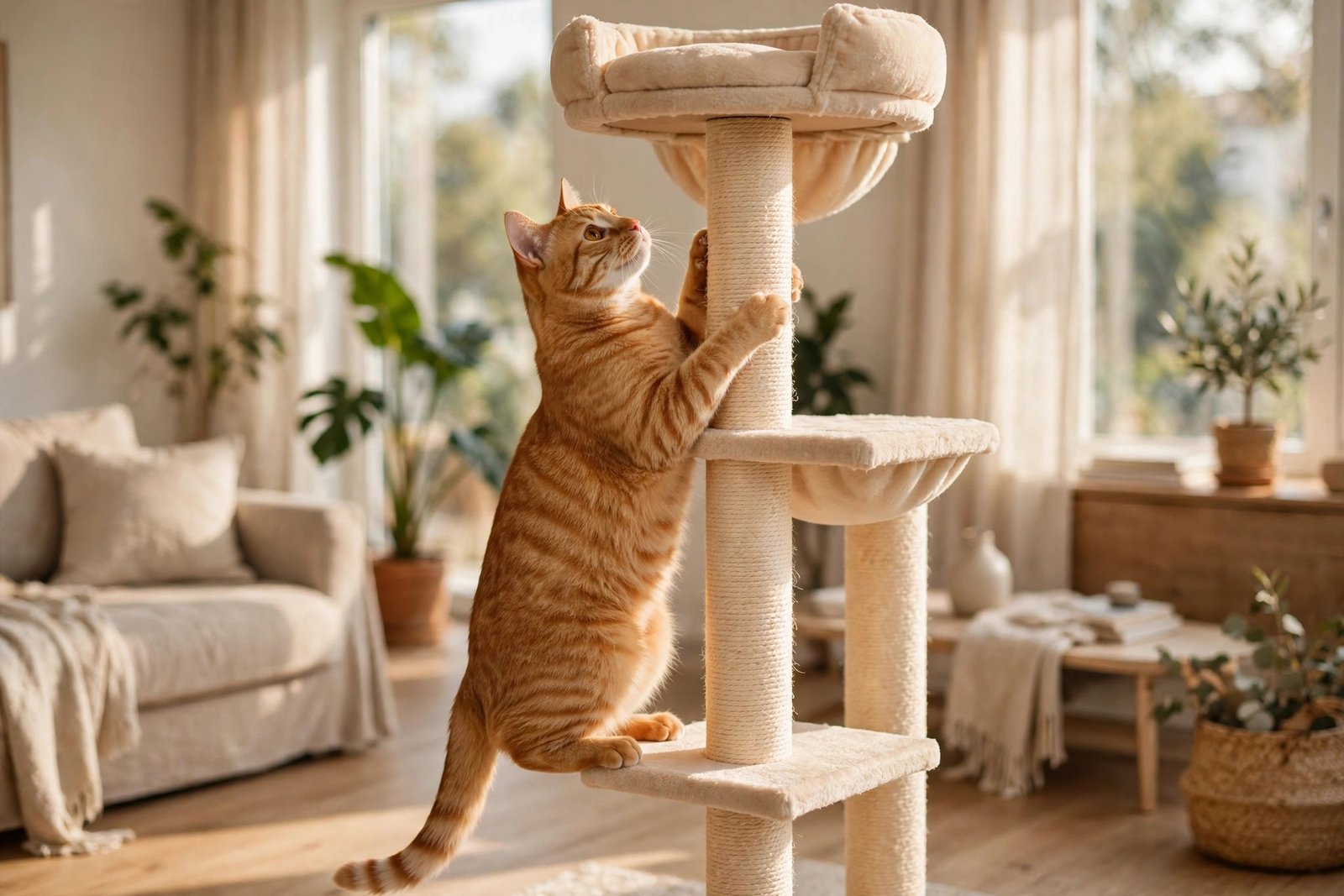
So you bought the cat tree — maybe a good one, maybe the tallest thing that would fit through your door — and your cat walked past it like furniture delivery was a rumor. If you’re wondering how to get a cat to use a cat tree, know this: it’s almost never about the tree being bad. It’s about cats being cats. They distrust new things, they distrust your enthusiasm about new things, and they operate on their own timeline.
The good news is that nearly every ignored cat tree can be fixed with placement and patience rather than a return label. These eight tricks work with feline instincts instead of against them. And if the tree itself is the problem, there’s an honest section at the end for that, too — because most articles never admit when the product is wrong.
Why Cats Ignore New Furniture
First, the cat isn’t being spiteful. Cats are territorial animals with a strong neophobia streak — new objects smell wrong (factory, warehouse, shipping), look wrong (tall, unfamiliar silhouette in their territory), and your excitement about them reads as suspicious. A cat needs to decide on its own terms that the tree is safe, useful, and theirs.
This is why every trick below has the same underlying principle: make the tree smell familiar, place it where the cat already wants to be, and reward curiosity without forcing anything. You’re not training the cat. You’re letting the cat claim the tree.
Trick 1: Put It by the Window
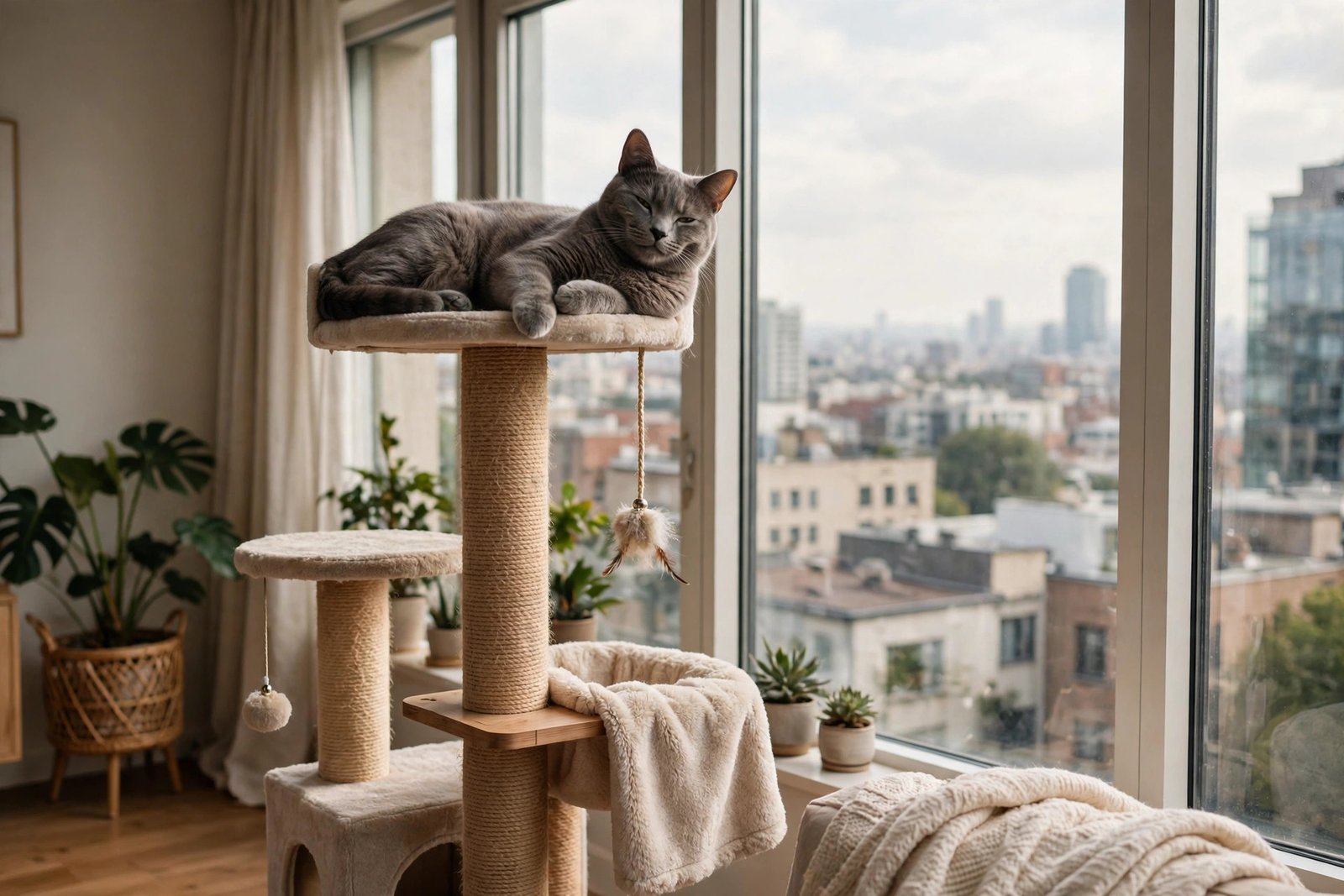
This is the single highest-impact move. Cats are wired to watch — birds, people, leaves, the neighbor’s dog. A cat tree parked against a blank wall offers nothing to look at. A cat tree by a window offers television. If your tree has a perch at window height, even better: the cat climbs up, discovers the view, and suddenly the tree has a purpose.
In a small apartment, “by the window” usually means swapping it with whatever furniture currently holds that spot. Do the swap. The window-adjacent position also tends to get sunlight, and a warm sunny perch sells itself.
Trick 2: Catnip, Treats, and Play
Sprinkle a little dried catnip on the lower platforms and scratching surfaces — not a mountain of it, just enough to invite investigation. Then run a play session with a wand toy that ends on the tree: drag the toy up the scratching post, over a platform, and let the cat “catch” it on the tree. The cat associates the tree with the fun, not the object.
Drop a few treats on different levels over the first few days. You’re building a map in the cat’s head: good things happen at various heights on this structure. Don’t lure the cat all the way to the top on day one — let the cat discover the upper levels on its own schedule. The discovery is the point.
Trick 3: The Worn T-Shirt Scent Trick
New trees smell like factories. Drape a t-shirt you’ve worn (not a clean one — that’s the point) over a platform for a few days. Your scent is the most familiar smell in the cat’s world, and it converts the tree from “foreign object” to “thing that smells like my person.”
This sounds odd until you try it. Cats navigate their territory largely by scent, and a tree that smells like you gets claimed far faster than one that smells like a warehouse. Once the cat starts using the tree, remove the shirt — by then the cat’s own scent marking (cheek rubs, paw kneading) will have taken over the job.
Trick 4: Don’t Force or Carry Them Up
This is the trick that’s really a rule: never place the cat on the tree yourself. A cat that gets set on a new structure feels trapped, not invited — and one bad experience can set acceptance back by weeks. No lifting the cat to the top perch “to show them the view.” No shutting the cat in a room with only the tree.
If the cat sniffs the base and walks away, that’s progress, not failure. Sniffing means investigating. Investigating today means climbing next week. Your job is to make the tree available and interesting, then get out of the way.
Trick 5: Reward Every Interaction
The first time a paw touches the tree — treat. The first sniff of the scratching post — calm praise. The first time the cat sits on a low platform — jackpot, treats and a play session. You’re rewarding curiosity at whatever level the cat offers it.
This is basic, and it works because cats are pragmatic: behaviors that produce good outcomes get repeated. The mistake people make is only rewarding the “goal” behavior (sleeping on the top perch) and ignoring the small steps that lead there. Reward the small steps and the big ones follow.
Trick 6: Make the Old Spot Boring
If the cat ignores the tree because it already has a favorite perch — your bookshelf, the top of the wardrobe, the back of the couch — you can gently make that spot less appealing. Put a slightly crinkly texture there temporarily, or move the item the cat sleeps on. Nothing aversive, nothing scary — just less comfortable than it was.
At the same time, make the tree the better option: warm (near a sunny window or a heating vent), high (cats prefer elevation), and textured the way the cat likes. You’re not punishing the old spot. You’re outcompeting it.
Trick 7: When the Tree Itself Is the Wrong Type
Here’s the part most articles skip: sometimes the cat ignores the tree because the tree is wrong for that cat. Be honest with yourself about which of these fits.
Too short. Cats want height. A two-foot tree next to a six-foot bookshelf the cat already climbs will lose every time. If your cat is a climber and the tree doesn’t offer a real vantage point, no amount of catnip fixes it.
Wobbly. Touch the top and push gently. If it sways, a cat will feel that instability tenfold and won’t trust the upper levels. Stability matters more than height — a solid four-foot tree beats a wobbly six-foot one.
Wrong scratching texture. Some cats prefer sisal rope, others prefer carpet, others want cardboard. If the cat uses the platforms but never the post, the texture may be the issue — you can wrap a different material around the post rather than replacing the tree.
Too small for the cat. A large cat can’t curl on a perch built for a kitten. Check the perch dimensions against your cat’s actual lounging size.
If one of these is the problem, the fix isn’t more tricks — it’s the right tree. Our guide to the best cat trees for small apartments covers stability, height, and sizing for real apartment cats, so you can match the tree to the cat instead of the other way around.
Trick 8: How Long to Wait Before Giving Up
Give it a full month. Most cats show first interest within a few days and real use within two to three weeks. Shy or senior cats can take longer — up to six weeks isn’t unusual, and it isn’t a failure.
What you’re watching for is a trajectory, not a deadline. Sniffing in week one, a paw on a platform in week two, a nap on a low level in week three — that’s a cat on its way. Zero interaction after a month, despite good placement and the tricks above, usually means the tree is the wrong type (see Trick 7) rather than the cat being stubborn.
One more thing: don’t give up right before it works. The classic story is the owner who moves the tree to the garage on day 29, and the cat — who was one sunny afternoon away from claiming it — never gets the chance. A month of patience is cheaper than a second tree.
Frequently Asked Questions
How long until a cat uses a new cat tree?
Most cats investigate within a few days and start using it within two to three weeks. Shy or older cats can take up to six weeks. Watch for a trajectory — sniffing, then pawing, then sitting, then napping — rather than expecting full use on day one.
Should I put catnip on the cat tree?
A light sprinkle of dried catnip on platforms and scratching posts helps invite investigation. Don’t overdo it — a small amount sparks curiosity, while a pile of it can overstimulate some cats. Not all cats respond to catnip (it’s a genetic sensitivity), so if yours ignores it, use treats and play instead.
My cat only sleeps on the floor-level base of the tree — is that normal?
Completely normal, especially in the first weeks. The cat is claiming the tree from the safest level first. As confidence builds, most cats work their way up. If the cat never leaves the base after a month, check whether the upper levels feel unstable — wobble is the most common reason cats stay low.
Can I pick my cat up and put them on the tree?
Don’t. A cat placed on a new structure feels trapped rather than invited, and one forced experience can delay acceptance by weeks. Let the cat discover every level on its own — reward curiosity, never force contact.
Related reading
- Best Cat Trees for Small Apartments — if the tree itself is the problem, here’s how to choose the right one.
Last updated: October 9, 2026