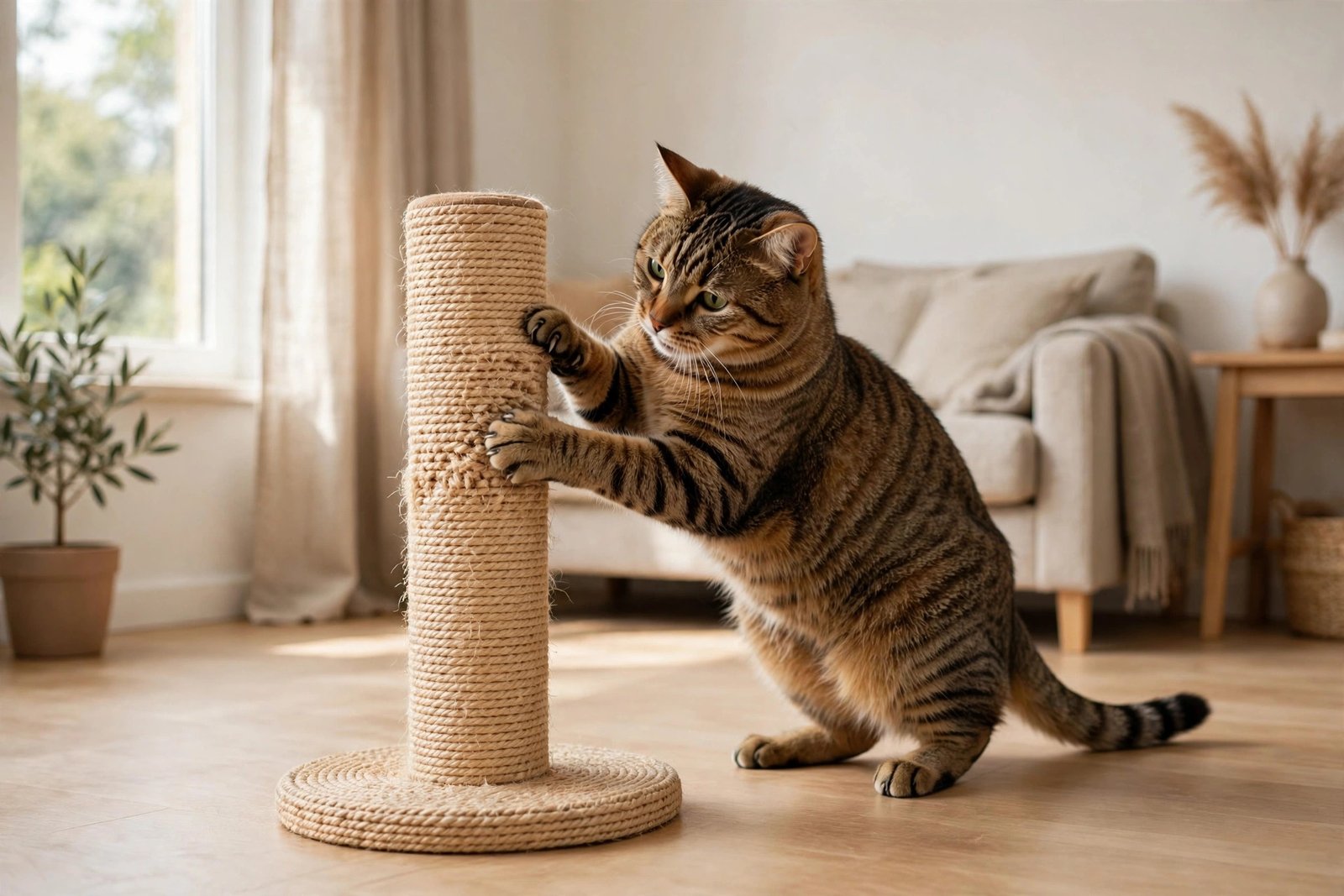
The hunt for the best cat scratcher that doesn’t shed usually starts the same way: you sweep. Then you sweep again the next day, and the sisal fibers are back on the dark hardwood, or the cardboard crumbs have migrated from the scratcher to the rug to — somehow — the kitchen. In a small apartment the mess has nowhere to hide, and what would be a minor annoyance in a house becomes a daily sweeping tax. So we went looking for the scratchers that genuinely leave the least behind, and we filtered the way we always do: buyer-review evidence first, brand marketing last. Seven picks made the cut, from woven-sisal posts reviewers say stay intact for years to a cardboard box whose walls trap their own crumbs. No testing claims, no paid placements — just listing details, verified buyer feedback, and the drawbacks stated plainly.
The apartment mess problem nobody puts on the box
Every scratcher sheds something. Sisal rope unravels into loose fibers. Standard corrugated cardboard flakes into crumbs. Carpet pulls apart and leaves pills. The honest question is never “zero mess or not” — it is how much, how often, and whether the design does anything about it. That is the filter behind every pick below, and it produced a clear evidence hierarchy: sisal rope is the worst offender, woven sisal and sisal fabric shed far less (multiple long-term reviewers confirm it), fine-grain high-density cardboard flakes less than standard corrugate (a brand claim we attribute, not a verified fact), and box or bowl shapes contain whatever debris the material makes. Keep that hierarchy in mind as you read — it is the whole buying guide in one paragraph.
For a head-to-head on the two main materials, see our sisal vs cardboard comparison.
One more honest note before the picks: your cat does not care about the mess. A shredded, crumb-trailing scratcher is a human problem, not a feline one. But there is a cat problem hiding inside it — a post that falls apart gets abandoned, and an abandoned post means the couch becomes the scratcher. The low-mess picks below are also, not coincidentally, the ones buyers say last.
Quick picks
| Award | Product | Why it stands out | Check Price |
|---|---|---|---|
| Best overall | SmartyKat Scratch Scroll Sisal & Carpet Curled Cat Scratcher | The most direct no-shed buyer evidence in the set — multiple reviews praise zero shreds on the floor | Check Price on Chewy |
| Best tall post | SmartCat Ultimate Scratching Post, 32″ H | Woven — not rope — sisal with multi-year no-shred reviews; full stretch, minimal debris | Check Price on Chewy |
| Best budget tall post | Frisco 33-in Heavy Duty Sisal Cat Scratching Post, Gray | A boarding-facility owner confirms it doesn’t shed like rope posts; 4.7 stars across 8,735 ratings | Check Price on Chewy |
| Best cardboard pick | Necoichi Premium Comfort Cat Scratcher Wall, Large | Fine-grain high-density cardboard marketed for minimal paper waste; L-shape doubles as lounger | Check Price on Chewy |
| Best compact low-cleanup design | Best Pet Supplies Catify Sloped Sisal Cat Scratcher, Gray | Sisal over plywood with no rope to unravel and no cardboard to flake; ramp doubles as a perch | Check Price on Chewy |
| Best debris-containing design | Frisco Step-In Cat Scratcher Toy with Catnip | Raised box walls trap cardboard crumbs inside instead of on your floor — reviewers confirm it | Check Price on Chewy |
| Best for kittens / small cats | Catstages Scratch & Cuddle Corrugated Scratcher and Lounger | A 14-inch bowl that keeps scratching — and its crumbs — contained in one small footprint | Check Price on PetSmart |
Best overall: SmartyKat Scratch Scroll Sisal & Carpet Curled Cat Scratcher
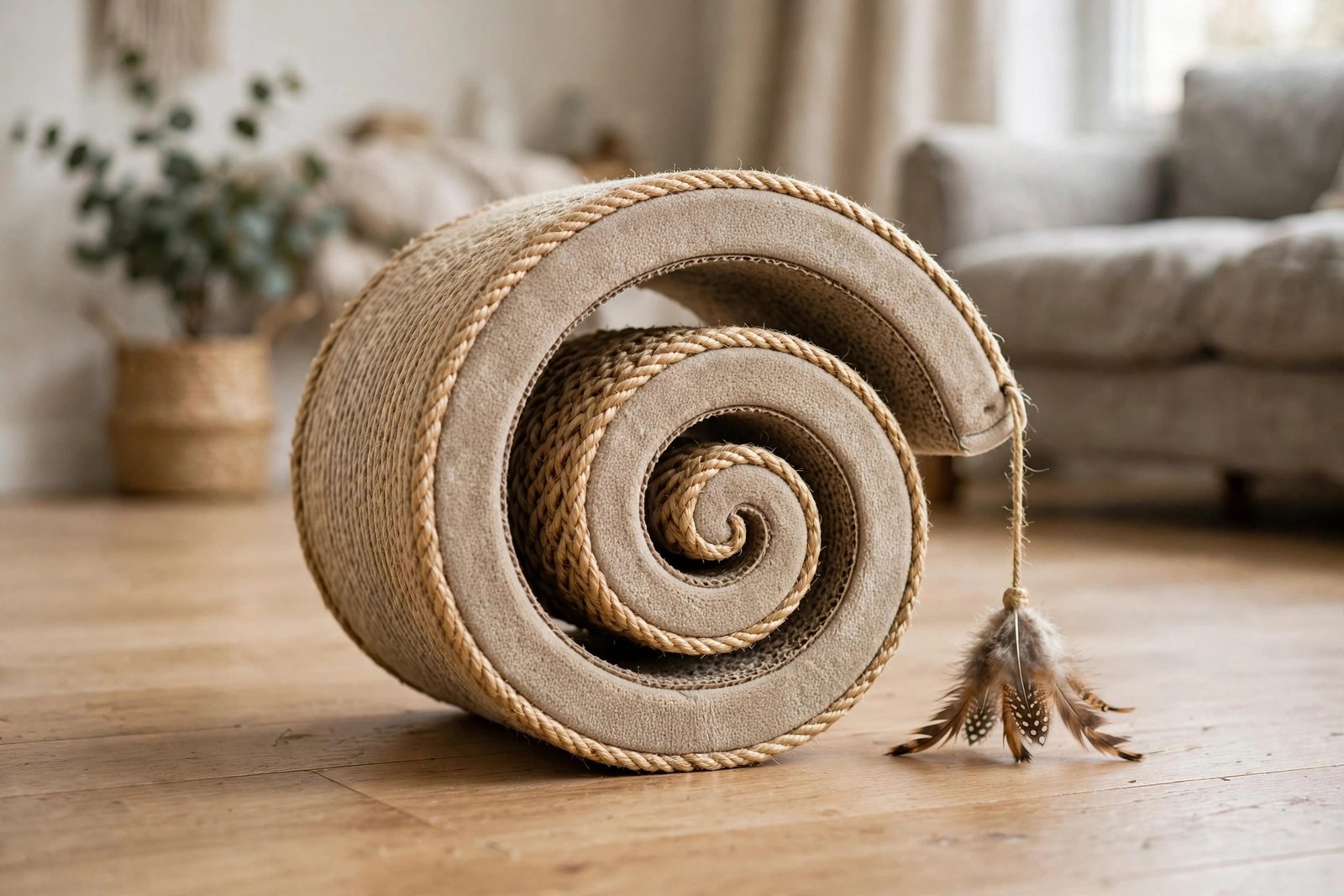
This is the pick with the most direct evidence for the article’s angle. The SmartyKat Scratch Scroll is a curled, wave-shaped scratcher — 17.75 x 11 x 6.5 inches per Chewy’s customer Q&A — with sisal and carpet scratching surfaces and a dangling feather toy, and multiple recent Chewy reviews (late 2025 into early 2026) specifically praise that it doesn’t shed like cardboard boxes and doesn’t leave residue or shreds on the floor. On Chewy it holds 4.6 stars across 1,895 ratings with 89% positive on both durability and material, and the page was in stock on the day of research. The scroll shape is doing quiet work here too: it keeps the cat’s scratching in one contained zone instead of spreading the wear — and the debris — across a wide surface.
The honest drawbacks: the carpet section is the weak point. A 2-star review reports the carpet on the hump pulling apart with glue bits coming out — the sisal area holds up better, per the same buyer base. The feather toy breaks off quickly according to reviews, so treat it as a bonus rather than a feature. And the scroll is single-sided (Chewy Q&A confirms it is not double-sided), with no replacement parts available — when one face is worn, the whole unit is done. None of that changes the no-shed verdict, but it sets the lifespan expectation honestly.
Apartment scorecard: Footprint — 17.75 x 11 inches; compact enough for a bedroom corner. Installation — none; unbox and place. Rental-friendly — yes; freestanding, no mounting, nothing to patch. Cleaning — the whole argument: reviewers report no shreds or residue on floors; vacuum the scroll’s crevices occasionally. Best room — bedroom or living-room corner; doubles as a lounger so one item covers scratching and resting.
Best tall post: SmartCat Ultimate Scratching Post, 32″ H

If your cat needs a full vertical stretch, this is the low-mess way to give it to them. The SmartCat Ultimate is a 32-inch post on a 16 x 16-inch two-piece base, wrapped in fibrous woven sisal — not rope, not carpet — so claws don’t snag and fibers don’t unravel. The no-shed evidence here is durability-as-cleanliness: recent Chewy reviews report zero shreds after months of daily use, and one reviewer describes eight to nine years of use across two units. Woven sisal holds together where rope comes apart, which is exactly why it stays off your floor. It carries 4.6 stars across 3,904 Chewy ratings with 88% positive on durability and 89% on material and stability.
The honest drawbacks: the base is engineered pressed wood, and one Chewy Q&A answer questions the value against cheaper lookalikes on that basis. Some reviews note it can feel wobbly for cats that launch themselves at it, and the two base screws need periodic re-tightening. On slippery hard floors it can also shift a few inches during enthusiastic sessions — a felt pad underneath fixes that, and doubles as floor protection in a rental. None of these are mess problems; they are stability notes, stated so you buy it with eyes open.
Apartment scorecard: Footprint — 16 x 16-inch base; a true tall post in a corner-sized footprint. Installation — two included screws, minutes. Rental-friendly — yes; freestanding, and a felt pad underneath protects hard floors. Cleaning — woven surface sheds far less than rope per long-term reviewers; occasional vacuuming of the base edges. Best room — living room corner near the couch, where the full-stretch habit usually lives.
Best budget tall post: Frisco 33-in Heavy Duty Sisal Cat Scratching Post
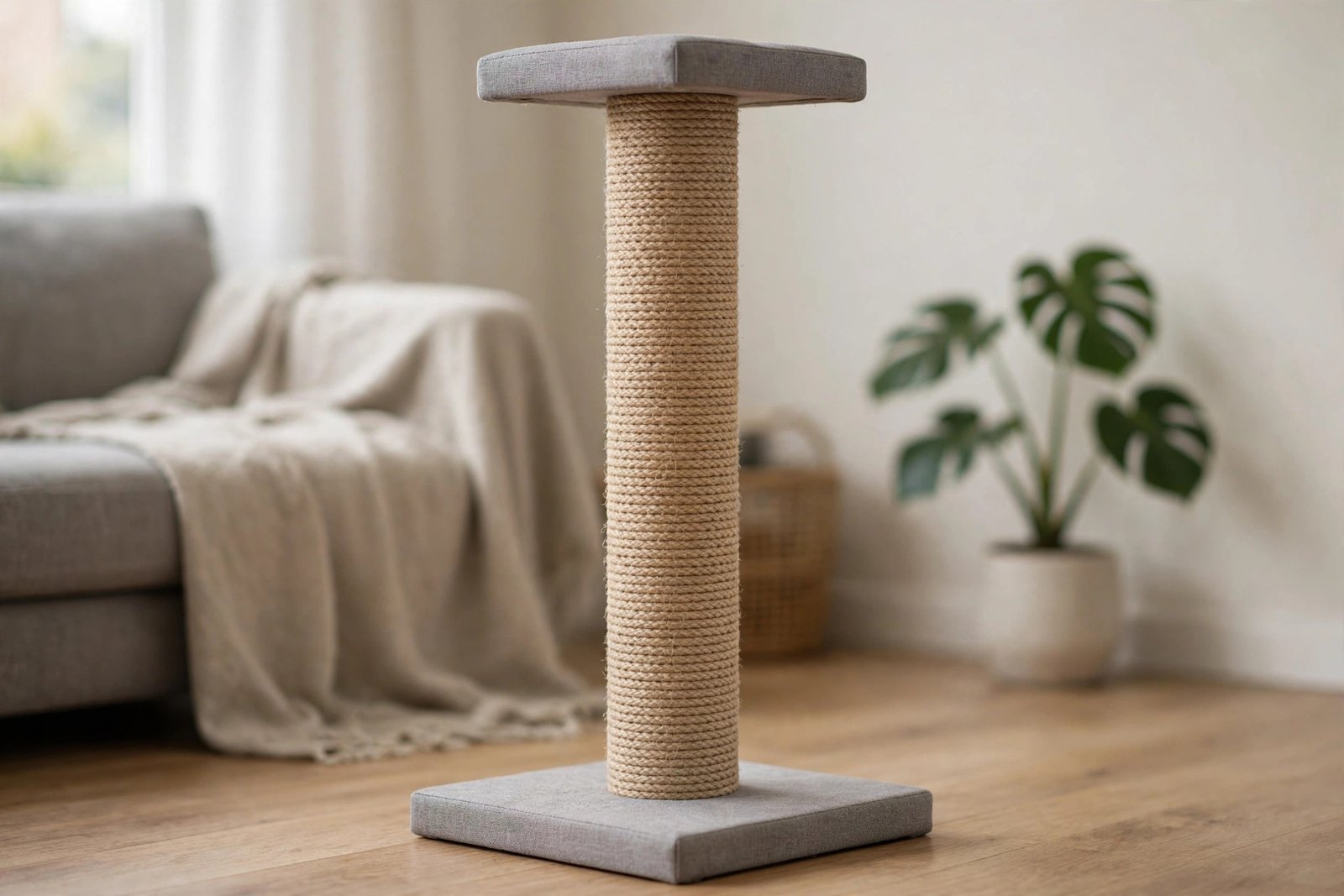
The Frisco 33-in Heavy Duty is the cheapest route to a full-stretch, low-debris post, and it earns this slot on reviewer testimony rather than brand claims. The surface is woven sisal fabric — not rope — over a 16 x 16 x 33.5-inch frame with fabric-wrapped base and top. A boarding-facility owner’s review explicitly says it doesn’t shed like standard sisal-rope-wrapped posts or cat trees, and a seven-year long-term review praises the fabric for not coming apart the way cardboard and rope do. With 4.7 stars across 8,735 Chewy ratings and 91% positive on durability, this is the deepest evidence base in the set.
The honest drawbacks are quality-control variance. Some reviews report units arriving wobbly or with a visible sisal seam, the base-to-post joint is particle board that one reviewer says cracked over time, and the connecting screws need re-tightening like the SmartCat’s. Buy it for the low-shed woven surface and the price; inspect the joint on arrival and keep a screwdriver handy. At this rating volume, the pattern is clear: the fabric stays intact, the hardware needs attention.
Apartment scorecard: Footprint — 16 x 16 inches; corner-friendly. Installation — screw base to post; check the joint for wobble on day one. Rental-friendly — yes; freestanding tall post, no wall contact. Cleaning — woven fabric sheds far less than rope per reviewers; the fabric-wrapped base wipes clean. Best room — anywhere the tall-post habit needs redirecting; the gray fabric reads neutral in small living rooms.
Best cardboard pick: Necoichi Premium Comfort Cat Scratcher Wall
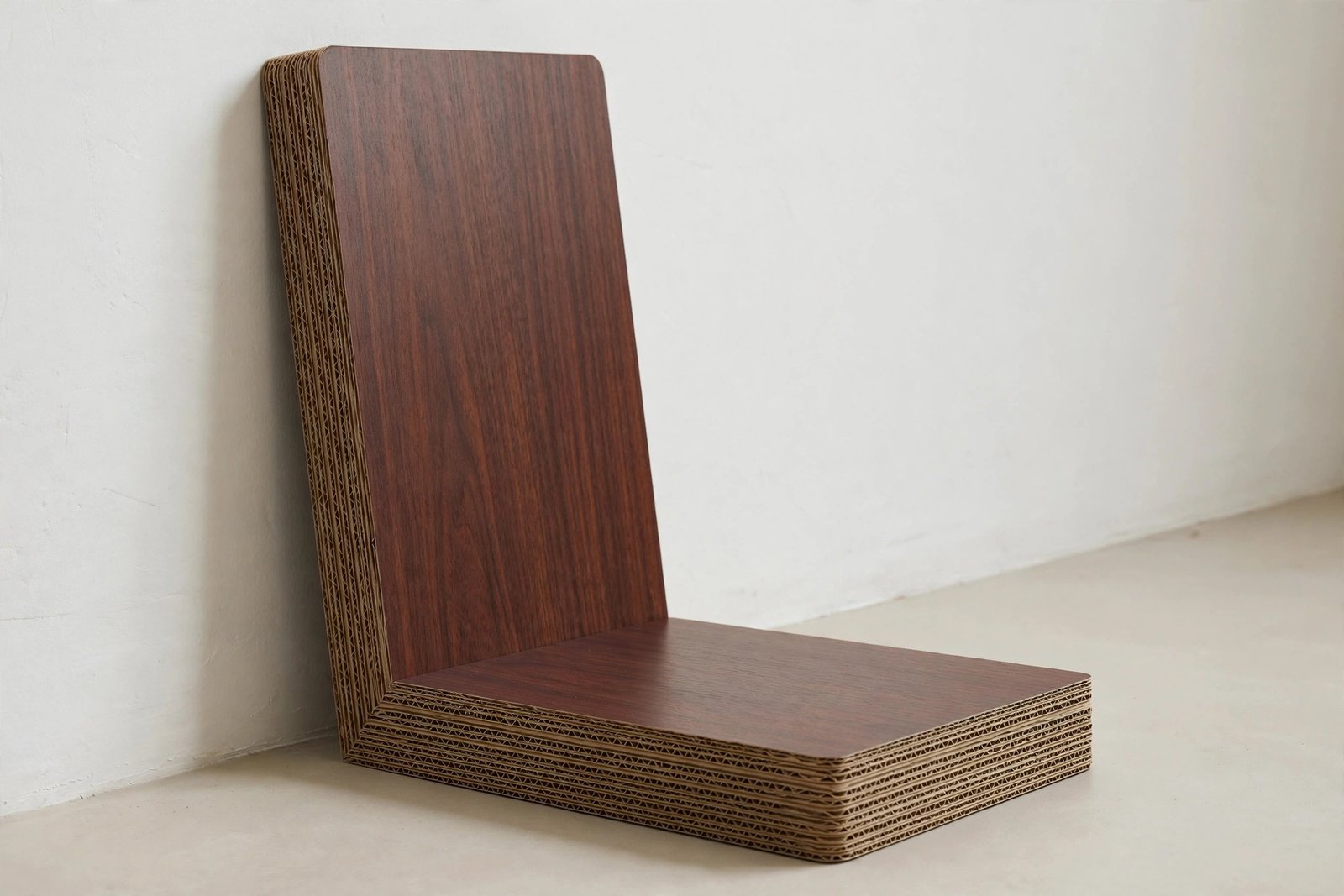
Cardboard people, this one’s for you — with the brand-claim caveat stated up front. The Necoichi Premium Comfort Scratcher Wall is an L-shaped wall-and-floor scratcher in a Large size, made from 100% recycled paper in a fine-grain, high-density cardboard with plant-based adhesives (brand-stated materials). Necoichi markets the fine grain as producing “a fraction of the paper shavings” for minimal cleanup and says the design “reduces scratching waste” — those are the brand’s claims, not independently verified facts, so weigh them accordingly. What is verified: 4.5 stars across 2,632 Chewy ratings, in stock on the day of research, reversible pads for double use, and assembly with included screws and screwdriver. The L-shape also redirects vertical scratching that would otherwise land on walls and couch corners — several reviews center on exactly that couch-saving effect.
The honest drawbacks are specific. The replacement pads sold on Chewy do not fit the wall scratcher — Chewy’s customer Q&A (May 2026) confirms the three-section wall unit takes different pads — so “replaceable” is limited in practice despite the reversible design. One reviewer says the material is too soft to actually blunt nails. It can slide on hard floors unless braced against furniture or set on a non-slip pad. And some cats ignore it entirely, which is the eternal cardboard gamble. The wood-grain side panels do read as furniture, which helps it survive aesthetically in a small living room.
Apartment scorecard: Footprint — lean-against-the-wall Large L-shape; vertical scratching without a post’s floor footprint. Installation — included screws and screwdriver; brace against furniture on hard floors. Rental-friendly — yes; freestanding lean-to, no wall mounting. Cleaning — fine-grain cardboard is brand-claimed to flake less; the L-shape keeps debris near the wall line. Best room — against the wall or couch corner the cat already targets.
Best compact low-cleanup design: Best Pet Supplies Catify Sloped Sisal Cat Scratcher
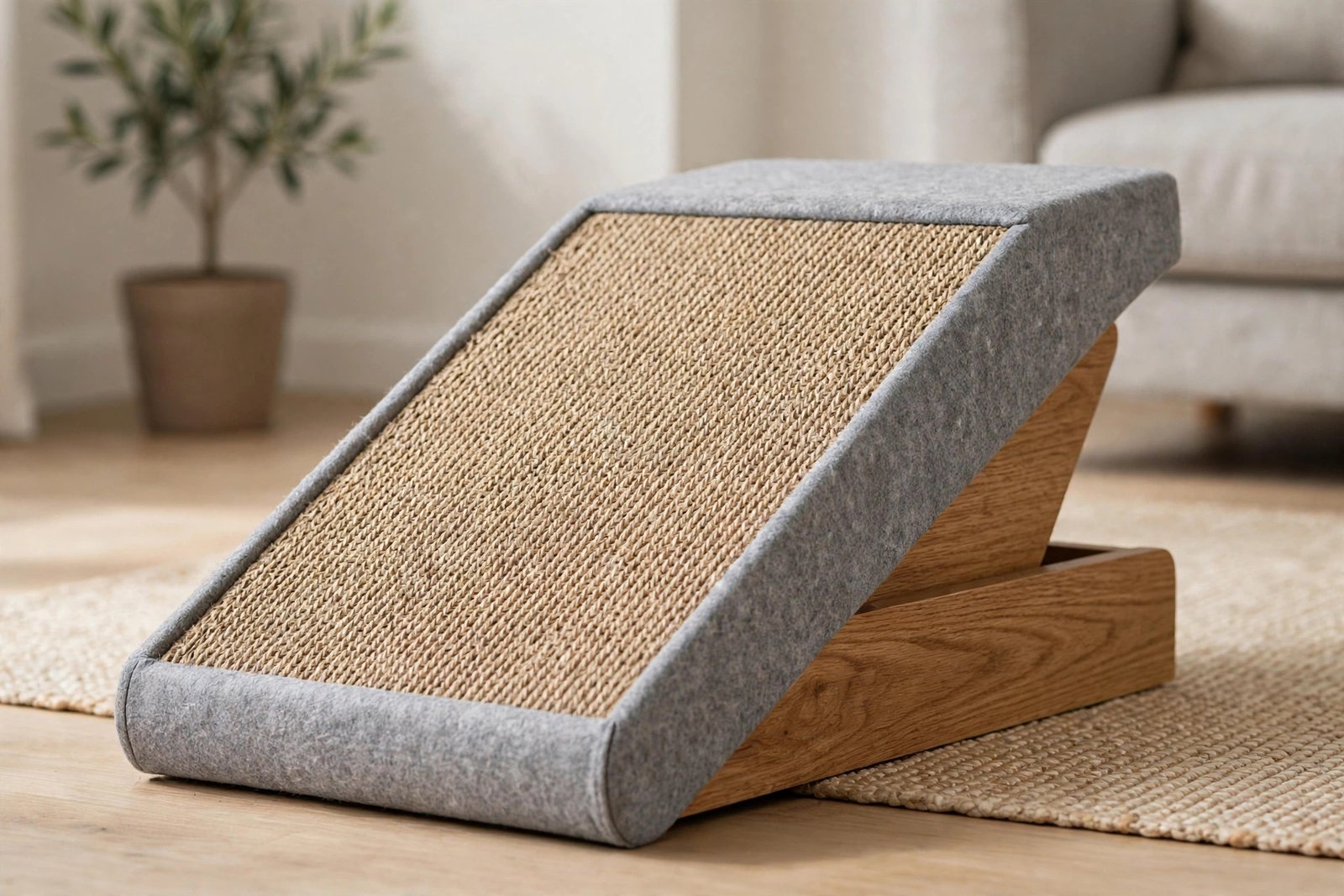
The Catify Sloped takes the low-mess argument down to construction: sisal stretched over a half-inch plywood base (per Chewy’s customer Q&A), with no rope to unravel and no cardboard to flake. The ramp shape doubles as a perch and lounger, so it earns its floor space twice in a small room. The brand’s case is stated on the listing — it “requires less cleanup compared to cardboard scratchers” and the sisal “doesn’t break down as easily to minimize extra cleanup” — brand claims, attributed honestly. The page was in stock on the day of research at 4.1 stars across roughly 570 to 732 Chewy ratings (multiple variant listings), with durability at 73–74% positive and stability at 68–69%.
The honest drawbacks: this is the lowest-rated pick in the set, and the weak spots are exactly durability and stability. One review reports the rubber edge strips coming loose. The sisal pad is not removable or replaceable (Chewy Q&A, February 2026) — when the surface is worn, the whole unit is done, which shortens the value story. Some cats prefer cardboard and ignore it. And the listing never stated exact inch dimensions, so measure your space against the size chart on the product page before ordering. Buy it for the compact ramp form and the no-rope, no-cardboard construction — not for bulletproof longevity.
Apartment scorecard: Footprint — small ramp form; exact inch dimensions not stated on the listing — check the size chart. Installation — none. Rental-friendly — yes; freestanding, lightweight, easy to move. Cleaning — sisal-over-plywood has nothing to unravel or flake; wipe the base, vacuum the sisal. Best room — beside the couch or under a window; the ramp doubles as a lookout perch.
Best debris-containing design: Frisco Step-In Cat Scratcher Toy with Catnip

Sometimes the smartest low-mess answer isn’t a different material — it’s a different shape. The Frisco Step-In is a 15 x 13 x 4.5-inch corrugated cardboard scratcher built as a box with raised walls and a solid base (so the included catnip stays inside instead of falling through). Multiple recent reviews specifically praise that the walls keep cardboard debris inside the box instead of on the floor — the containment mechanism is the entire argument for this pick, and buyers confirm it works. At 4.7 stars across 5,390 Chewy ratings with 90% positive on material and 89% on effectiveness, it is also one of the best-reviewed boxes at any price, and the page was in stock on the day of research.
The honest drawbacks: replacement scratcher inserts are not available (Chewy Q&A, March 2023) — when the pad is spent, the whole box goes, which undercuts the containment story over time. Some cats just sit in it and never scratch, turning your debris solution into a bed (a comfortable one, at least). Large cats find it too small and can slide it around the floor, which re-creates the mess problem the walls were solving — put it on a rug or non-slip pad if your cat is on the bigger side. This is a small-cat, small-room pick; respect both limits.
Apartment scorecard: Footprint — 15 x 13 inches; the budget containment play for tight spaces. Installation — none; add the included catnip. Rental-friendly — yes; freestanding box, nothing mounted. Cleaning — tip the box over a trash can to empty trapped crumbs — the debris collects where you can reach it. Best room — living room floor near the couch; doubles as a bed for cats that claim it.
Best for kittens / small cats: Catstages Scratch & Cuddle Corrugated Scratcher and Lounger

The smallest footprint in this set — about 14 inches square — and the argument here is pure design rationale rather than buyer evidence, stated plainly. The Catstages Scratch & Cuddle is a 13.8 x 13.8 x 3.15-inch bowl made from 100% recycled corrugated cardboard, intended for kittens and small cats up to 10 lb per the retailer description. The bowl shape keeps scratching — and whatever crumbs it makes — contained in one spot instead of scattered, and it doubles as a nap nest, which is how it earns 14 inches of studio floor. The PetSmart page loaded fine on the day of research; the rating count was not shown on the fetched page, so we make no rating claim for this pick.
The honest drawbacks define the buyer narrowly. The 10-lb limit excludes most adult cats — this is strictly a kitten and small-cat pick, and a growing kitten will age out of it. The bowl shape means less scratching surface than a flat pad, so a vigorous scratcher may prefer more runway. And unlike every other pick here, there are no low-mess buyer reviews to cite — the containment case is the shape doing the work, observed, not reviewed. If your cat is under 10 lb and your apartment is a studio, the trade is worth it; otherwise, pick from the six above.
Apartment scorecard: Footprint — 13.8 x 13.8 inches; the smallest in this set, ideal for studios. Installation — none. Rental-friendly — yes; freestanding bowl, nothing to mount or patch. Cleaning — lift the bowl and sweep underneath; crumbs stay mostly inside the curve. Best room — bedroom corner or beside the bed; a kitten’s scratch-and-nap station in one.
How we picked
We researched current Chewy and PetSmart listings for scratchers with credible low-mess evidence, compared verified buyer ratings and review language, and checked every product page for availability on the day of writing. The first filter was the article’s angle: debris. Picks had to show real evidence of leaving less behind — reviewer language about no shedding, long-term intactness, or a containment shape buyers confirm works — not just a brand’s “low-mess” label. The second filter was the apartment fit: footprint, freestanding designs a renter can place and move, and honest drawbacks including the ones that shorten a pick’s life. Two picks overlap other Velvnox articles on purpose — the SmartCat Ultimate appears in our tall scratching posts guide and the Frisco 33-in in the heavy-base draft — but both are covered here under a distinct low-mess angle with fresh copy, not recycled text. No brand paid for placement, none of these picks is sponsored, and we did not lab-test any of these scratchers.
Buying guide: materials ranked by mess, shapes that contain it, and cleaning that actually works
Materials, from messiest to cleanest. Sisal rope is the worst offender: wrapped strands loosen with every scratch and rain fibers. Carpet is next — it pills, pulls apart, and at least one buyer found glue bits in the debris. Standard corrugated cardboard flakes into crumbs that travel on paws and air currents. Then the turn: woven sisal and sisal fabric hold together far better, with multiple long-term reviewers reporting intact surfaces after years — this is the single biggest material upgrade you can buy. Fine-grain high-density cardboard is brand-marketed as flaking less (Necoichi’s claim; treat it as marketing until buyer evidence accumulates). And at the clean end, the material matters less than the shape — a box or bowl traps whatever its material makes.
Shapes that contain debris. If you love cardboard — many cats do — buy the container, not just the material. Raised walls (Frisco Step-In), bowls (Catstages), curled scrolls (SmartyKat), and L-shapes braced against a wall (Necoichi) all keep crumbs in a zone you can clean in one sweep instead of across the room. Pair any scratcher with a washable mat underneath and you have turned a floor problem into a laundry problem, which is a strict upgrade in a rental. For the couch-adjacent scratching habit specifically, our guide to the best sisal scratching mats to protect your couch covers the flat, furniture-side half of the family.
Cleaning the scratcher zone without making it a chore. A handheld vacuum once or twice a week beats daily sweeping — the debris from these picks is light and sits on surfaces rather than grinding in. Shake contained designs (boxes, bowls) over a trash can. Trim loose rope fibers with scissors instead of pulling them, which unravels more. And place scratchers on hard floors rather than rugs where you can: crumbs on wood sweep up in seconds, while crumbs in carpet pile become permanent residents.
The honest bottom line. No scratcher is literally zero-mess, and any page promising that is selling something. What you can buy is less mess: woven over rope, contained over flat, and fine-grain over standard corrugate — in that order of evidence strength. The picks above are ranked by how well that evidence holds up, not by how loudly the brand markets it.
Frequently asked questions
Why do cat scratchers shed?
Because scratching is destruction by design — the cat’s claws pull fibers and flakes loose, which is the point of the exercise. Sisal rope unravels strand by strand, standard cardboard flakes along its corrugation, and carpet pills and pulls. A scratcher that never shed at all would be a scratcher the cat couldn’t dig into. The realistic goal is a material that gives way slowly (woven sisal) or a shape that catches what comes off (boxes, bowls).
Do woven sisal scratching posts shed?
Far less than rope, per buyer evidence. Multiple long-term reviewers of the woven-sisal picks above report intact surfaces after months and years of daily use — one describes zero shreds after months, another eight to nine years across two units. Woven fabric distributes claw force across interlaced fibers instead of letting one strand pull free, which is why it outlasts rope. It is not zero-shed, but it is the biggest single material upgrade in this guide.
How can I reduce cardboard crumbs around my cat’s scratcher?
Three moves, in order of impact: first, switch to a contained shape — a box or bowl with walls keeps crumbs where you can sweep them in one pass. Second, put a washable mat under the scratcher so stray crumbs land on laundry, not flooring. Third, empty the container regularly — tip boxes and bowls over a trash can weekly so trapped debris doesn’t overflow back onto the floor. Fine-grain cardboard (the Necoichi pick) is brand-claimed to flake less, but the shape matters more than the grain.
Is carpet or cardboard messier for apartments?
Different messes, honestly. Cardboard makes crumbs — visible, sweepable, and contained by the right shape. Carpet makes pills and pulled fibers, and at least one buyer reported glue bits coming out of a carpet section — a mess you can’t fully sweep because it’s half-attached. For pure floor cleanliness, woven sisal beats both. If your cat insists on one of the two, cardboard in a box shape is the easier mess to live with in a small space.
Can you stop a sisal rope scratcher from shedding?
Mostly no — unraveling is what rope does. You can slow it: trim loose fibers with scissors instead of pulling them, keep the post out of direct sun (UV dries and brittles natural fiber), and vacuum the base weekly so loose fibers don’t migrate. But if the shedding bothers you daily, the fix is replacement, not maintenance — a woven-sisal post sheds a fraction of what rope does from day one.
Do cats care if their scratcher is messy?
No — the mess is a human problem, and your cat finds your sweeping schedule baffling. But there is a cat problem hiding inside the mess: a scratcher that falls apart gets abandoned, and an abandoned scratcher means the couch becomes the scratcher. So buy low-mess for your floors, and know you’re also buying longevity for the habit. A post that stays intact stays used.
Related reading: best furniture guards for cats — protect the couch while the low-mess scratching habit settles in.
Last updated: October 14, 2026
Pingback: Best Tall Cat Scratching Post 2027: 7 That Save Furniture
Pingback: Sisal vs Cardboard Cat Scratcher 2027