Walk into any pet aisle and the scratching section looks like a paradox of choice: the great cat scratching post vs scratching pad debate, tall rope-wrapped towers, flat cardboard slabs, and carpeted trees with condos and perches. They all promise to save your furniture. They can’t all be right for your cat — because cats don’t scratch the same way.
The good news: this decision takes about two days of observation and one honest look at your floor plan. Here’s how the three types actually compare, and how to pick the right one (or combination) for an apartment.
How we chose the products mentioned here: we researched live retailer listings and owner reviews across Chewy, PetSmart, and Petco to find current, well-reviewed options — no brand paid for placement, and nothing here is sponsored. We haven’t lab-tested every item or run this guide by a vet; treat it as diligent shopping research from fellow cat people, not a clinical review.
Post vs pad vs tree: quick comparison
| Type | Best for | Price range | Example pick |
|---|---|---|---|
| Scratching post | Vertical scratchers — cats who rake couch arms, door frames, and curtains | Mid-range | A tall (30 in+) sisal post with a wide, wobble-free base |
| Scratching pad/mat | Horizontal scratchers — cats who shred rugs and carpet edges; also a low-cost way to test your cat’s preference | Budget-friendly | A corrugated cardboard pad, or a sisal mat for power scratchers |
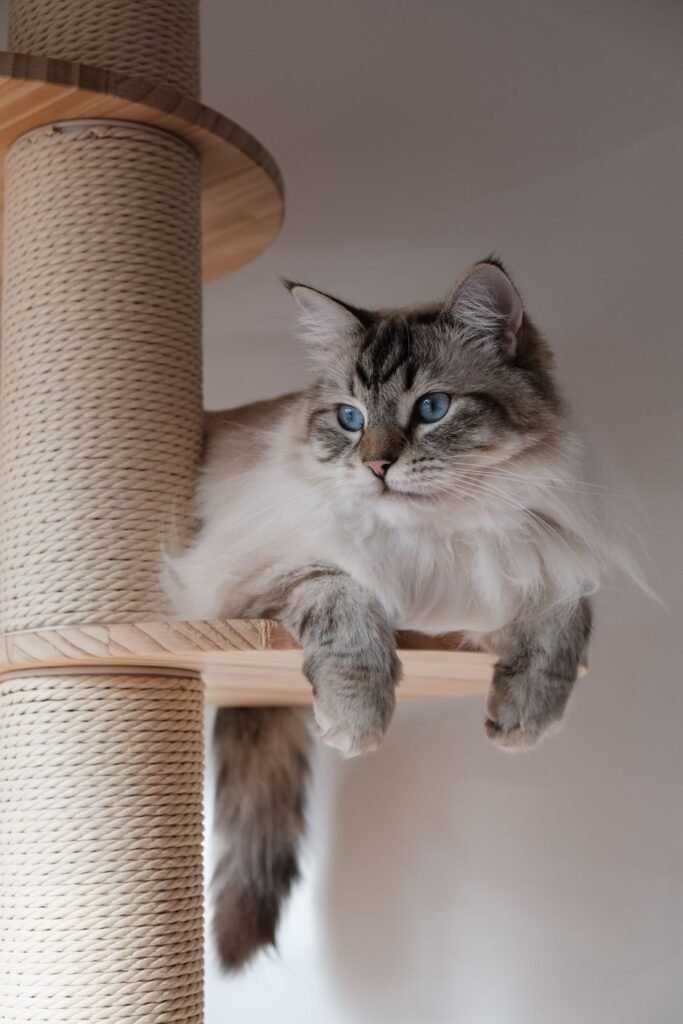
| Cat tree with scratcher | Cats who also need climbing, perching, and hiding spots | Higher investment | A compact tree with a small footprint and an anti-toppling strap |
Vertical posts: who they’re for
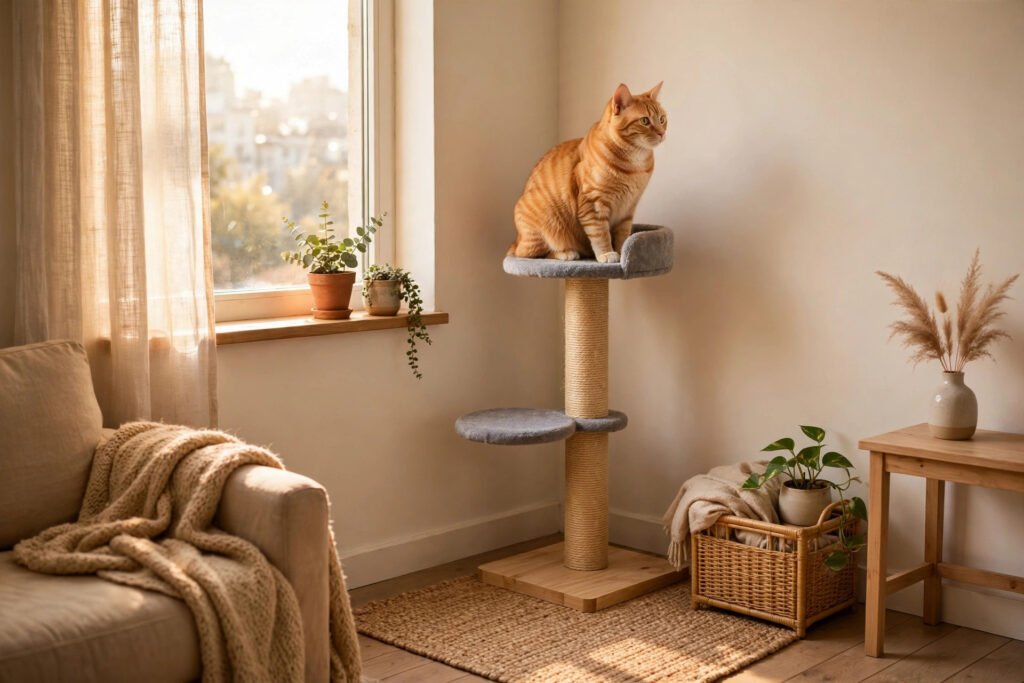
The classic scratching post — a sisal-wrapped column on a base — serves one job: the full vertical stretch-and-rake. If your cat’s damage is on couch arms, the sides of mattresses, door frames, or curtains, this is your type. That’s the majority of furniture-scratchers, which is why the post is the default recommendation.
What separates a good post from a decorative one: height of 30+ inches (anything shorter asks the cat to scrunch), a wide, heavy, wobble-free base, and sisal — not carpet — as the surface. Our researched roundup of the best tall posts compares seven current options: 7 Best Cat Scratching Posts That Actually Save Your Furniture.
The honest limitation: a post does nothing for the cat who shreds rugs. Angle mismatch is the number-one reason posts get ignored.
Horizontal pads: who they’re for
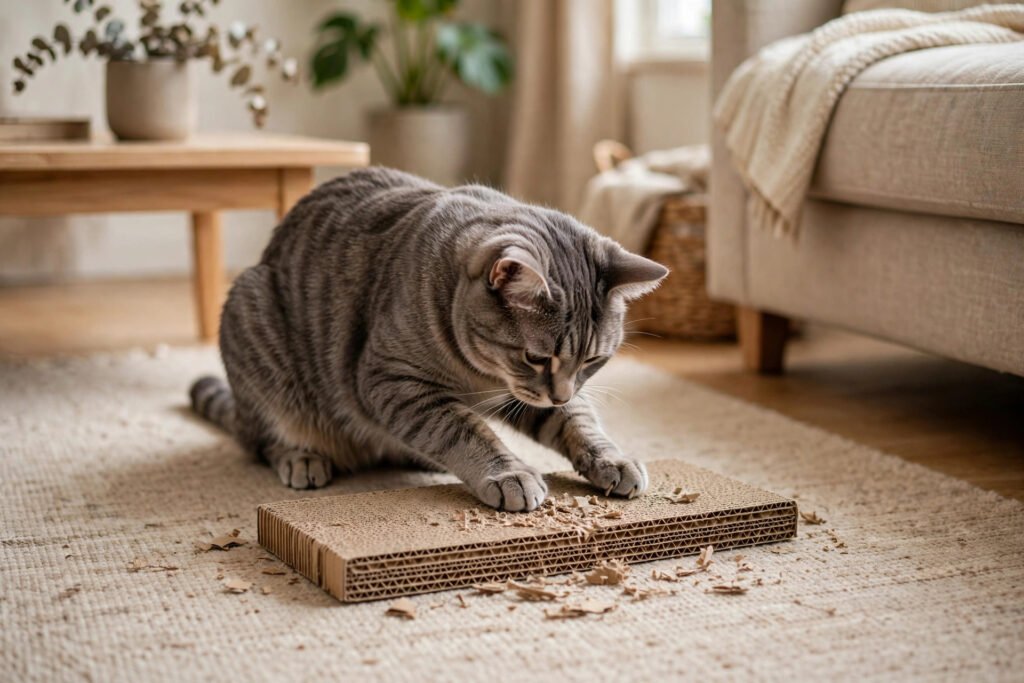
Pads and mats — usually corrugated cardboard, sometimes sisal mat — lie flat or at a low angle. They’re for the rug-shredders, carpet-edge rakers, and cats who scratch the floor next to their favorite sleeping spot.
Advantages in apartments: they’re inexpensive, nearly invisible (slide against a baseboard or under a side table), and replaceable. A cardboard scratcher that gets destroyed in two months did its job — it absorbed two months of damage that would have gone into your rug.
The cardboard confetti is real, though. Keep these on hard floors or a washable mat, not on light-colored carpet, unless you enjoy vacuuming cardboard snow. And know that heavy, enthusiastic scratchers go through cardboard fast — budget for replacements, or step up to a sisal mat.
Our rule of thumb: if you’re not sure which type your cat prefers, buy a cardboard pad first. It’s a cheap diagnostic. If the cat loves it, you’ve confirmed horizontal preference. If they ignore it, you know to invest in vertical. Shopping for a kitten? See our picks for the best scratching posts for kittens, which need shorter, extra-sturdy designs.
Cat trees with built-in scratchers: who they’re for
A cat tree bundles scratching with climbing, perching, and hiding — three things apartment cats are chronically short on. If your cat scratches furniture and knocks things off shelves and sleeps on top of the fridge, you’re not looking at a scratching problem, you’re looking at an under-furnished cat. A tree addresses all three.
The catch is footprint and price. Even “compact” trees need a genuine corner (roughly 20×20 inches of floor), and decent ones are a bigger investment. Don’t buy a tree just for scratching — buy it when the cat also needs vertical territory. In our product research, the standouts for small spaces were a 45.3-inch compact tree with a narrow 19.7×13.8-inch footprint and a 42-inch model with an anti-toppling wall strap — that strap matters, because a wobbling tree is a tree the cat won’t use.
One more honest note: the scratching surfaces on most trees are a side feature, not the main event. A dedicated tall post next to the couch usually outperforms a tree’s scratching column for pure furniture-saving. Trees win on total enrichment per square foot.
The couch test: how to tell what YOUR cat prefers
Forget breed guides and product marketing. Two days, three observations:
- Where is the damage? Vertical surfaces (arms, frames) → post. Flat surfaces (rugs, carpet) → pad. Everything, everywhere → consider the tree.
- What’s the body position? Rear up on hind legs, pulling down → vertical. Crouched low, raking forward → horizontal.
- When does it happen? Right after naps (stretch-driven) → the stretch matters most, so height/pad length matters. During play or zoomies (energy-driven) → sturdiness matters most.
Write it down. You’ll be amazed how clear the answer is once you actually look.
Material guide: sisal vs cardboard vs carpet
- Sisal rope/woven sisal: the all-rounder for vertical posts. Tough, satisfying texture, lasts 1–3 years. The default right answer for posts.
- Corrugated cardboard: the horizontal champion. Cheap, cats love the texture, recyclable. Downsides: mess, and frequent replacement for power scratchers.
- Carpet: avoid on purpose-bought scratchers. It teaches cats that carpet texture is scratchable — and your actual carpet is right there, larger and more convenient.
Our verdict by cat type
- The couch-arm shredder → tall sisal post (32 in+), placed touching the couch arm for two weeks. See our top picks.
- The rug destroyer → cardboard pads, several of them, placed on the damaged spots. Replace without guilt.
- The “scratches everything” cat → post for the main vertical spot + a cheap pad for the floor. Two tools, still budget-friendly.
- The bored apartment cat (scratching + climbing + chaos) → compact cat tree for enrichment + one dedicated post for the couch zone.
- The senior or petite cat → shorter post or angled pad; don’t make an arthritic cat reach 40 inches.
If you’ve decided on a post, here are the best tall cat scratching posts that actually save your furniture.
Placement in a small apartment
Whatever you buy, location beats product. The scratcher goes where the damage is — touching the couch arm, on the rug corner — for the first two weeks, then migrates inches per day to its permanent home. A perfect tall post across the room loses to a cheap pad in the right spot every time. The full method: How to Stop Your Cat Scratching the Couch.
Frequently asked questions
Should I buy a scratching post or a pad?
Watch your cat for two days before buying. Damage on vertical surfaces (couch arms, door frames) points to a post; damage on flat surfaces (rugs, carpet edges) points to a pad. If you’re genuinely unsure, a cardboard pad is the cheapest diagnostic — if the cat loves it, you’ve confirmed a horizontal preference.
Will a cat tree alone stop my cat scratching the furniture?
Usually not. The scratching surfaces on most trees are a side feature, and a dedicated tall post placed at the damage spot outperforms a tree’s scratching column for pure furniture-saving. Trees win on total enrichment per square foot — pair one with a post for the couch zone.
How tall should a scratching post be?
At least 30 inches so an adult cat can fully stretch; 32 inches or more is ideal. Shorter posts force a crouch that many cats simply reject, which is the most common reason a new post gets ignored.
Cardboard or sisal — which lasts longer?
Sisal wins for vertical posts, standing up to 1–3 years of heavy use. Cardboard is the horizontal champion but it’s consumable — enthusiastic scratchers shred pads in weeks to months. Plan on replacements, or step up to a sisal mat.
How many scratchers does one cat need?
Start with one, placed exactly where the damage is. Most apartments do well with two: a post at the main vertical spot and a pad where the cat works the floor. In multi-cat homes, one per cat plus a spare is a good rule.
Where should I put a scratcher in a small apartment?
Where the damage is — touching the couch arm or on the rug corner — for the first two weeks, then migrate it inches per day to its permanent home. Location beats product: the right spot matters more than the perfect scratcher.
Related reading
- 7 Best Cat Scratching Posts That Actually Save Your Furniture
- How to Stop Your Cat Scratching the Couch: 9 Fixes That Actually Work
- Browse all scratching guides
Last updated: October 2, 2026
Pingback: 7 Best Cat Scratching Posts That Actually Save Your Furniture
Pingback: How to Stop Your Cat Scratching the Couch: 9 Fixes That Work 2027