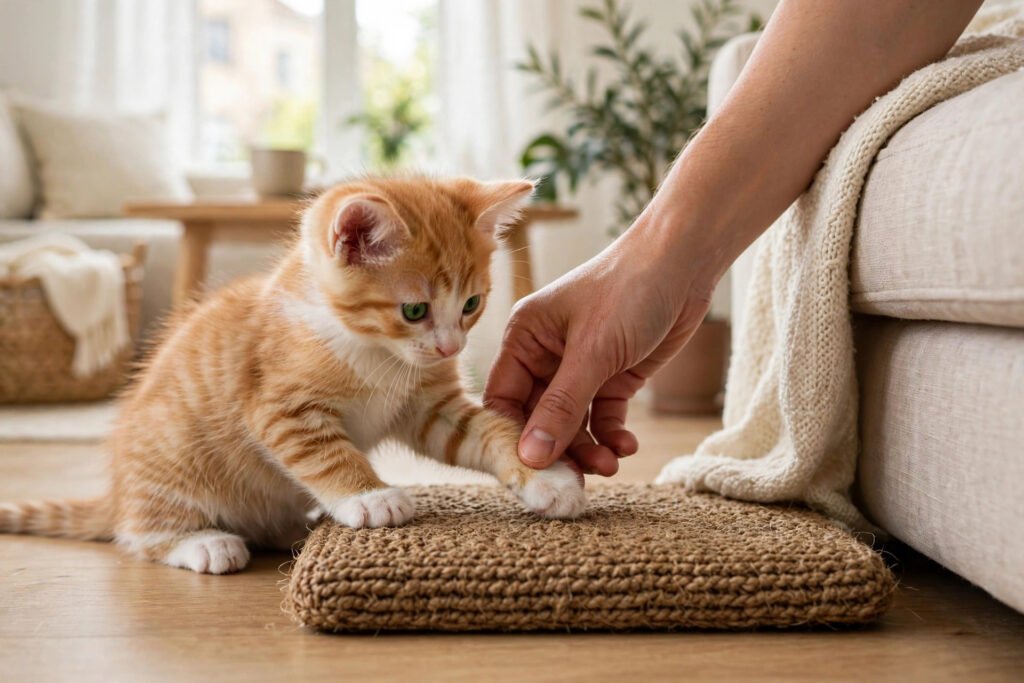
A kitten’s scratching habit is like concrete: easy to shape in the first weeks, miserable to break later. The good news is that kittens are the easiest cats to train — they haven’t spent years deciding your sofa is the perfect scratching texture. The bad news is that most “cat scratching posts” are built for adult cats: too tall for a 2-pound kitten to reach, too tippy for a kitten who climbs everything, and too expensive for something tiny claws will barely dent.
Kitten scratchers need three things: low and reachable, stable enough to survive being climbed like a jungle gym, and cheap enough that you can put one in every room. If you’re looking for the best scratching post for kittens for a small apartment, start with the picks below, drawn from live Chewy, PetSmart, and Petco listings.
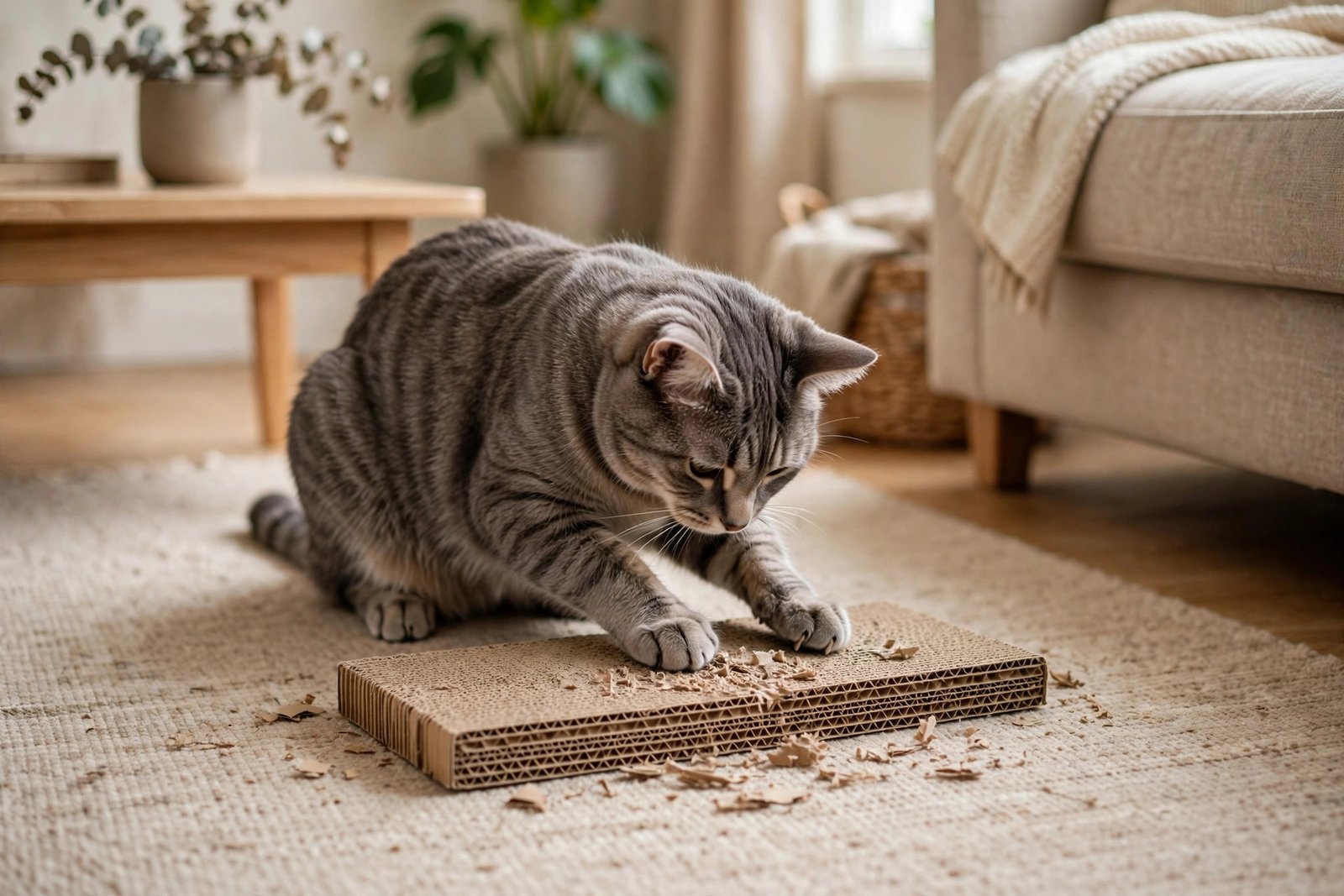
How we picked these
We researched these picks across live Chewy, PetSmart, and Petco listings, comparing star ratings and owner reviews with a focus on kitten-appropriate sizing and stability. None of these are paid placements. Retailer links show current prices, which change often — that’s why you won’t see dollar figures in this guide.
Quick picks
| Award | Product | Why it stands out | Check Price |
|---|---|---|---|
| Best overall for kittens | Catstages Scratch & Cuddle | Bowl-shaped cardboard scratcher sized for kittens up to 10 lb — low enough to step into, doubles as a nap spot. | Check Price |
| Best budget pick | Frisco Wave Cat Scratcher | Slim 17.75-inch horizontal scratcher with catnip — the cheapest way to learn your kitten’s scratching preference. | Check Price |
| Best scratcher + bed combo | Frisco Step-In Cat Scratcher | Step-in design with raised edges contains cardboard debris and doubles as a lounger. | Check Price |
| Best multi-room set | Kitty City XL Wide Corrugate 3-pack | Three reversible XL pads with furniture protectors — put one in every room. | Check Price |
| Best for corner scratchers | Happy & Polly L-Shape Scratcher Set | L-shaped cardboard hugs corners like a sofa arm, plus a round pad for floor scratching. | Check Price |
| Best first vertical tree | Yaheetech 35.5-in Cat Tree with Space Capsule | Two sisal posts and a space-capsule perch, sized for cats 10 lb and under. | Check Price |
| Best grow-into pick | Topeakmart Cactus Cat Tree 42″ | Five sisal posts at different heights on a compact 17 × 17-inch footprint. | Check Price |
Best overall for kittens: Catstages Scratch & Cuddle
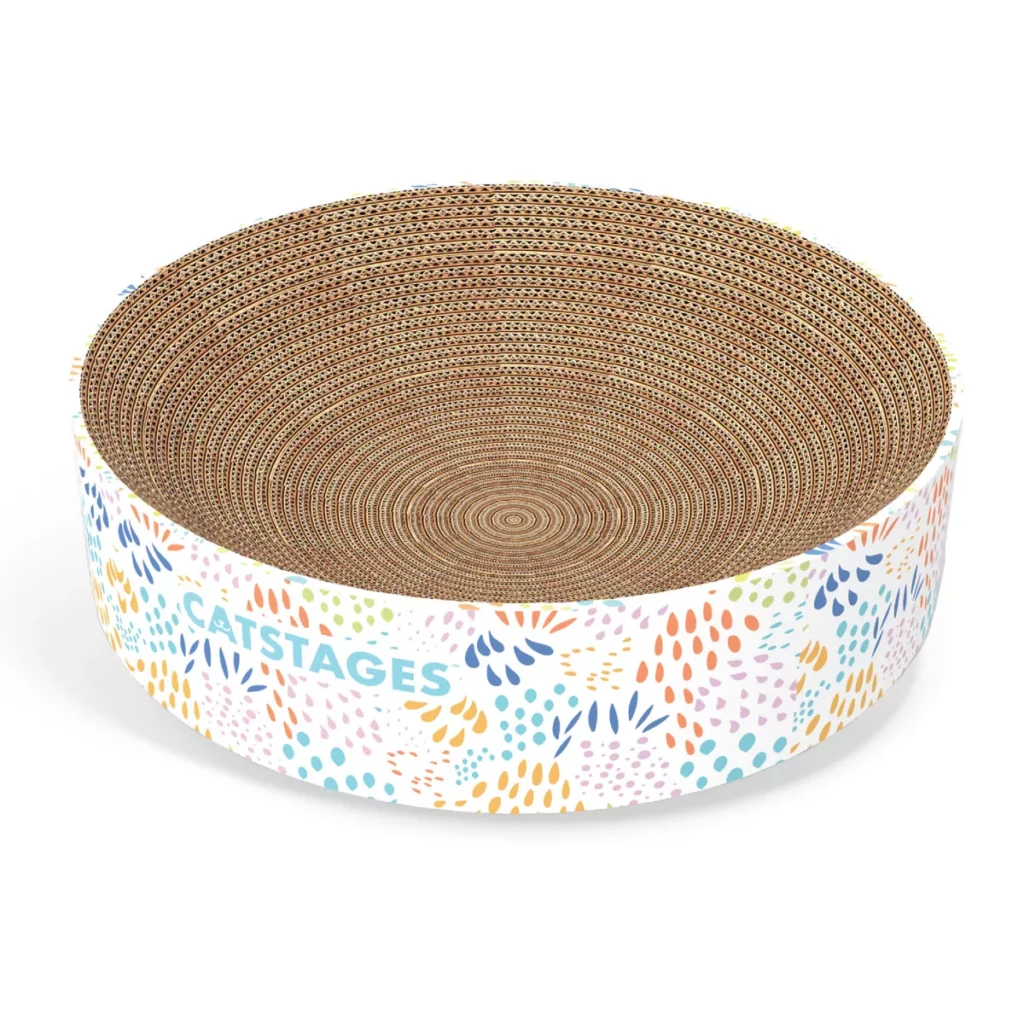
This is the rare product designed for kittens rather than adapted to them: a corrugated cardboard scratcher in a raised bowl shape, sized 13.8 × 13.8 × 3.15 inches, explicitly made for kittens and small cats up to 10 lb.
The bowl shape is doing two jobs. First, it’s low — a young kitten can step in and scratch without climbing. Second, the raised edges make it a lounging spot, which means the kitten naps where it scratches, and cats scratch when they wake up. Scratching habit and nap spot in one 14-inch square is exactly the efficiency a small apartment needs.
It’s made from 100% recycled corrugated cardboard. For a kitten’s first scratcher, this is the one.
Best budget pick: Frisco Wave Cat Scratcher
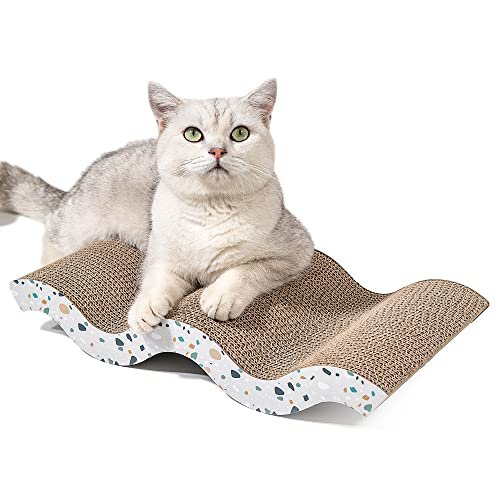
Before you spend real money on kitten furniture, run a cheap experiment answering the most important question: does your kitten prefer scratching horizontally or vertically? Many cats strongly prefer scratching horizontally, and a tall post won’t change that.The Frisco Wave is 17.75 inches of corrugated cardboard with catnip included, slim enough to slide against a wall or baseboard. Owner reports say it flips for a second surface, though the retailer doesn’t officially claim reversibility. It’s the cheapest possible experiment — and if the kitten takes to it, you’ve solved scratching for less than the price of lunch.
Best scratcher + bed combo: Frisco Step-In Cat Scratcher
The step-in design is clever for kittens: a solid-based cardboard scratcher the kitten steps into, with raised edges that contain the cardboard debris kittens generate with enthusiasm. It doubles as a lounging spot — 15 × 13 × 4.5 inches of scratch-and-nap.
Catnip is included. One honest note: the replacement scratcher insert is currently unavailable on Chewy, so treat this as a complete unit rather than a refillable system. At this price point, that’s fine — when it’s shredded, the kitten has graduated to bigger furniture anyway.
Best multi-room set: Kitty City XL Wide Corrugate 3-pack
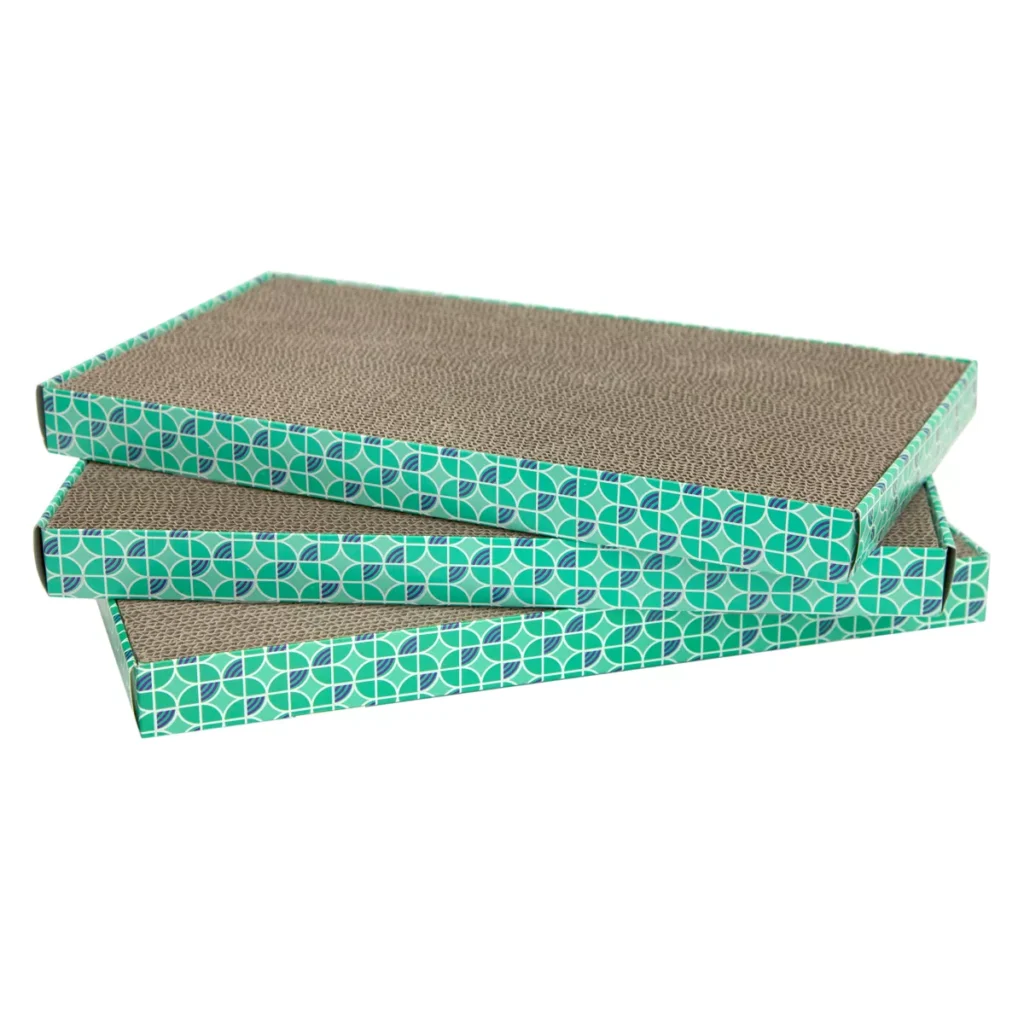
Kittens don’t travel to the scratcher — the scratcher has to be where the kitten already is. That’s the logic of the 3-pack: three XL corrugated pads, one for the living room, one for the bedroom, one for wherever the kitten has started eyeing the furniture.
Each pad is 18 × 10 × 15 inches, FSC-certified cardboard, reversible (pull the back tab to flip for a fresh surface), and the set includes furniture protectors. The retailer describes them as suitable from the biggest cats down to small/medium — kittens included.
For training, this is the highest-leverage purchase on the list: you can’t redirect a scratching kitten to a post in another room. Put the acceptable option within paw’s reach, everywhere.
Best for corner scratchers: Happy & Polly 26-in L-Shape Set
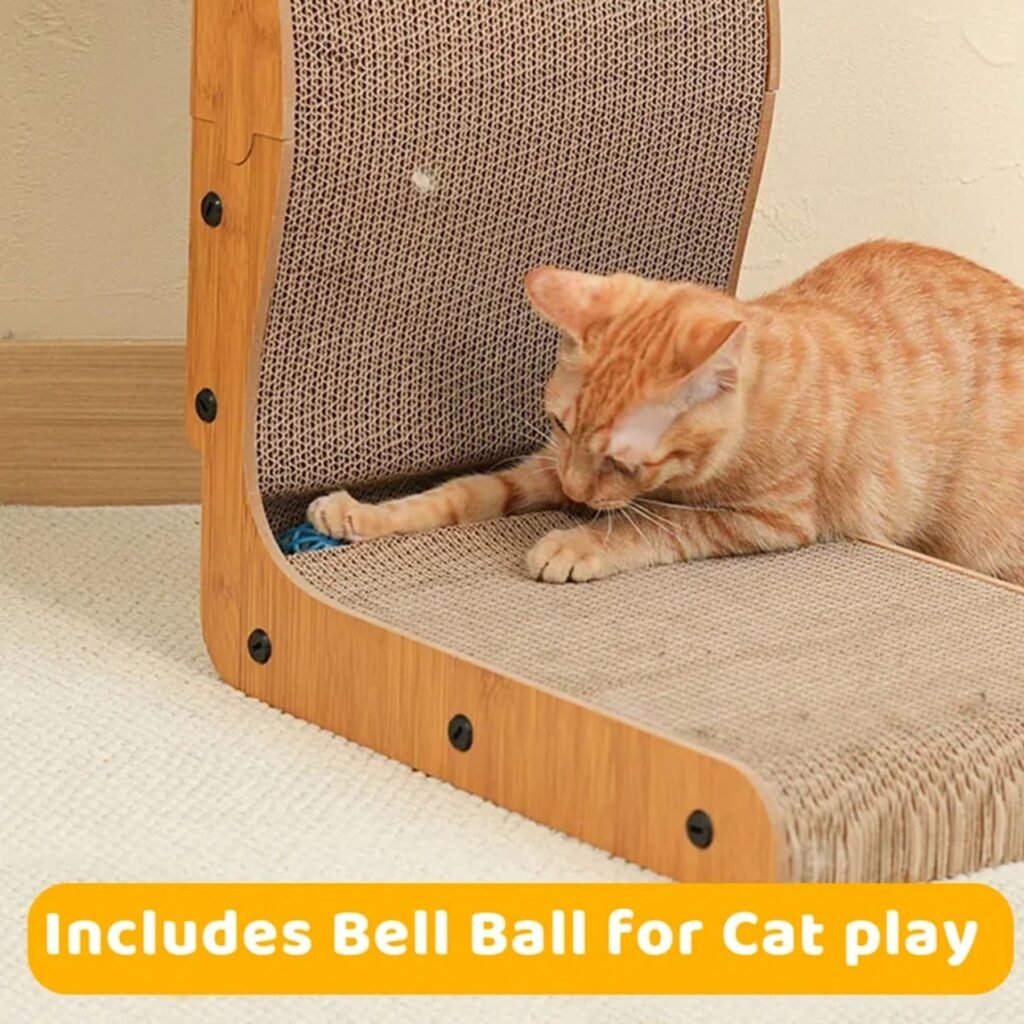
Some kittens go straight for the vertical: sofa arms, doorframes, the corner of the bookshelf. The Happy & Polly set answers with an L-shaped cardboard scratcher that hugs corners — the exact geometry of a sofa arm — plus a round pad for flat floor scratching.
The set includes high-density corrugated cardboard with an anti-tip L-shape piece and a non-slip round pad, reversible design. It’s the priciest cardboard option here, but if your kitten has already chosen the furniture as their scratching surface, matching that corner shape is what redirects them.
Best first vertical tree: Yaheetech 35.5-in with Space Capsule
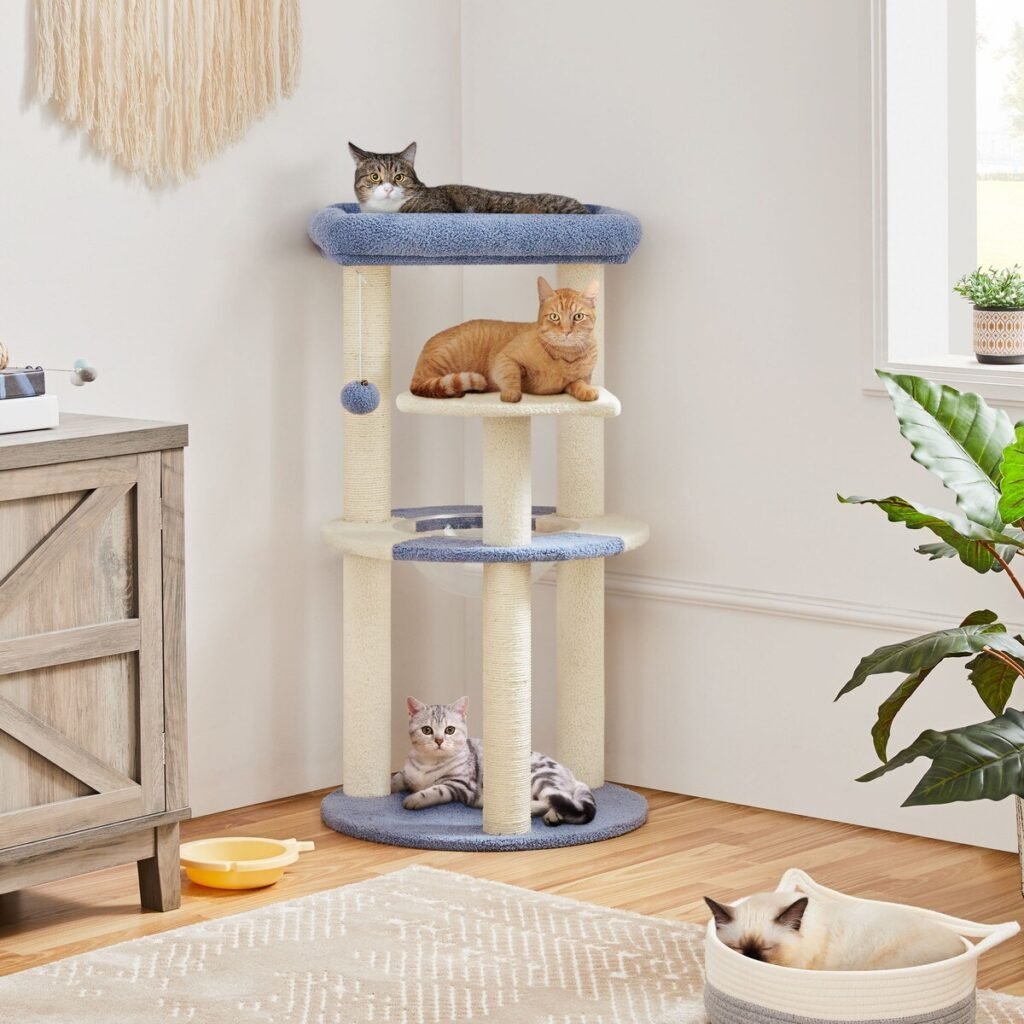
Once the kitten is confidently scratching cardboard, a first vertical post teaches the full-stretch scratch. This Yaheetech is proportioned for the job: 35.5 inches tall with two sisal-wrapped scratching posts and a space-capsule perch, designed for cats 10 lb and under — which is exactly the kitten weight range.
With 4.5 stars across 439 ratings, it’s a proven first tree — check the current price at the link. The 10-lb limit means this is a kitten-and-small-cat tree, not a forever tree for a large adult — plan the upgrade when the cat outgrows it. When that day comes, our guide to the best tall cat scratching post picks up where this one leaves off.
Best grow-into pick: Topeakmart Cactus Cat Tree 42″
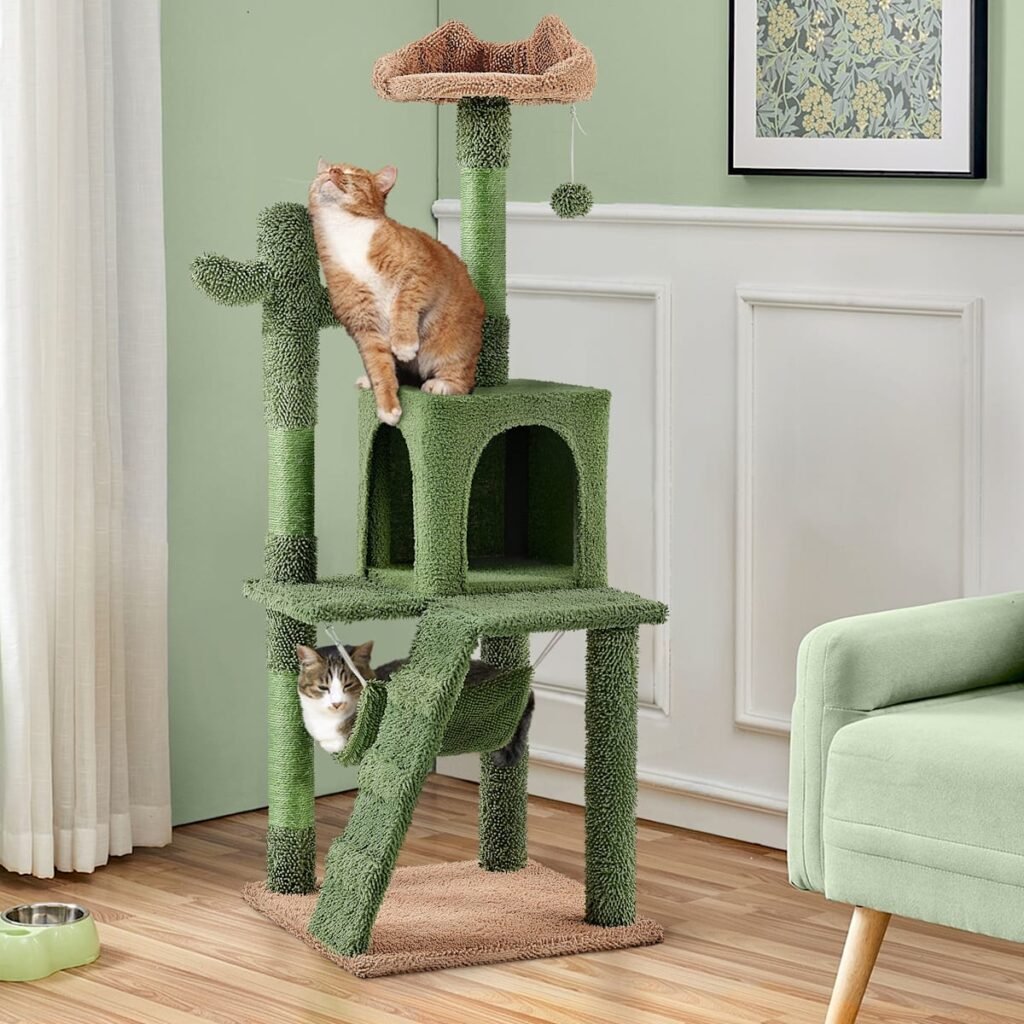
If you’d rather buy once: the Cactus tree’s five sisal scratching posts at different heights mean a kitten can reach the low ones now and the high ones later. The 17 × 17-inch footprint is the smallest of any tree on this list — it fits the corner of a kitten’s room without dominating it.
Designed for 2–3 small to medium-sized cats, 4.5 stars. Supervise young kittens on any tall furniture until they’re coordinated enough to climb down as well as up — enthusiasm outpaces ability in the early months.
How to train a kitten to use a scratcher (the part that actually matters)
Start the day the kitten arrives. Every day the kitten scratches the sofa unredirected, the sofa becomes “the scratching place” in their mind. Put an acceptable scratcher next to the kitten’s sleeping spot on day one.
Match the texture the kitten chose. If the kitten scratches the carpet, they want horizontal cardboard. If they go for the sofa arm, they want vertical sisal or a corner-hugging L-shape. Don’t fight their preference — redirect it.
Reward, don’t punish. When the kitten uses the scratcher, treat or praise immediately. Spraying or shouting teaches the kitten to scratch when you’re not looking, which is worse.
Play near the scratcher. A wand toy dragged across the scratcher gets paws on it; paws on it discover the texture; discovered texture becomes habit. Ten minutes of this beats a week of hoping. If the sofa is already the established scratching spot, pair this routine with our guide on how to stop cats scratching the couch.
Trim claws regularly. Blunt claws do less damage during the training period and make scratching the post more satisfying than scratching furniture. Ask your vet to show you the technique the first time — cutting the quick is painful and memorable in the wrong way.
Kitten scratcher buying rules
Low beats tall for the first months. A kitten who can’t comfortably reach a 34-inch post will scratch the 20-inch sofa arm instead. Start horizontal or low, add height as the cat grows.
Stability matters more with kittens. Kittens climb everything. A lightweight post becomes a falling object with a kitten attached. Wide bases, low centers of gravity, or wall straps until the cat is coordinated.
Cardboard is a feature, not a compromise. Kitten claws are small and soft — cardboard gives satisfying feedback without the resistance of sisal. Many kittens prefer it well into adulthood.

Cheap and many beats expensive and one. Three inexpensive pads in three rooms will save more furniture than one pricey post in the wrong room. For more ideas that fit tight floor plans, see our picks for the best cat tree for small apartments.
Frequently asked questions
At what age should kittens start using a scratching post?
Immediately — from the day they come home, whatever the age. Kittens as young as 4–5 weeks will paw at scratching surfaces. The earlier the habit forms, the less furniture suffers.
Why does my kitten ignore the scratching post?
Usually one of three things: it’s too tall to reach comfortably, it’s in the wrong room (kittens won’t travel), or it’s the wrong texture for that kitten’s preference. Try an inexpensive horizontal cardboard scratcher next to their bed before buying anything else.
Will a kitten outgrow a small scratcher?
Yes — plan for it. Cardboard scratchers are consumables (that’s the point), and a kitten tree with a 10-lb limit gets replaced when the cat matures. Budget for the upgrade rather than being surprised by it.
Is cardboard or sisal better for kittens?
Start with cardboard. Kitten claws are small and soft, and cardboard gives satisfying feedback with less resistance than sisal. Many kittens prefer cardboard well into adulthood — add a sisal post once they’re confidently scratching and ready for a full vertical stretch.
How many scratchers does a kitten need?
More than you’d think, in more rooms than you’d think. Kittens won’t travel to scratch, so put an acceptable option wherever the kitten already spends time — especially next to sleeping spots, since cats love to scratch right after waking up. That’s exactly why multi-packs exist.
When should I replace a cardboard scratcher?
When it’s shredded flat or the kitten starts ignoring it. Cardboard scratchers are consumables by design — a well-used one is proof it’s working, not a failure. If it’s reversible, flip it for a second life first.
Related reading
- 7 Best Cat Scratching Posts That Actually Save Your Furniture
- Cat Scratching Post vs Pad vs Tree: Which Does Your Cat Need?
- How to Stop Your Cat Scratching the Couch
- Browse all scratching guides
Last updated: October 2, 2026
Pingback: 7 Best Tall Cat Scratching Posts That Actually Save Your Furniture 2027
Pingback: Cat Scratching Post vs Scratching Pad vs Tree: Which Does Your Cat Need? 2027
Pingback: How to Stop Your Cat Scratching the Couch: 9 Fixes That Work 2027
Pingback: Best Small Cat Scratching Posts for Apartments 2027 - Velvnox